What Factors Determine Attic Insulation Installation Costs?
The cost of attic insulation installation depends on five main factors: attic size, insulation material, the R-value your climate requires,…

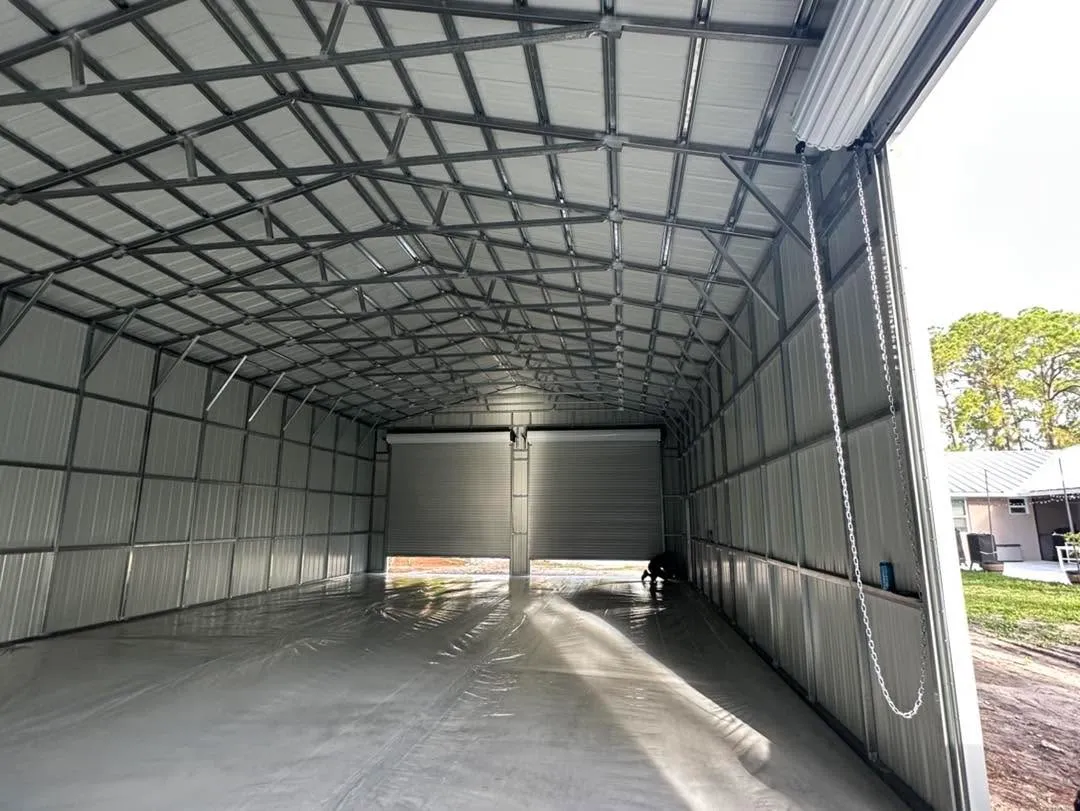
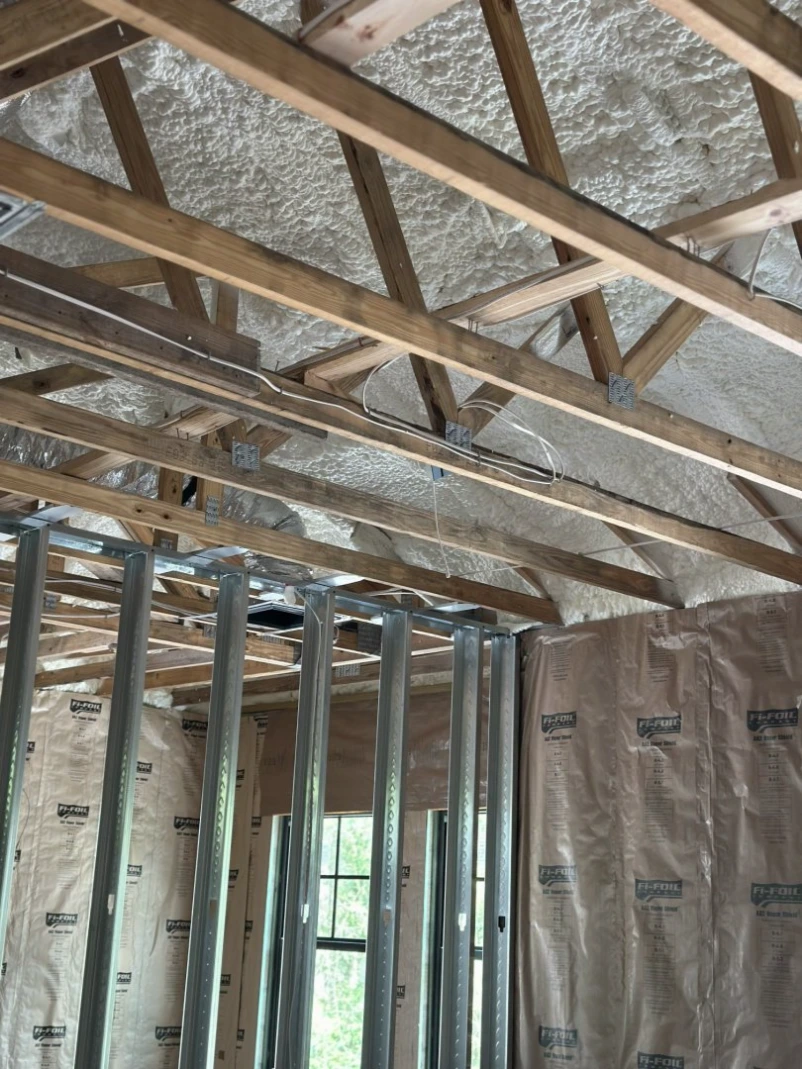
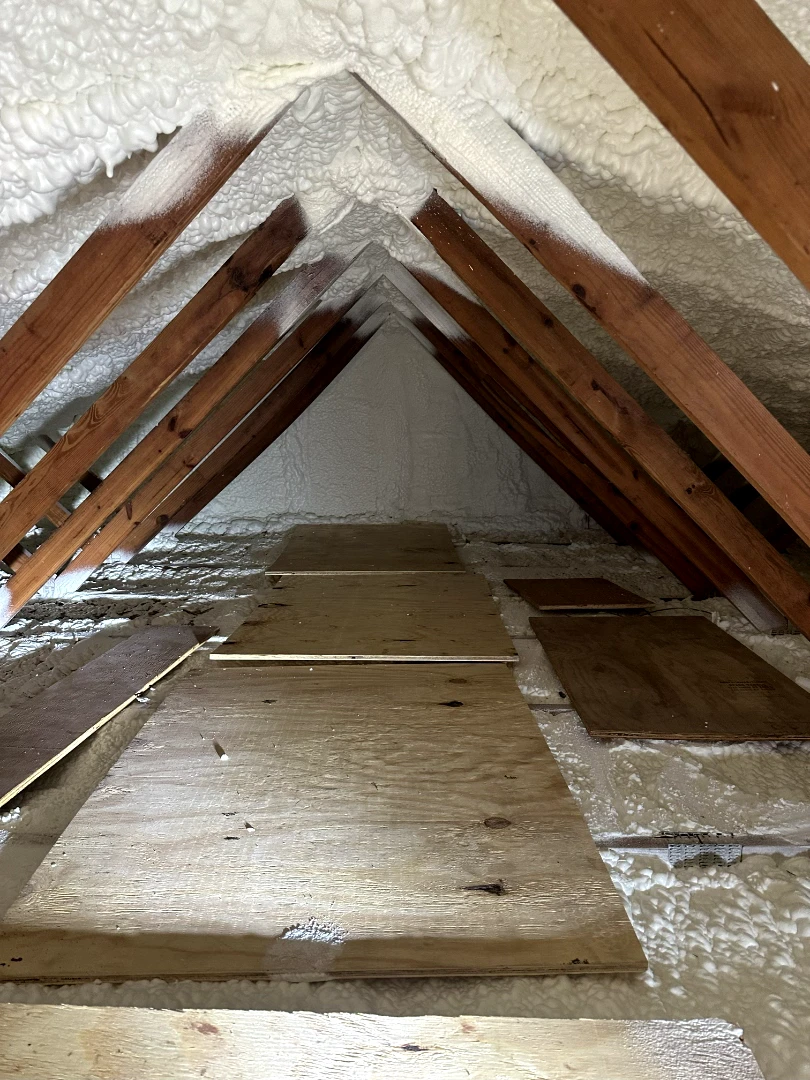
Property owners in Jupiter, FL, who properly insulate their pole barns can reduce heating and cooling costs by roughly 15% on average, according to data from the U.S. Department of Energy and ENERGY STAR. For a conditioned pole barn running HVAC year-round in Florida’s hot-humid climate (IECC Climate Zone 2A), that translates to meaningful monthly savings that accumulate over the life of the building. Beyond energy savings, proper insulation protects the structure from moisture condensation, rust, and wood rot, which are serious and expensive problems in Jupiter’s humid, subtropical environment. Following best practices for insulating pole barns helps owners prevent these issues and extend the life of the building.
Jupiter, Florida, falls within IECC Climate Zone 2A, which the Building America Solution Center classifies as hot and humid. This means our pole barns face extreme heat for most of the year, combined with heavy moisture loads in the air. A metal-roofed, uninsulated pole barn in this environment is essentially an oven in summer and a condensation trap year-round.
When warm, humid outdoor air contacts the cool underside of a metal roof panel, condensation forms rapidly. This moisture drips down onto stored equipment, livestock, inventory, or finished interior surfaces. Over time, it rusts metal components and rots wooden structural members. Proper insulation with an integrated vapor barrier prevents this moisture from forming in the first place.
According to the Department of Energy, insulation works by providing thermal resistance, measured in R-value. The higher the R-value, the better the material resists conductive heat flow. In Florida’s climate, the DOE recommends R-30 to R-60 for attic spaces and R-13 minimum for wood-frame walls in Climate Zone 2. These targets are the baseline for meaningful energy performance.
For pole barns specifically, spray foam insulation is the preferred material because it fills irregular cavities, seals air leaks, and provides a continuous vapor barrier. There are two main types we work with, and each has distinct advantages.
Closed-cell spray foam delivers approximately R-6 to R-7 per inch and has a density that makes it rigid and structural. It acts as both an insulation layer and a vapor retarder, blocking moisture transmission through the building envelope. This dual function is especially valuable in Jupiter’s humid climate. The DOE’s Guide to Home Insulation notes that spray foam is one of the most effective materials for filling small cavities and sealing air leaks, which is exactly what pole barn construction demands.
Open-cell spray foam provides about R-3.5 to R-3.8 per inch at a lower material cost. It expands significantly to fill cavities and offers good sound-dampening properties. While it does not serve as a vapor barrier on its own, it works well for interior partition walls in conditioned pole barn spaces where moisture control is managed separately.
| Insulation Type | R-Value Per Inch | Vapor Barrier | Best Use in Pole Barns |
|---|---|---|---|
| Closed-cell spray foam | R-6 to R-7 | Yes | Roof, exterior walls, metal-to-wood transitions |
| Open-cell spray foam | R-3.5 to R-3.8 | No | Interior walls, sound control areas |
| Fiberglass batts | R-2.9 to R-3.8 | No | Budget wall insulation (requires a separate vapor barrier) |
| Rigid foam board | R-3.8 to R-6.5 | Varies | Continuous insulation on walls |
Energy savings from insulation depend on several factors, including whether the space is conditioned, the quality of the HVAC system, and how much of the building envelope is actually insulated. The EPA’s ENERGY STAR methodology provides modeled estimates showing that in Climate Zone 2 (which covers most of Florida), homeowners can expect roughly 9% savings on heating and cooling costs, or 6% on total energy bills, from proper air sealing and insulation.
For pole barns specifically, the savings can be even more significant because these structures typically start with zero insulation. A completely uninsulated metal building loses heat rapidly in winter and gains it rapidly in summer, forcing HVAC equipment to run almost constantly. Adding a proper insulation layer with spray foam can reduce that HVAC runtime by a substantial margin. Understanding pole barn insulation costs in 2026 helps property owners balance upfront expenses with long-term energy savings.
| Pole Barn Use | Conditioned Space | Estimated Monthly Energy Savings Potential |
|---|---|---|
| Workshop/hobby garage | Partially conditioned | Noticeable reduction in cooling costs |
| Home gym/living space | Fully conditioned | Significant savings, 10-20% on HVAC portion |
| Equipment storage | Unconditioned but dehumidified | Lower dehumidifier runtime, moisture protection |
| Agricultural / livestock | Climate controlled | Major savings on ventilation and cooling systems |
These examples reflect typical projects we encounter across the Jupiter area:
| Building Use | Approximate Size | Insulation Type | Estimated Project Investment |
|---|---|---|---|
| Residential workshop | 1,500 sq ft | Closed-cell spray foam | $2,000 to $6,500 |
| Horse barn with tack room | 3,000 sq ft | Closed-cell roof, open-cell walls | $5,000 to $12,000 |
| Home gym addition | 2,000 sq ft | Closed-cell spray foam | $3,500 to $8,500 |
| Agricultural storage | 4,000 sq ft | Closed-cell spray foam | $7,000 to $15,000 |
| Commercial workspace | 2,500 sq ft | Closed-cell spray foam | $4,500 to $12,000 |
Several variables determine both what you will pay for insulation and how much you will save over time:
Ideal candidates:
Not the best fit right now:
The conversation around pole barn insulation usually focuses on installation costs. The more important question is what happens when you skip it. In Jupiter’s climate, an uninsulated, enclosed metal building accumulates condensation during nearly every season. That moisture damages structural wood, corrodes metal fasteners and roofing panels, and destroys stored tools, vehicles, feed, and inventory. Repairing wood rot or replacing rusted structural components costs far more than insulation ever will. Add in the ongoing expense of an HVAC system working overtime to condition a space that cannot hold its temperature, and the cost of doing nothing compounds year after year.
At ALL IN OVERHALL, we specialize in pole barn insulation for property owners throughout Jupiter and the surrounding areas. Our team evaluates your building, recommends the right insulation strategy for your specific use case, and delivers professional installation that pays for itself. Whether you need closed-cell spray foam for moisture control and maximum R-value or a hybrid approach for a budget-conscious project, we have the experience to get it done right the first time.
Request a Quote: Contact us at (561) 406-3835 or email [email protected] to get a detailed project estimate.
Schedule an On-Site Assessment: Call (561) 406-3835 to book a free building evaluation and insulation consultation at your Jupiter property.
Jupiter is in Climate Zone 2A, so the DOE recommends R-30 to R-60 for attics and R-13 minimum for wood-frame walls. Closed-cell spray foam achieving R-30 to R-38 on the roof deck is a common target for conditioned pole barns in our area.
Yes. When installed correctly with a vapor-retarding material like closed-cell spray foam, insulation keeps the interior surface temperature above the dew point, which prevents condensation from forming on metal roof and wall panels.
Spray foam insulation, when properly installed, can last the lifetime of the building without degrading, settling, or losing its R-value. It does not absorb moisture and will not sag over time like fiberglass batts.
Spray foam insulation requires professional equipment, training, and safety precautions. DIY fiberglass or rigid board installation is possible, but achieving proper air sealing and vapor barrier continuity is difficult without professional experience, especially on metal buildings.
Florida does not typically reassess property taxes for insulation improvements alone. However, making your pole barn a usable, conditioned space could increase its appraised value if it is considered part of your primary property or converted to livable square footage.