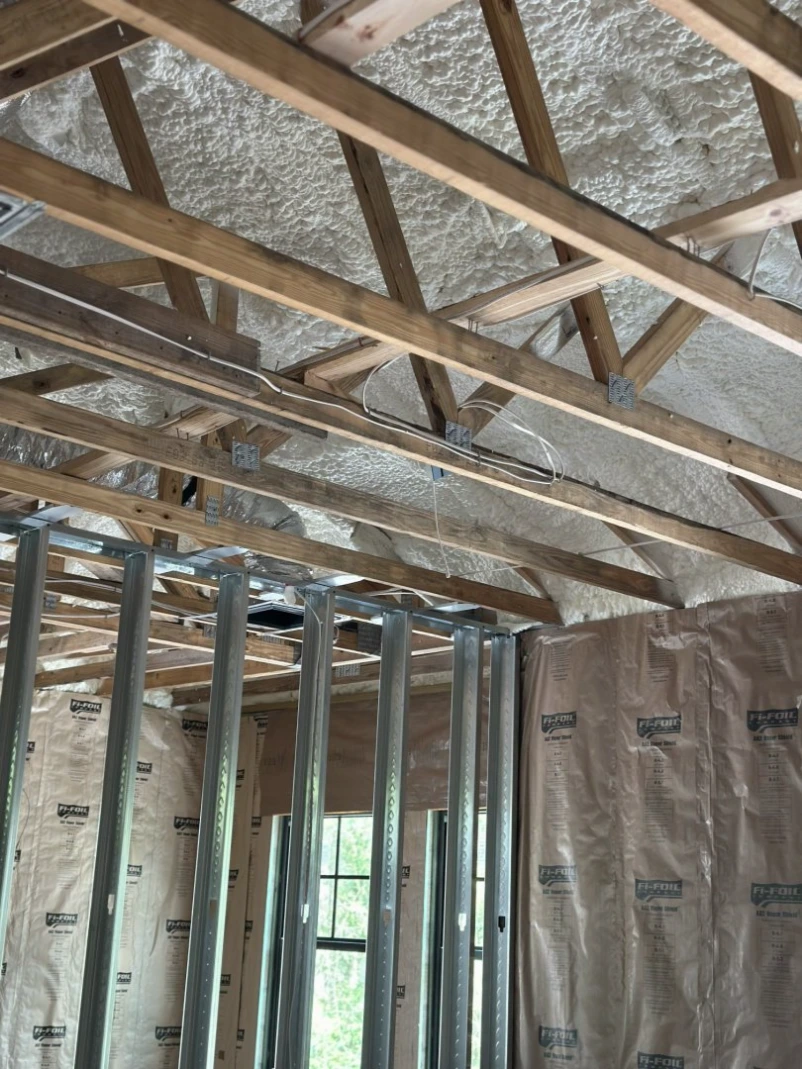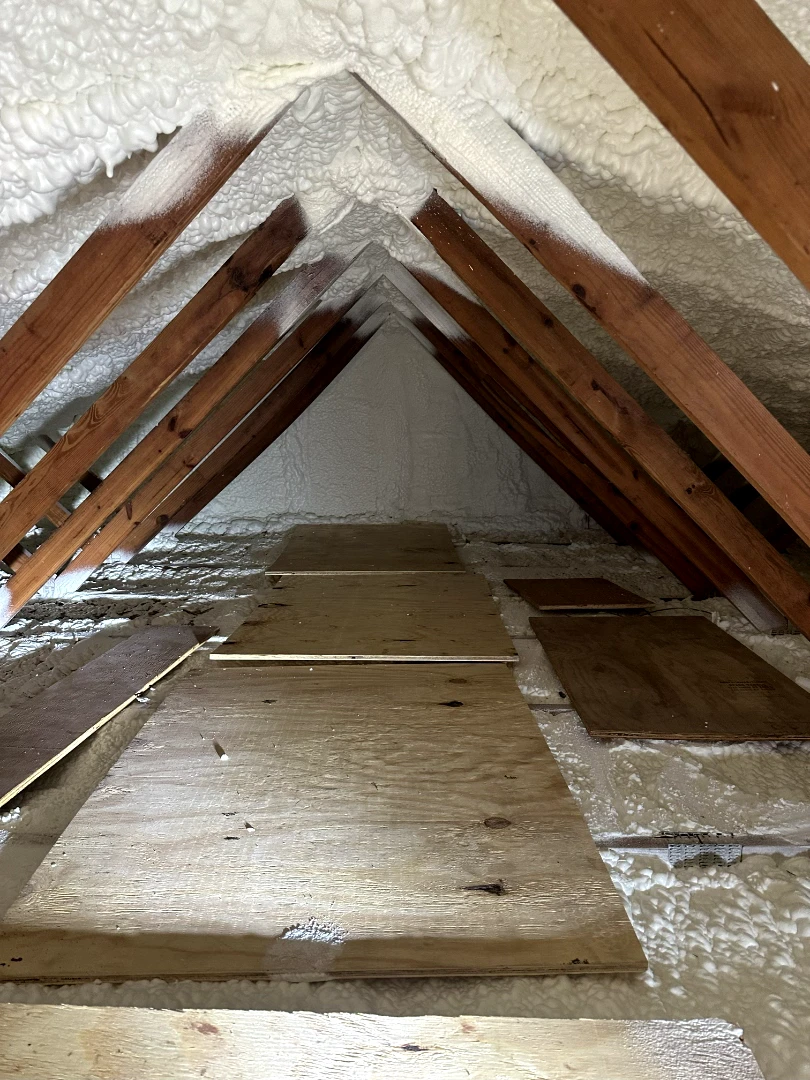
What Factors Determine Attic Insulation Installation Costs?
The cost of attic insulation installation depends on five main factors: attic size, insulation material, the R-value your climate requires,…

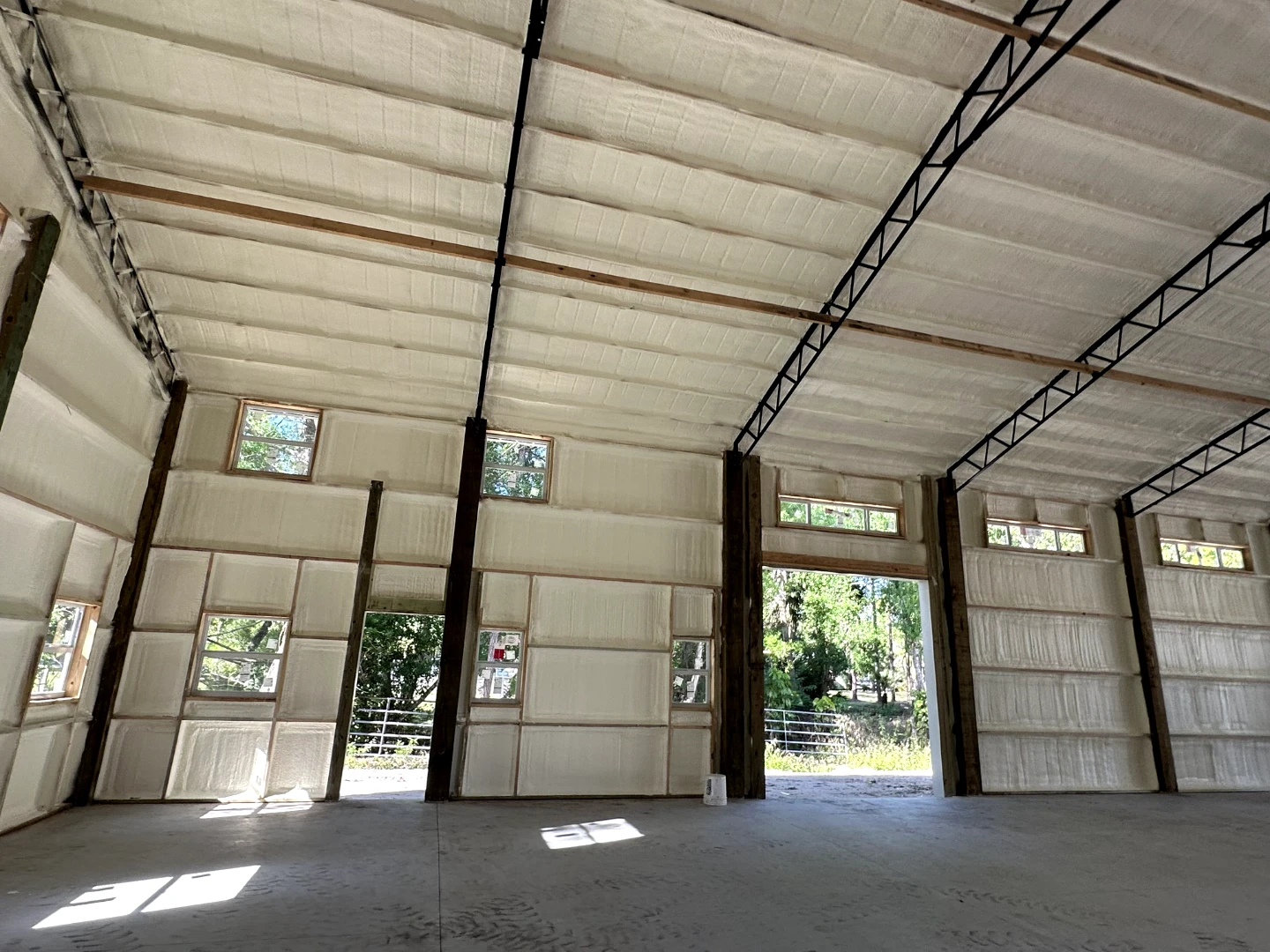
The average cost of insulating a pole barn in 2026 ranges from $2,000 for a small, basic project up to $20,000 for larger or fully conditioned structures, with most projects landing around $10,000. The final number depends on the building size, insulation type, R-value requirements for your climate zone, and whether you are insulating just the walls, just the roof, or both. Pole barns, also known as post-frame buildings, present unique insulation challenges because their metal siding and roofing conduct heat rapidly and are prone to condensation, making the choice of insulation material and installation quality far more impactful than in standard wood-framed construction. Following a guide to pole barn insulation helps building owners address these challenges and improve long-term performance.
Pole barns use large posts or poles for vertical structural support with girts running horizontally between them. The exterior is most commonly corrugated metal siding and roofing. This construction method, which originated in the 1930s for agricultural use, has evolved into a versatile and affordable building approach used today for workshops, storage, commercial space, and even barndominiums. While the speed and cost savings of post-frame construction are major advantages, the metal skin creates two problems: high thermal conductivity and condensation. Metal transfers heat rapidly, meaning an uninsulated pole barn in summer can become unbearable, and in winter it sheds warmth almost as fast as your heating system produces it. Condensation forms when warm indoor air meets the cold metal surface, leading to rust, wood rot, and mold. Proper insulation addresses both problems simultaneously when specified and installed correctly.
The pricing from our project data shows that pole barn insulation falls into a predictable range based on building size and insulation choices.
| Insulation Type | Typical Low | Typical Average | Typical High | R-Value Per Inch |
|---|---|---|---|---|
| Closed Cell Spray Foam | $2,000 | $8,000 | $25,000 | ~R-6.5 |
| Open Cell Spray Foam | $1,500 | $5,000 | $15,000 | ~R-3.5 |
| Pole Barn Insulation (All Types) | $2,000 | $10,000 | $20,000 | Varies |
| Insulation Removal and Replacement | $1,500 | $3,000 | $7,500 | N/A |
Closed-cell spray foam is the premium option for pole barn insulation. According to Building Science Corporation, closed-cell foam provides an R-value of approximately 6.5 per inch and, at thicknesses greater than 1.5 inches, qualifies as a Class II vapor retarder. This matters enormously in a pole barn because the metal exterior creates condensation risk. Closed-cell foam seals gaps, fills irregular cavities around girts and posts, and adds structural rigidity. It is the go-to choice for IECC Climate Zones 5 and above, where condensation control is essential.
Open-cell spray foam is lighter, less expensive, and expands more to fill cavities. It delivers around R-3.5 per inch and is vapor permeable at roughly 50 perms per inch. In warm climates, open-cell foam works well for pole barn walls and ceilings. In colder climates, it can be combined with a separate vapor retarder, though Building Science Corporation notes this approach has had only “limited success” and recommends closed-cell in IECC Climate Zones 5 and higher.
Fiberglass batts and rolls are the most affordable option and can work in pole barns with standard framing cavities. In a typical pole barn with 2×6 or 2×8 girts, you have room for R-19 to R-30 fiberglass batts. The downside is that fiberglass does not seal air leaks, leaving gaps around framing that allow heat transfer and condensation on adjacent metal. Fiberglass also provides no vapor barrier function on its own, so a separate vapor retarder must be installed. Understanding the energy savings from pole barn insulation can help property owners justify investing in higher-performance systems.
The U.S. Department of Energy publishes recommended R-values by climate zone, which directly affect how much insulation your pole barn needs and, therefore, how much it costs.
| Climate Zone | Attic / Ceiling | Wood-Frame Wall | Floor |
|---|---|---|---|
| 1 (Hot-Humid) | R-30 to R-49 | R-13 | R-13 |
| 2 (Warm) | R-49 to R-60 | R-13 | R-13 |
| 3 (Warm) | R-49 to R-60 | R-20 | R-19 |
| 4 (Mixed) | R-60 | R-20 + R-5 CI | R-19 to R-30 |
| 5 (Cool) | R-60 | R-20 + R-5 CI | R-30 |
| 6 (Cold) | R-60 | R-20 + R-5 CI | R-30 |
| 7-8 (Very Cold) | R-60 | R-20 + R-5 CI | R-38 |
For pole barns used as heated workshops or living spaces in northern climates, you may need R-20 to R-25 for walls and R-38 to R-60 for the ceiling. An unheated storage barn in a moderate climate might get by with R-13 in walls and R-30 in the ceiling. The ENERGY STAR recommended R-values are based on the 2021 International Energy Conservation Code and serve as the baseline for compliance.
These examples illustrate how building size and use case affect pole barn insulation costs in practice.
| Building Use | Location | Approx. Size | Insulation Scope | Typical Project Price |
|---|---|---|---|---|
| Hobby Workshop | Rural (Zip 33478) | 1,500 sq ft | Walls only, open cell | $2,000 |
| Heated Workshop | Suburban (Zip 33458) | 2,500 sq ft | Walls and ceiling, closed cell | $10,000 |
| Barndominium Living Space | Rural (Zip 33478) | 3,000 sq ft | Full envelope, closed cell | $16,000 |
| Equipment Storage | Rural (Zip 33478) | 4,000 sq ft | Ceiling only, fiberglass | $3,000 |
| Commercial Space | Suburban (Zip 33458) | 2,500 sq ft | Full envelope, closed cell | $14,000 |
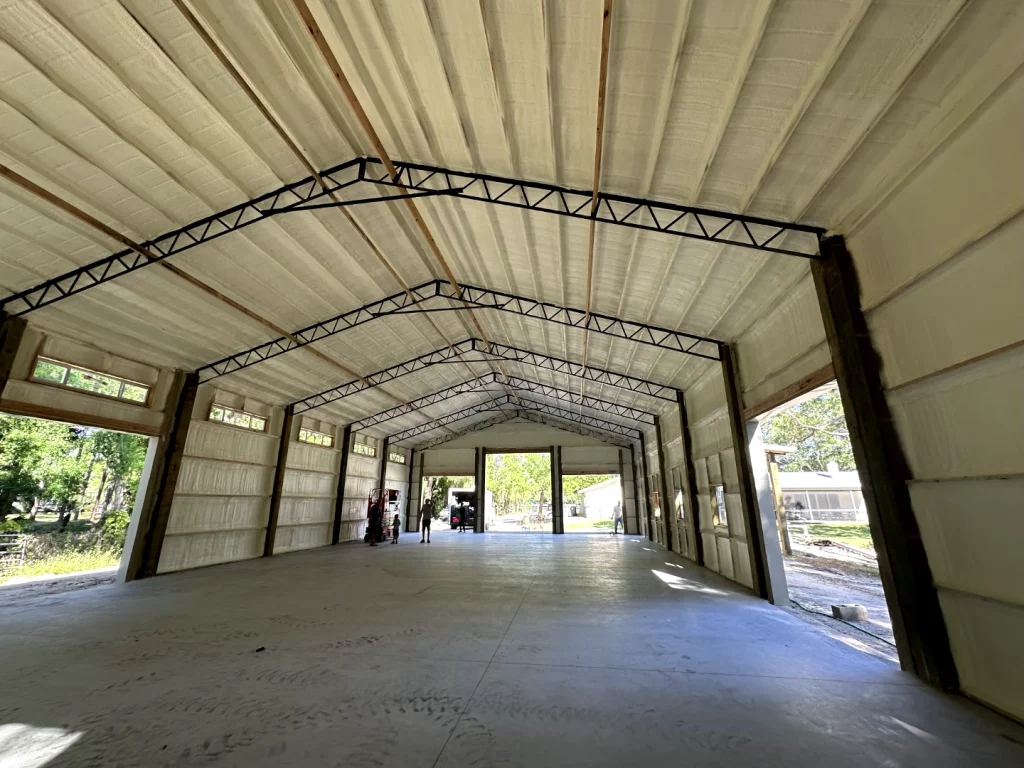
Several variables push your project to the lower or higher end of the price range:
Ideal candidates:
Not ideal for:
What happens to a pole barn budget when you skip insulation entirely? An uninsulated metal building in a climate that demands heating or cooling can waste 30 to 50 percent of the energy your HVAC system produces. Condensation forms on the interior metal surfaces, drips onto stored equipment and inventory, rusts fasteners, rots wood framing, and creates mold conditions that can damage anything stored inside. Over a few years, the accumulated repair and energy waste costs typically exceed what proper insulation would have cost from the start. The material cost of insulation is a one-time expense. The cost of not insulating compounds every month.
ALL IN OVERHALL provides pole barn insulation services across our service area, with expertise in closed-cell spray foam, open-cell spray foam, and retrofit insulation projects for both new construction and existing buildings. Our team understands the specific demands of post-frame construction and will recommend the right insulation type and R-value for your climate zone, building use, and budget.
Call us at (561) 406-3835 or email [email protected] to discuss your pole barn insulation project. We work with properties ranging from 400 sq ft to 4,000+ sq ft, and we will walk you through exactly what your building needs, no guesswork involved.
Fiberglass batts are DIY-friendly for simple wall cavities, but spray foam requires professional equipment and training. Improper installation of any insulation type leads to air gaps, condensation issues, and reduced thermal performance that costs more in the long run.
Spray foam does have an odor during and immediately after installation, which dissipates within 24 to 72 hours with proper ventilation. This is one of the most common questions homeowners ask before committing to a spray foam project.
Most pole barn insulation projects take one to three days, depending on building size, insulation type, and whether old insulation needs to be removed first. Your contractor will provide a timeline during the consultation.
In most climates, yes. Closed-cell spray foam at sufficient thickness acts as a Class II vapor retarder on its own. With open-cell foam or fiberglass, you need a separate vapor barrier to prevent condensation on metal surfaces.
The federal Energy-Efficient Home Improvement Credit covers insulation upgrades that meet IECC requirements, but eligibility depends on the specific materials and whether the building qualifies as a primary residence. Consult your accountant for guidance on your specific situation.