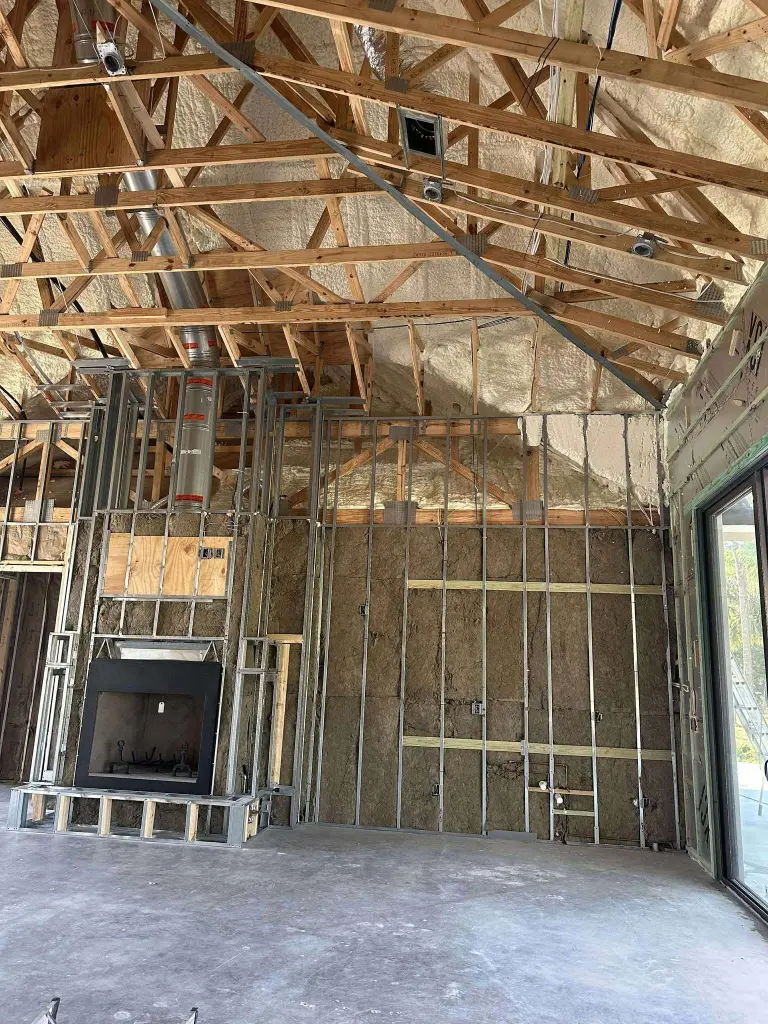
Why Does Old Insulation in Jupiter, FL Stop Protecting Your Home Effectively Over Time?
Old insulation in Jupiter, FL stops protecting your home because South Florida’s tropical climate slowly breaks the material down from…


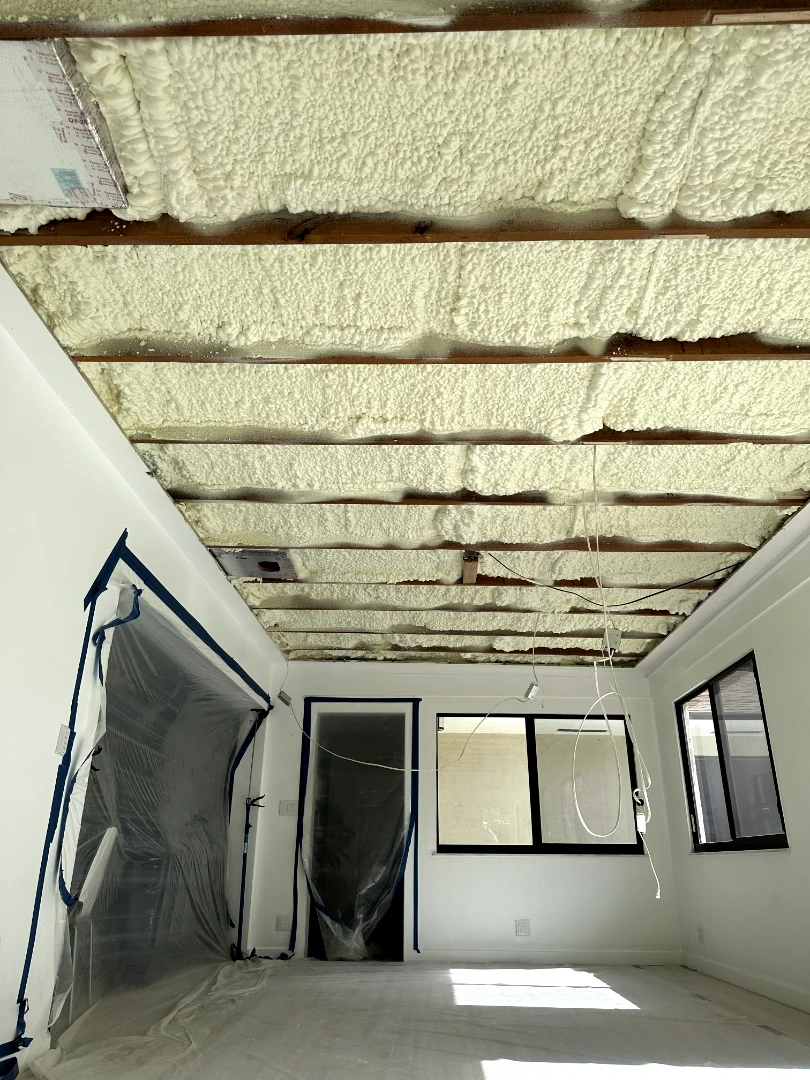
Open-cell spray foam insulation can meaningfully reduce utility bills for homeowners in Juno Beach by sealing air leaks that drive up cooling costs in our humid subtropical climate. However, the exact savings depend on the condition of your existing insulation, the size and layout of your home, and whether your HVAC ductwork runs through the attic. Homes with significant air leakage and ductwork in unconditioned attic space tend to see the most dramatic improvement, while newer or tighter homes may experience more modest reductions. One reason for these performance gains is that open-cell spray foam adheres to most surfaces, creating a continuous air seal around framing members, wiring, and other irregular building components. The two main benefits driving savings are superior air sealing, which eliminates drafts and uncontrolled air movement, and moving the building’s thermal boundary to the roofline, so that ductwork and mechanical systems operate inside conditioned space rather than fighting extreme attic heat.
Juno Beach sits along Florida’s Atlantic coast in Palm Beach County, which the Climate of Florida reference classifies as a tropical climate zone. Summer average highs in South Florida hover around 90 degrees Fahrenheit with dew points that make the heat index feel considerably hotter. The rainy season runs from May through October, and Florida’s climate brings daily thunderstorms, persistent humidity, and virtually no break from air conditioning demand for eight to nine months of the year.
What makes insulation performance particularly important in Juno Beach is the combination of heat and humidity. Most homes in the area were built with vented attics and fiberglass or blown-in insulation on the attic floor. During summer, attic temperatures in vented Florida attics can reach 150 degrees or more. Understanding open-cell spray foam costs in Jupiter, FL helps homeowners evaluate whether upgrading to a high-performance insulation system is a worthwhile long-term investment. When HVAC ductwork runs through that space, especially older leaky ductwork, a substantial portion of the cooled air your system produces never reaches your living spaces. According to the Building Science Corporation, ductwork and air handlers in vented attics “typically leak, leading to significant negative pressures in buildings” and major energy penalties. By spraying open-cell foam against the underside of the roof deck, all of that ductwork and equipment moves inside the conditioned envelope where it belongs.
Open-cell spray foam insulation works differently than traditional insulation materials. When sprayed, it expands to fill cavities, cracks, and penetrations, creating both a thermal barrier and an air seal in a single application. The U.S. Department of Energy’s Building America program notes that “spray polyurethane foams have advantages over alternative insulation methods because they provide air sealing in complex assemblies, particularly roofs.”
Two primary mechanisms drive utility bill reductions:
Air sealing the building envelope. Open-cell foam expands into every gap around framing, electrical penetrations, plumbing runs, and light fixtures. This eliminates the uncontrolled air movement that forces your air conditioner to run longer cycles to maintain set temperatures. In a coastal home where wind-driven moisture is a constant pressure, sealing these gaps has a direct and measurable effect on cooling efficiency.
Moving ductwork inside the thermal boundary. This is where the biggest savings appear in Juno Beach homes. When spray foam is applied to the underside of the roof sheathing, the attic becomes part of the conditioned space. Ductwork that was previously sitting in 140-plus degree heat now operates in a space that stays close to the temperature of your living areas. The Building Science Corporation’s research on conditioned attics confirms that conditioned unvented attics “can be made significantly more airtight much easier” than vented attics and that moving ducts inside the envelope makes “the building much more energy efficient.”
Both open-cell and closed-cell spray foam are available, and the right choice depends on your goals, your budget, and where the insulation will be installed.
| Feature | Open-Cell Spray Foam | Closed-Cell Spray Foam |
|---|---|---|
| R-Value Per Inch | Approximately R-3.6 | Approximately R-6.5 to R-7 |
| Vapor Permeability | Vapor permeable, allows moisture to pass through | Vapor impermeable, acts as a vapor barrier |
| Best Applications | Wall cavities, attics, floor systems, large open areas | Crawl spaces, exterior walls, flood-prone areas |
| Air Sealing | Excellent, expands to fill gaps | Excellent, also provides structural rigidity |
| Typical Project Range | $1,500 to $15,000 | $2,000 to $25,000 |
For Juno Beach attics, open-cell spray foam is often the practical choice because it fills large rafter bays at a lower material cost than closed-cell. However, building science research presented at the 2013 Conference on Thermal Performance of Exterior Envelopes has shown that open-cell foam can contribute to moisture accumulation on roof sheathing in some conditions. The risk in hot humid climates like ours is manageable when the attic is properly conditioned, but it is something homeowners should understand before making a decision.
Juno Beach’s humidity is not just an outdoor comfort issue. It is a building science concern that directly affects how insulation performs. Open-cell spray foam is vapor permeable, meaning moisture can diffuse through it. In a sealed attic where the foam is sprayed directly against the roof sheathing, moisture from interior air can reach the underside of the roof deck. If that moisture is not managed, it can lead to elevated moisture content in the wood sheathing over time. Working with a spray foam insulation contractor in Juno Beach, FL helps ensure the right insulation system is selected and installed to effectively manage heat and moisture.
The Green Building Advisor discussion on Florida attic conversions captures the real-world challenges homeowners face in our climate. Building science experts in that discussion recommend several strategies to keep sealed attics safe in humid climates:
When these precautions are followed, open-cell spray foam performs well in Florida attics and delivers significant energy savings without moisture risk.
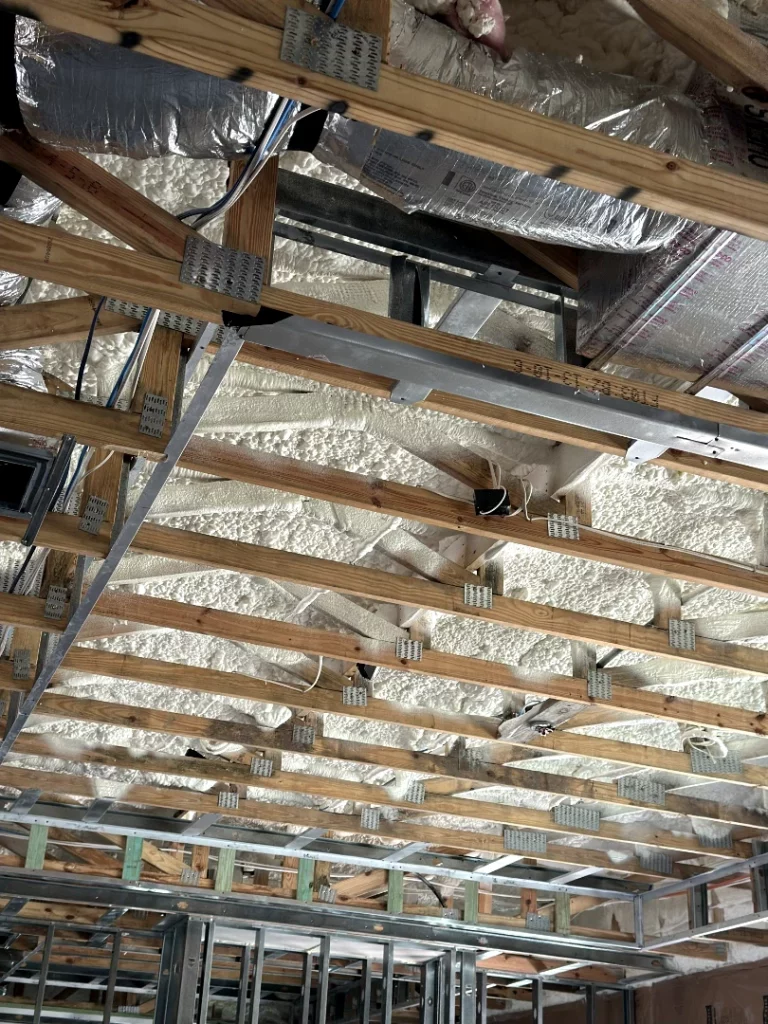
The impact on your utility bill will vary based on several home-specific factors:
| Home Type | Recommended Approach | Key Considerations |
|---|---|---|
| Older home (pre-2000) with vented attic and ductwork in attic | Open-cell spray foam on roof deck with HVAC supply to attic | Largest savings potential due to leaky ducts and poor existing insulation |
| Newer home (post-2000) with decent insulation | Open-cell foam in walls and attic, combined with air sealing inspection | Moderate savings, focus on sealing remaining gaps |
| Home with vaulted or cathedral ceilings | Open-cell spray foam between rafters, monitor humidity | Eliminates the uninsulated roof plane that drives high cooling costs |
| Home with existing moisture issues in attic | Address leaks and ventilation first, then consider closed-cell or open-cell with conditioning | Never spray foam over wet or damaged materials |
Choosing the right installer matters as much as choosing the right product. Look for these indicators:
ALL IN OVERHALL provides expert spray foam insulation services for homeowners throughout the Juno Beach area, including zip codes 33478 and 33458. Our team evaluates your home’s specific needs, recommends the right insulation strategy for Florida’s demanding climate, and installs every project to manufacturer specifications. Whether you need open-cell spray foam for an attic encapsulation, wall cavity insulation, or a complete building envelope upgrade, we deliver results that lower your utility bills and improve your home’s comfort year-round.
Request a Quote (561) 406-3835 | Schedule an Insulation Assessment
Call us at (561) 406-3835 or email [email protected] to discuss your project. We respond quickly and provide honest, detailed recommendations based on what your home actually needs.
Savings depend heavily on your home’s current condition. Homes with significant air leaks and ductwork in unvented attics typically see the largest reductions, sometimes 20 to 30 percent on cooling costs, while tighter homes with existing insulation may see more modest improvements of 10 to 15 percent.
Yes, when installed correctly with proper attic conditioning. The key is ensuring the attic space receives some HVAC supply air or dehumidification so moisture levels stay controlled. Properly installed open-cell foam in conditioned attics has been used successfully in Florida for over two decades.
Open-cell spray foam provides both insulation and air sealing in a single application, whereas cellulose and fiberglass only provide thermal resistance and rely on separate air sealing work. In Juno Beach’s climate, the air sealing advantage of spray foam makes a meaningful difference in cooling performance.
When properly installed, open-cell spray foam insulation lasts the life of the building. It does not settle, sag, or degrade over time like fiberglass batts, and it maintains its air sealing properties indefinitely as long as it is not physically damaged.
Open-cell spray foam is commonly installed in both new construction and retrofit applications. For existing homes, our team removes old insulation, prepares the surfaces, and sprays the foam directly against the roof sheathing or wall cavities. The process typically takes one to two days depending on the size of the project.