What Factors Determine Attic Insulation Installation Costs?
The cost of attic insulation installation depends on five main factors: attic size, insulation material, the R-value your climate requires,…

Professional insulation replacement in Jupiter, FL pays for itself through lower cooling bills, reduced HVAC runtime, and protection against moisture damage, and it starts working from the first month your system runs less. Federal data shows that air sealing combined with insulation can deliver up to a 10% savings on annual energy bills, and in a cooling-dominated climate like ours, attics are where the biggest wins happen. Payback depends on three factors: the condition of your current insulation, the material you choose, and how hard your air conditioner works through Palm Beach County’s long cooling season. Below, we break down the actual payback math, compare material options with real project pricing, and show you how to shorten the return window.
In our climate, the attic is the single largest source of unwanted heat gain. Building insulation research shows that around 40% of a building’s energy consumption goes to heating and cooling, and in hot climates solar radiation is the dominant heat source, radiating down through the roof deck all day. ENERGY STAR places South Florida in zone 1, the hottest zone on its map, and recommends R30 in an uninsulated attic or R25 added over a thin existing layer. When old insulation has settled to a fraction of that, your AC pays the difference every afternoon.
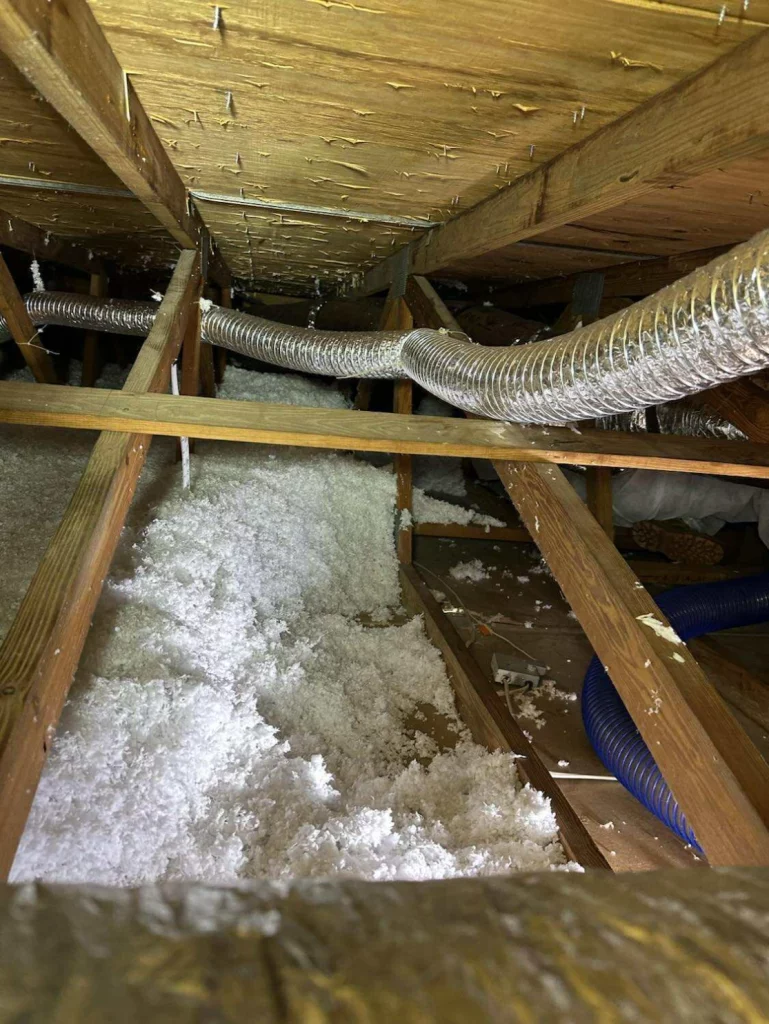
Humidity makes the problem worse. Studies cited in building science literature show that high humidity measurably degrades insulation’s thermal conductivity, and when water gets trapped in the material, insulation loses performance and can become a thermal bridge. Compacted, damp, or contaminated insulation does not just underperform; a guide to insulation replacement can help homeowners understand when replacement may be necessary and what the process involves. Replacing it resets your thermal envelope and gives us access to seal the attic floor properly, which is where much of the savings actually comes from.
The calculation is simple: divide the project cost by annual energy savings. Here is what goes into each side.
Project cost: Our typical removal-and-replacement project averages $3,000, with a range of $1,500 to $7,500 depending on attic size, accessibility, and how much old material we haul out. Larger square footage and difficult access push toward the high end.
Annual savings: ENERGY STAR’s air sealing and insulation guidance supports savings of up to 10% on total annual energy bills. Homes that start with degraded or very thin insulation in a heavy cooling climate tend to land at the top of that range.
Here is what payback looks like at different household energy spending levels, using our $3,000 average project:
| Monthly Energy Spend | Annual Bill | Savings at 10% | Payback Period |
|---|---|---|---|
| $150 | $1,800 | $180/year | ~17 years |
| $250 | $3,000 | $300/year | ~10 years |
| $350 | $4,200 | $420/year | ~7 years |
| $450 | $5,400 | $540/year | ~5.5 years |
At Florida’s average residential rate of 15.10 cents per kWh, homes running air conditioning eight to nine months a year commonly fall in the middle and upper rows of that table. And energy bills only tell part of the story. Shorter AC runtimes mean fewer compressor hours, fewer repair calls, and delayed equipment replacement. Steadier indoor temperatures and better humidity control add daily comfort value that never shows up on a utility statement. For many homeowners, those returns effectively cut the true payback period well below the energy-only math.
ENERGY STAR notes that contractors can simply add new insulation on top of existing material, unless the old insulation is wet, moldy, smelly, or contains animal waste. That distinction matters enormously in Jupiter.
Full replacement also lets us air-seal every penetration in the attic floor, top plates, wire chases, and plumbing vents, before new material goes down. ENERGY STAR stresses “seal before insulating” because insulation slows heat transfer but does almost nothing to stop air leakage. Skipping that step is the most common reason replacement projects underperform.
Choosing the right material is the other half of the payback equation. Here is our current project pricing:
| Service | Typical Range | Average Project | Best For |
|---|---|---|---|
| Insulation removal and replacement | $1,500 to $7,500 | $3,000 | Restoring degraded attics |
| Attic insulation (blown-in) | $1,500 to $15,000 | $5,000 | Fast, cost-effective attic floors |
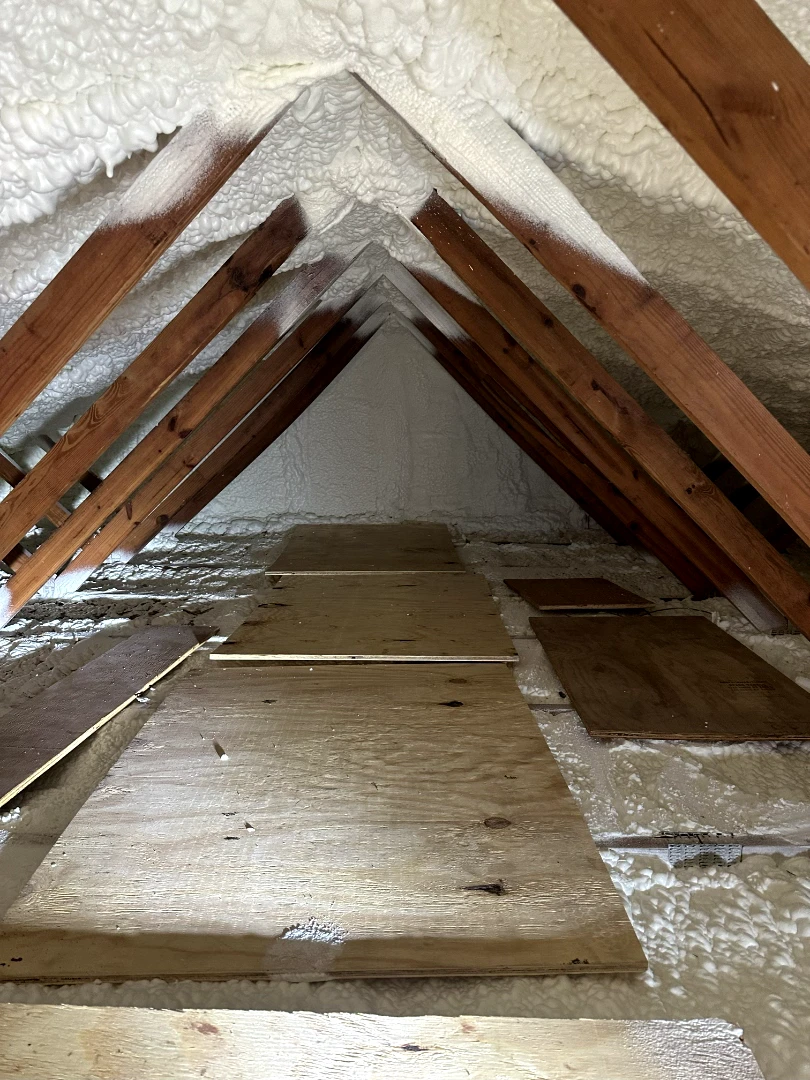
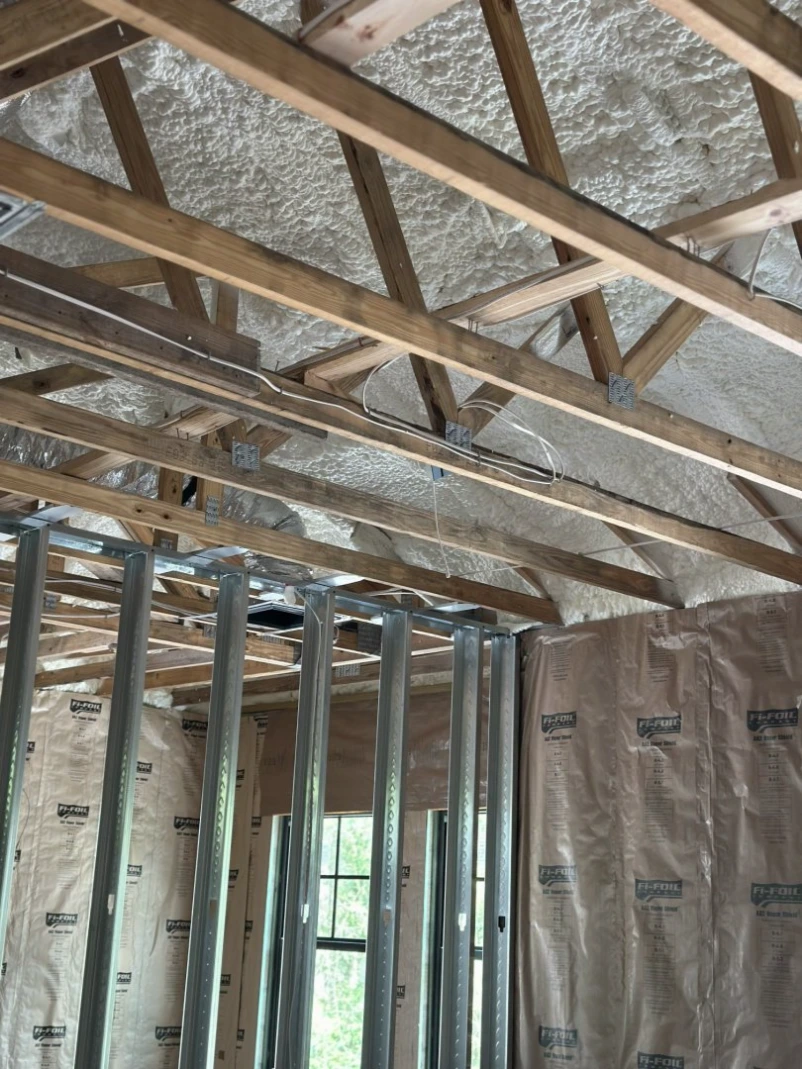
| Open-cell spray foam | $1,500 to $15,000 | $5,000 | Air sealing + sound dampening |
| Closed-cell spray foam | $2,000 to $25,000 | $8,000 | Maximum R-value per inch, moisture resistance |
| Pole barn insulation | $2,000 to $20,000 | $10,000 | Agricultural and workshop buildings |
Open-cell foam expands to fill gaps and seals air leaks while dampening noise, which suits most vented attics. Closed cell is denser, delivers higher R-value per inch, and resists moisture, making it the choice for roofs, rim joists, and metal buildings. Check what local homeowners say about their experiences with our insulation work. Homeowners frequently ask us about smell or off-gassing, and the answer is reassuring: quality low-VOC products cure within hours and are odor-neutral once fully cured, and our crew ventilates the space during installation.
| Your Situation | Recommended Approach | Why It Pays Off |
|---|---|---|
| Retrofit home with original insulation | Removal and replacement with blown-in material | Eliminates contamination and resets R-value |
| New construction or major renovation | Open-cell or closed-cell spray foam | Air sealing and insulation in one step |
| Home with metal outbuildings or barns | Pole barn insulation | Cuts cooling costs on hard-to-condition spaces |
| Commercial property owner | Mixed blown-in and foam strategy | Tailored to building use and load |
Every attic is different, and the fastest way to know your real payback period is to have us measure what you have now. Our team at ALL IN OVERHALL inspects, removes, and replaces insulation across Jupiter, FL, and we will show you exactly where your thermal envelope is leaking money before we quote a dollar. Call us at (561) 406-3835 or email [email protected], and start turning your attic from your home’s biggest liability into its best-performing asset.
Quality low-VOC products cure within hours and are odor-neutral once cured. We ventilate during installation and walk you through what to expect before the crew arrives.
Most residential attic replacements are completed in a single day. Larger spray foam or pole barn projects typically run two to three days depending on square footage and access.
Open cell suits most vented attics, sealing air leaks at a lower average project cost of $5,000. Closed-cell delivers higher R-value per inch and moisture resistance, averaging $8,000, and fits roofs and metal structures.
Replace it if the material is wet, moldy, smelly, or contaminated by pests, per ENERGY STAR guidance. If it is clean and dry, topping off is usually sufficient.
Savings reach up to 10% of annual energy bills, so a $300 monthly bill could recover roughly $300 per year. Heavy AC users with degraded starting insulation see the fastest payback.
