What Factors Determine Attic Insulation Installation Costs?
The cost of attic insulation installation depends on five main factors: attic size, insulation material, the R-value your climate requires,…

Yes, professional insulation removal can save you money on energy bills in Port St. Lucie, FL, but the savings depend on what is currently in your attic and what replaces it. If your home has old, compressed, moisture-damaged, or insufficient insulation, removing it before installing new material creates the conditions for measurable efficiency gains. The EPA estimates that homeowners who seal air leaks and add proper insulation can save an average of 15% on heating and cooling costs nationally, with savings varying by climate zone. For Port St. Lucie, which sits in Climate Zone 2 under the Florida Building Code, the estimated heating and cooling savings reach approximately 9% when insulation is brought up to modern standards. The path to those savings starts with removing what is no longer working and understanding the cost of insulation removal before the project begins.
Building insulation works by resisting the flow of heat through your home’s envelope. Over time, insulation degrades and loses its ability to perform. According to the U.S. Department of Energy’s Insulation Fact Sheet, heating and cooling account for 50 to 70% of the energy used in the average American home, and inadequate insulation is one of the leading causes of energy waste. In Port St. Lucie’s hot, humid climate, your air conditioning system works overtime during most of the year. If your attic insulation has settled, compressed, absorbed moisture, or been disturbed by pests, it is not providing the R-value resistance it was originally rated for.
The problem compounds because many homes in Port St. Lucie were built decades ago with insulation standards that would not pass today’s code. As ENERGY STAR notes, 9 out of 10 homes in the U.S. are under-insulated. Adding new insulation on top of damaged or inadequate old insulation is rarely the right approach. Compressed insulation below loses its rated R-value, and moisture trapped in older material continues to degrade the new layer above it. Removal allows the job to be done correctly from the substrate up.
Port St. Lucie falls within Florida’s Climate Zone 2, which requires stricter insulation performance than the southernmost counties in Zone 1. According to the University of Florida’s My Florida Home Energy program, the Florida Building Code mandates a minimum R-38 attic insulation for Climate Zone 2 counties, while Zone 1 counties require only R-30. Current best building practices in Florida actually recommend R-30 to R-38 for attics, meaning many older homes in Port St. Lucie were built with significantly less.
The same source confirms that attic insulation is the single most important and cost-effective location for insulation in a Florida home. More heat per square foot travels through your ceiling than any other building surface. In a hot climate where heat flows from the warm exterior to the air-conditioned interior, your attic is the primary battleground. If your existing insulation was installed at R-19 or less, which was common in construction from the 1970s through the 1990s, your home is operating well below what current code demands. Understanding the ROI of insulation removal can help homeowners decide whether upgrading outdated materials is financially worthwhile.
The EPA’s Methodology for Estimated Energy Savings provides clear data on what homeowners can expect by upgrading insulation to meet the 2012 International Energy Conservation Code requirements. For homes in Climate Zone 2, which covers Port St. Lucie, the estimated savings break down as follows:
| Location | Climate Zone | Estimated Heating and Cooling Savings |
|---|---|---|
| Port St. Lucie (Climate Zone 2) | CZ 2 | 9% |
| South Florida (Climate Zone 1) | CZ 1 | 7% |
| National Average | All zones | 15% |
These savings assume both air sealing and insulation upgrades. In Port St. Lucie, where air conditioning drives the majority of annual energy costs, a 9% reduction in cooling expenses can translate to meaningful dollar savings over time. The payback period depends on your current energy consumption, the condition of your existing insulation, and the type of replacement material installed. A qualified spray foam contractor in Port St. Lucie, FL can evaluate your home and recommend the most effective insulation solution for long-term energy savings.
Not every under-insulated home requires full removal. In some cases, adding new insulation over existing material is appropriate. But removal becomes necessary when one or more of the following conditions are present:
Our team assesses each attic individually during an on-site inspection to determine whether removal is necessary or whether additional insulation alone will solve the problem.
A professional insulation removal and replacement project follows a structured process designed to protect your home and maximize efficiency:
Inspection and assessment: Our team evaluates the existing insulation condition, identifies air leaks, and determines the best replacement material for your home’s needs.
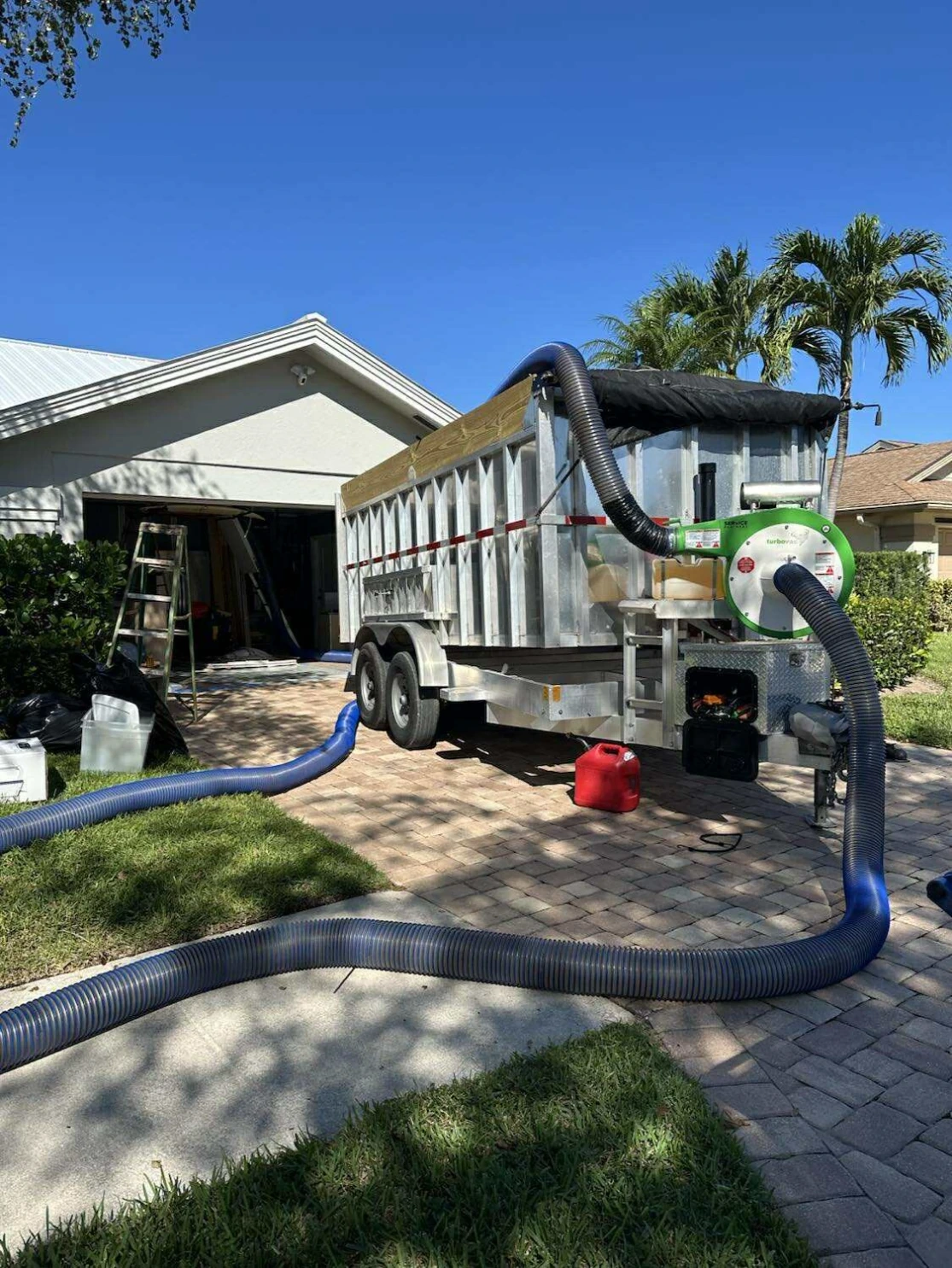
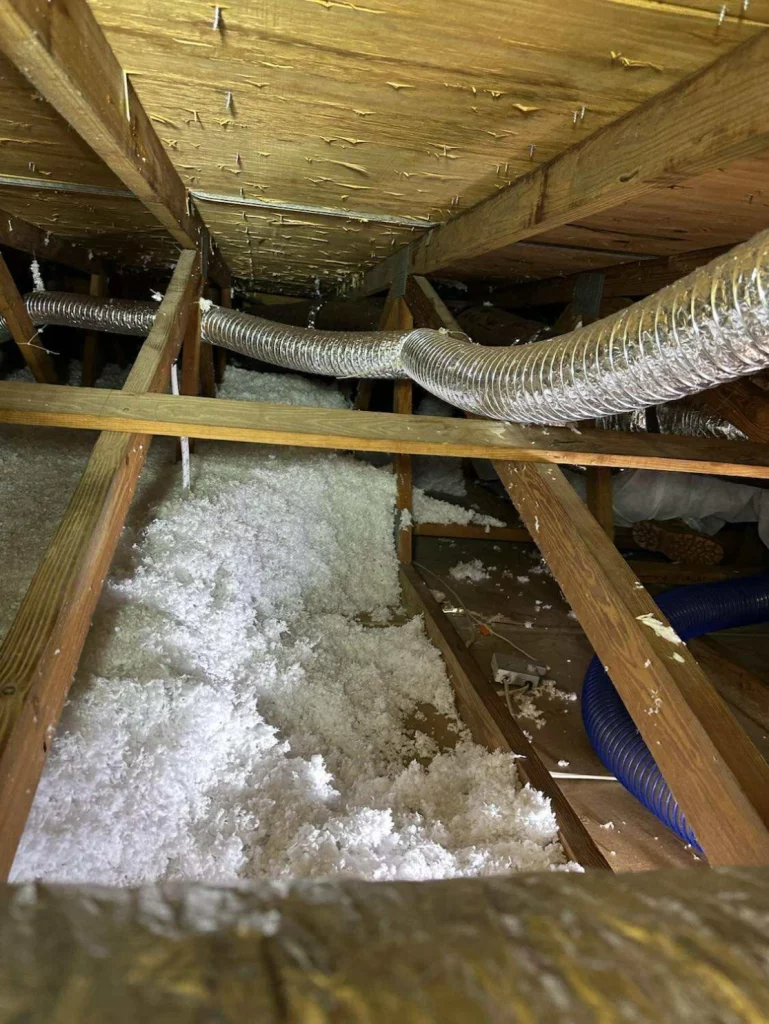
Containment and removal: Damaged or contaminated insulation is carefully extracted using specialized vacuum equipment. This step prevents debris from entering your living space and exposes the ceiling plane for air sealing work.
Air sealing: Gaps around recessed lights, plumbing penetrations, electrical runs, and ductwork are sealed. The DOE fact sheet emphasizes that air sealing must happen before new insulation is installed, because insulation hides these leaks and makes them harder to address later.
New insulation installation: Fresh insulation is installed to meet or exceed the R-38 requirement for Climate Zone 2, using materials suited to the hot, humid conditions in Port St. Lucie.
The federal government currently offers tax incentives that directly reduce the cost of insulation upgrades. According to ENERGY STAR’s Federal Tax Credits page, homeowners can claim 30% of insulation material costs up to $1,200 per tax year through the Energy Efficient Home Improvement Credit. Combined with a home energy audit credit of up to $150, the total available credit for insulation-related work reaches $1,200.
This credit applies to existing homes and principal residences. The insulation must meet or exceed the International Energy Conservation Code requirements, which aligns with the R-38 standard already required in Port St. Lucie’s Climate Zone 2. Our team helps you select qualifying materials and provides the documentation you need to claim the credit.
| Approach | Best For | Key Considerations |
|---|---|---|
| Full removal and replacement | Damaged, contaminated, or severely degraded insulation | Higher upfront cost, but delivers maximum efficiency and clean substrate for air sealing |
| Overlay new insulation | Existing insulation in good condition but below code R-value | Lower cost, but cannot address hidden air leaks or moisture issues |
| Air sealing only | Homes with adequate insulation but high air leakage | Targets the sealing work, but does not improve thermal resistance |
Choosing the right team for insulation removal and replacement matters as much as the material itself. Look for contractors who perform a thorough attic inspection before quoting a price, explain why removal is or is not necessary for your specific situation, include air sealing as part of the scope rather than treating it as an optional add-on, use materials that meet or exceed Climate Zone 2 code requirements, and provide clear documentation for federal tax credit eligibility. Communication quality, transparency about process, and attention to building science principles are the markers of a contractor who will deliver lasting results.
All In OverHall provides professional insulation removal and replacement services for homeowners throughout Port St. Lucie and the surrounding area. Our team evaluates your existing insulation, identifies air sealing opportunities, and recommends the right approach to bring your home up to current energy efficiency standards. With an average project investment of $3,000 for insulation removal and replacement, we help you make informed decisions that balance upfront cost with long-term energy savings. Contact us at [email protected] or call (561) 406-3835 to discuss your project. Let us show you what proper insulation can do for your comfort and your monthly bills.
Request a Quote | Schedule an Attic Inspection
If your existing insulation shows signs of moisture damage, pest contamination, heavy compression, or mold, removal is necessary. Adding new insulation over damaged material traps problems and reduces the effectiveness of the new layer.
Most residential attic projects in the Port St. Lucie area are completed in one to two days, depending on the square footage and the complexity of air sealing work required.
Professional removal uses containment systems and high-powered vacuum equipment that keeps debris confined to the attic space. Our team takes precautions to protect your living areas throughout the process.
The right choice depends on your attic configuration, budget, and access. Spray foam offers strong air sealing properties, while blown-in fiberglass or cellulose provides reliable R-value at a lower cost. Our team recommends the best option for your specific situation.
The federal tax credit applies to the cost of new insulation materials that meet IECC requirements, not the removal process itself. Our team provides documentation to help you claim up to 30% of qualifying material costs, up to $1,200.