What Factors Determine Attic Insulation Installation Costs?
The cost of attic insulation installation depends on five main factors: attic size, insulation material, the R-value your climate requires,…

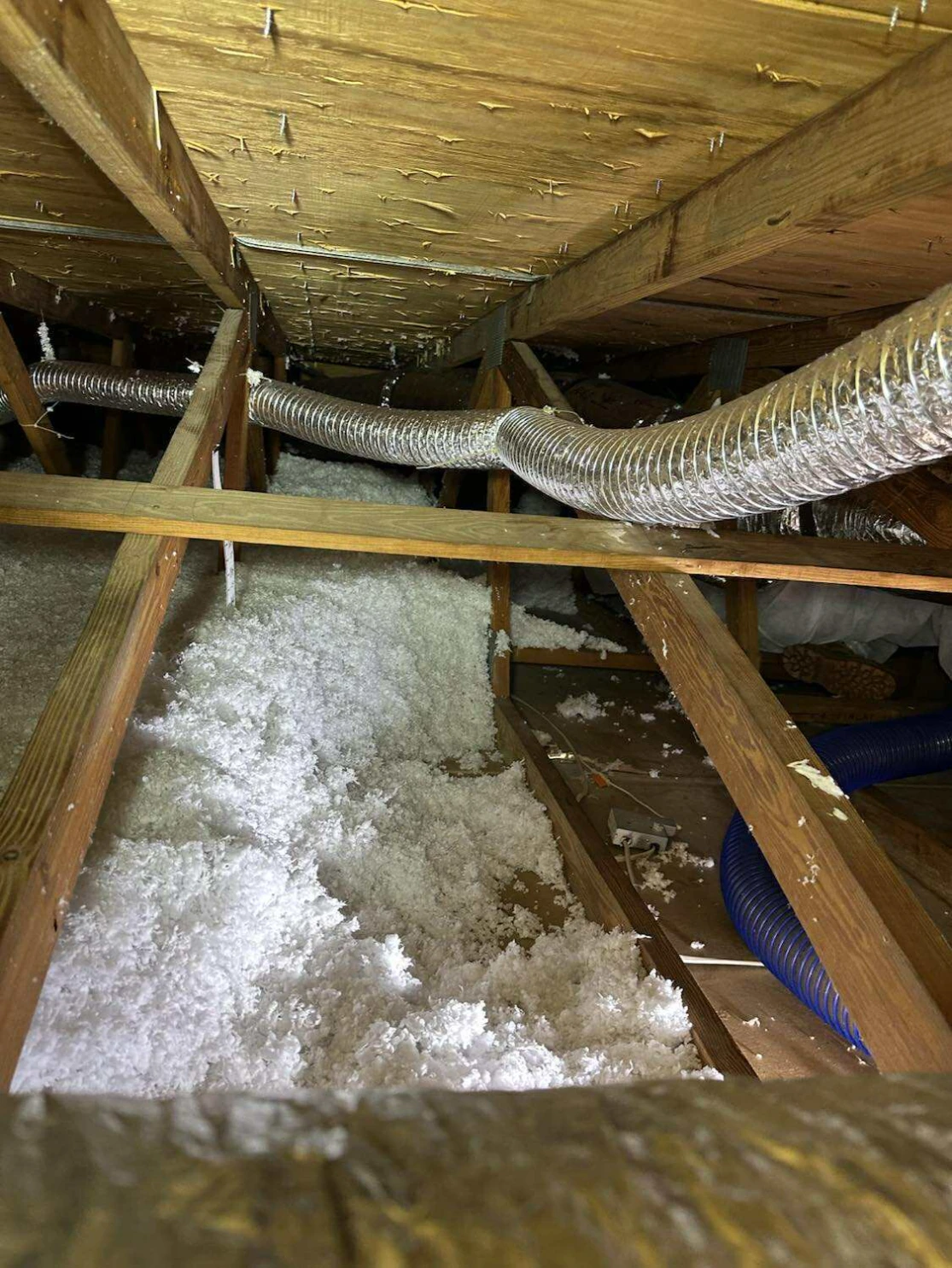
Removing old, degraded insulation before installing new material is one of the most overlooked steps in improving home energy performance. In Jupiter, FL, where Palm Beach County’s heat and humidity put constant stress on a building envelope, layering new insulation over damaged or compressed material hides problems rather than fixing them. Old insulation that has absorbed moisture, been contaminated by pests, or simply settled and lost its R-value creates hidden barriers to efficiency that no amount of new material on top can overcome. The result is higher utility bills, uneven indoor temperatures, and potential health risks from mold and allergens trapped in the existing material. For homeowners in Jupiter considering an insulation upgrade, the decision to remove old insulation first determines whether that investment delivers real, measurable returns or simply masks an underlying problem. Understanding the cost of insulation removal in Jupiter, FL, can help homeowners plan for a more effective and lasting upgrade.
Jupiter experiences a tropical monsoon climate with long, hot summers, persistent high humidity, and heavy rainfall from June through September. These conditions create an environment that is particularly hard on insulation, especially in attics where temperatures can reach 140 degrees or higher during peak summer months. The humidity alone introduces moisture into attic spaces through daily temperature fluctuations and condensation cycles. Over the years, this exposure causes insulation materials to degrade in several ways:
The EPA notes that indoor mold growth should be avoided entirely and that molds produce allergens, irritants, and, in some cases, toxic substances. In Jupiter’s humid environment, old insulation that has been exposed to moisture events, even minor ones, is a likely candidate for hidden mold growth that new insulation layered on top would simply trap in place.
Many homeowners assume that adding new insulation on top of existing material is an acceptable shortcut. This approach has several fundamental problems:
Reduced total R-value: Compressed insulation provides far less thermal resistance than its rated value. According to the InterNACHI guide on insulation R-value, stuffing batt insulation into a smaller cavity than intended actually lowers its effectiveness. The same principle applies to old, settled material. Adding R-30 of new material over R-5 of effective old material does not deliver R-35 in practice because the underlying layer creates thermal bridging, gaps, and air channels.
Air sealing is impossible: One of the most important steps in an insulation upgrade is sealing air leaks around penetrations and top plates. This reduction in air infiltration is a key part of the ENERGY STAR methodology for estimating energy savings, which is only achievable when the attic floor is exposed during the process.
Hidden problems multiply: Water damage, pest contamination, and mold trapped under new insulation continue to worsen without detection. Over time, these hidden conditions can compromise structural wood members and ceiling drywall, leading to far more expensive repairs.
Code compliance issues: Current Florida Building Code requirements, based on the IECC, specify minimum R-values for new construction and retrofits. When old insulation remains, and new material is added on top without verification of the underlying condition, there is no reliable way to confirm that the assembly meets code or performs as intended. Addressing these issues through insulation removal for lower energy bills helps ensure the new system performs efficiently and delivers lasting savings.
Not every insulation retrofit requires full removal, but several conditions make it necessary:
In each of these scenarios, leaving old insulation in place would compromise the performance, safety, and health of the home’s living environment.
The financial return on insulation removal and replacement depends on the condition of the existing material and the quality of the new installation. ENERGY STAR data shows that in Climate Zone 2, which includes Jupiter and all of Palm Beach County, homeowners can expect meaningful savings on heating and cooling costs from proper air sealing and insulation. While that percentage is lower than in northern climates due to milder winters, the cooling-dominant load in Jupiter means the dollar savings on summer utility bills are substantial.
| Old Insulation Condition | Action Recommended | Key Benefit | Performance Impact |
|---|---|---|---|
| Dry, intact, meets code | Add new on top (minor top-up) | Lower cost approach | Moderate improvement |
| Settled, below R-30 | Full removal and replacement | Proper R-value achieved | Significant improvement |
| Moisture-damaged or moldy | Full removal + remediation | Health and safety restored | Complete turnaround |
| Pest-contaminated | Full removal and sanitation | Air quality restored | Major improvement |
| Fire or smoke-damaged | Full removal by professionals | Safety compliance | Required for occupancy |
Homes built before 1990: These homes often contain older fiberglass batt insulation that has settled well below code requirements. In many cases, the insulation was installed without vapor barriers or proper air sealing. Full removal and replacement with modern material, combined with air sealing, delivers the highest ROI for this category.
Homes built from 1990 to 2010: These may have blown-in insulation that has compressed over time. If the material is dry and uncontaminated but below current R-value recommendations, removal and replacement with spray foam or high-density blown material provides measurable energy savings.
Newer homes (post-2010): These homes generally have better baseline insulation but may still benefit from removal if the original installation was poorly done, if ventilation issues caused moisture damage, or if the home experienced a roof leak that saturated the insulation.
ALL IN OVERHALL is the local insulation contractor serving Jupiter and Palm Beach County that homeowners trust to evaluate, remove, and replace old insulation with precision and care. Our team assesses every attic individually, identifying moisture damage, pest contamination, and code deficiencies before recommending a tailored solution. We handle insulation removal and replacement projects ranging from standard residential attics to complex retrofits, always with a focus on performance, health, and long-term value. Call us at (561) 406-3835 or email [email protected] to get started with an honest assessment and a plan built for your home.
Request a Quote | Schedule an Attic Assessment
Visible mold, pest droppings, water stains, compressed or flattened material, and musty odors are clear signs that removal is necessary. If you are unsure, a professional attic inspection can determine the condition and R-value of what is currently installed.
Only if the existing insulation is dry, undamaged, uncontaminated, and still provides a meaningful R-value. If any of those conditions are not met, layering new material on top will trap problems and reduce the effectiveness of your investment.
Most standard residential attic projects in Jupiter can be completed in a single day. Larger homes, difficult access areas, or projects requiring mold remediation may take longer, which our team communicates during the initial assessment.
Yes. Old insulation that has absorbed moisture, harbored mold, or been contaminated by pests releases airborne particles into the living space through gaps and air leaks. Removing it eliminates that source of indoor air pollution.
If the insulation damage was caused by a covered event such as a storm, roof leak, or pipe burst, your homeowner’s insurance may cover the removal and replacement. Our team can document the damage to support your claim.