What Factors Determine Attic Insulation Installation Costs?
The cost of attic insulation installation depends on five main factors: attic size, insulation material, the R-value your climate requires,…

The cost of attic insulation installation depends on five main factors: attic size, insulation material, the R-value your climate requires, attic accessibility, and whether you must remove old insulation first. A complete attic insulation guide can help homeowners understand these factors before comparing project costs. For homeowners in Jupiter and the surrounding Palm Beach County area, most attic insulation projects land between $1,500 and $15,000, with an average investment of about $5,000. Blown-in fiberglass or cellulose sits at the affordable end, open-cell spray foam fills the middle, and closed-cell spray foam commands the top of the range. Where you fall within that spread comes down to the details of your attic and your goals, and understanding those details is what lets you budget accurately, compare bids fairly, and avoid paying for scope you do not need. Below, we break down each factor, share real price ranges by project type, and show you how to evaluate any estimate with confidence.
Insulation projects are priced by the square foot, so size is the first number on any estimate. We handle jobs from 400 square feet on up, and most homes in our service area fall between 1,500 and 4,000 square feet. A larger attic requires more material, more setup, and more crew time, which is why square footage appears as a price driver on nearly every quote.
Material and product cost is the biggest factor affecting pricing on our projects. Each material solves a different problem, and each carries a different price tier:
| Material | Best For | Skill Level | Relative Cost |
|---|---|---|---|
| Blown-in loose fill (fiberglass or cellulose) | Unfinished attic floors, fast coverage | Professional blowing equipment | Lowest |
| Batt or blanket insulation | Accessible, open framing | Basic | Low to moderate |
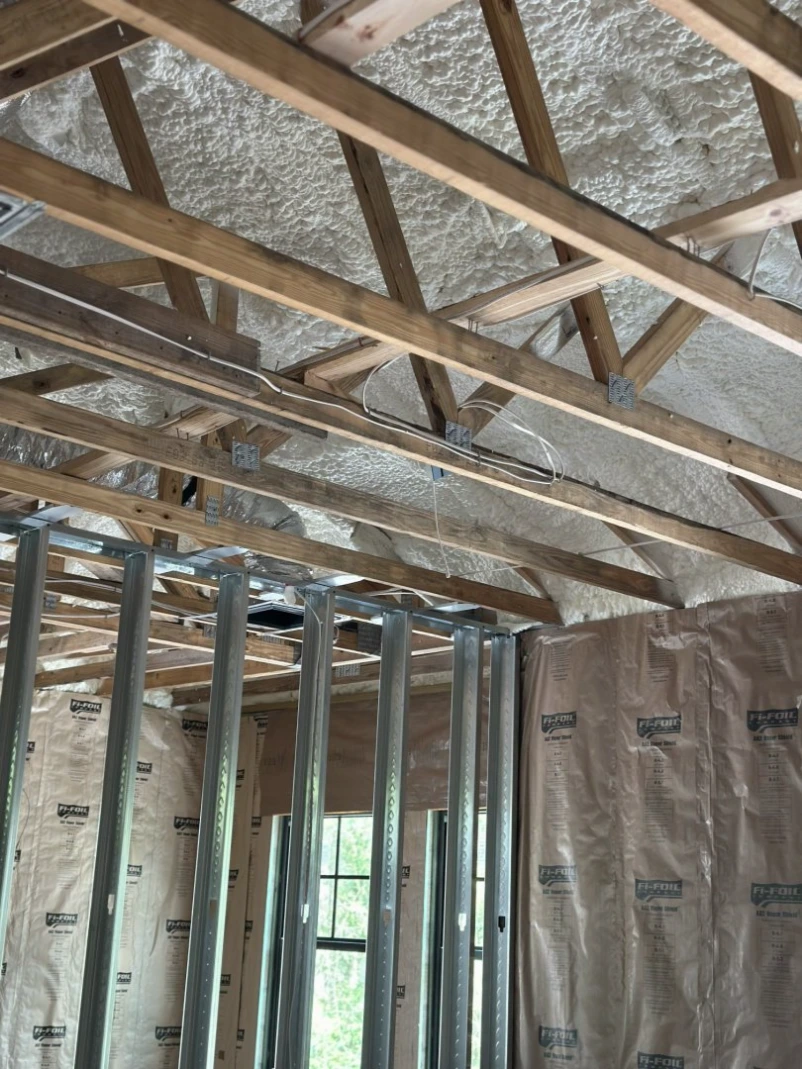
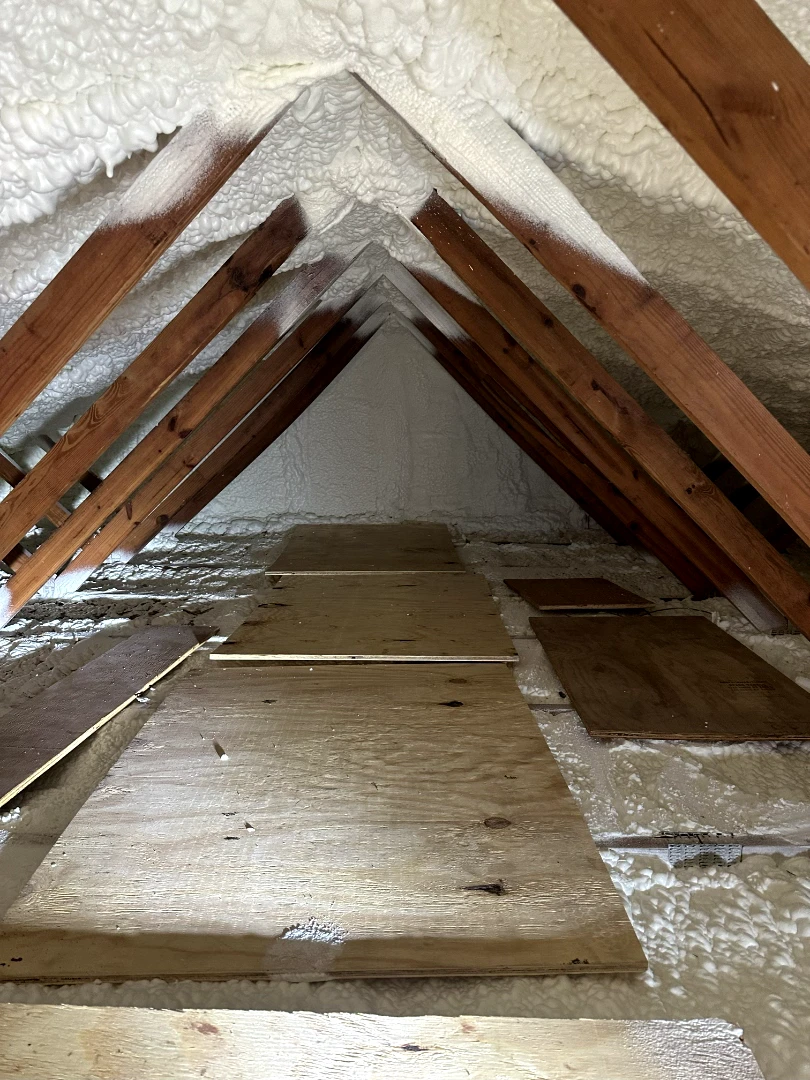
| Open cell spray foam | Attic decks, air sealing, sound dampening | Certified installer needed | Moderate |
| Closed cell spray foam | Moisture resistance, highest R-value per inch, rigidity | Certified installer needed | Highest |
Most professional attic floor jobs use blown-in loose fill because it installs quickly and evenly, and common loose-fill materials add roughly R-2.5 to R-3.7 per inch of depth, depending on whether you choose fiberglass, rock wool, or cellulose, according to the Insulation Institute’s attic insulation guide. Spray foam costs more but insulates and air-seals in a single step, which is why homeowners in our area frequently ask us to compare open-cell versus closed-cell before committing.
R-value measures resistance to heat flow, and the higher the number, the better the thermal performance. The right target depends entirely on where you live. Based on the 2021 International Energy Conservation Code, ENERGY STAR’s recommended attic R-values break down like this:
| Climate Zone | If Your Attic Is Uninsulated | If You Have 3 to 4 Inches Already |
|---|---|---|
| Zone 1 | R-30 | R-25 |
| Zone 2 | R-49 | R-38 |
| Zone 3 | R-49 | R-38 |
| Zones 4 through 8 | R-60 | R-49 |
Jupiter and Palm Beach County sit in the warmest Florida zones, where R-30 to R-49 is the realistic target. Reaching a higher R-value requires greater thickness, and greater thickness requires more material, so your climate-driven target directly shapes the final price. For context, ENERGY STAR notes most attics aim for about R-38, or 10 to 14 inches of insulation.
Access works both ways: straightforward access lowers pricing, while difficult access raises it. Crews move faster through pull-down stairs and open joist bays than through a hatch-only entry with two feet of clearance. Retrofits with vaulted ceilings or little to no attic access demand careful planning, specialized equipment, or spray foam applied from the roof deck. Accessibility also affects hidden problems. ENERGY STAR’s contractor guidance flags wet insulation, moldy rafters, vents exhausting into the attic, and older knob-and-tube wiring as issues that should be corrected professionally before any new insulation goes in, and resolving them adds cost.
Contrary to what many homeowners assume, existing insulation does not always need to come out. Unless it is wet, moldy, smelly, or contaminated with animal waste, new insulation can usually go right on top. When removal is necessary, it becomes its own project: insulation removal and replacement typically ranges from $1,500 to $7,500, averaging about $3,000, because it adds labor hours, containment, and disposal fees before a single inch of new insulation is installed.
A quality estimate includes preparation, not just material. Air sealing the attic floor before insulating ensures you get full performance from the product, and installing rafter vents (baffles) keeps soffit ventilation open as insulation depth builds. ENERGY STAR recommends confirming that any contractor agrees to “seal before insulating,” and if your attic houses fuel-burning equipment, combustion safety testing should follow any air sealing. These line items add modest cost upfront and prevent performance problems later.
Finally, market conditions matter. Material prices shift over time, and energy-code updates push recommended R-values upward, which changes how much product a job requires. Hiring a licensed, insured, and certified crew also affects price, and it is worth it: the work gets done faster, documented properly, and backed by a record of the R-value actually installed.
To make the factors above concrete, here are the typical ranges we see across our service lines:
| Service | Typical Low | Typical Average | Typical High |
|---|---|---|---|
| Attic insulation | $1,500 | $5,000 | $15,000 |
| Open-cell spray foam | $1,500 | $5,000 | $15,000 |
| Closed-cell spray foam | $2,000 | $8,000 | $25,000 |
| Insulation removal and replacement | $1,500 | $3,000 | $7,500 |
| Pole barn insulation | $2,000 | $10,000 | $20,000 |
These ranges align with how insulation pays for itself. Roughly 40 percent of a building’s energy consumption goes to heating and cooling, and Wikipedia’s overview of building insulation notes that insulation reduces HVAC load and thermal variability for decades after installation. An estimated 90 percent of US homes are under-insulated, per the Insulation Institute, which means most attics have meaningful savings left on the table.
| Your Situation | Recommended Approach | Key Notes |
|---|---|---|
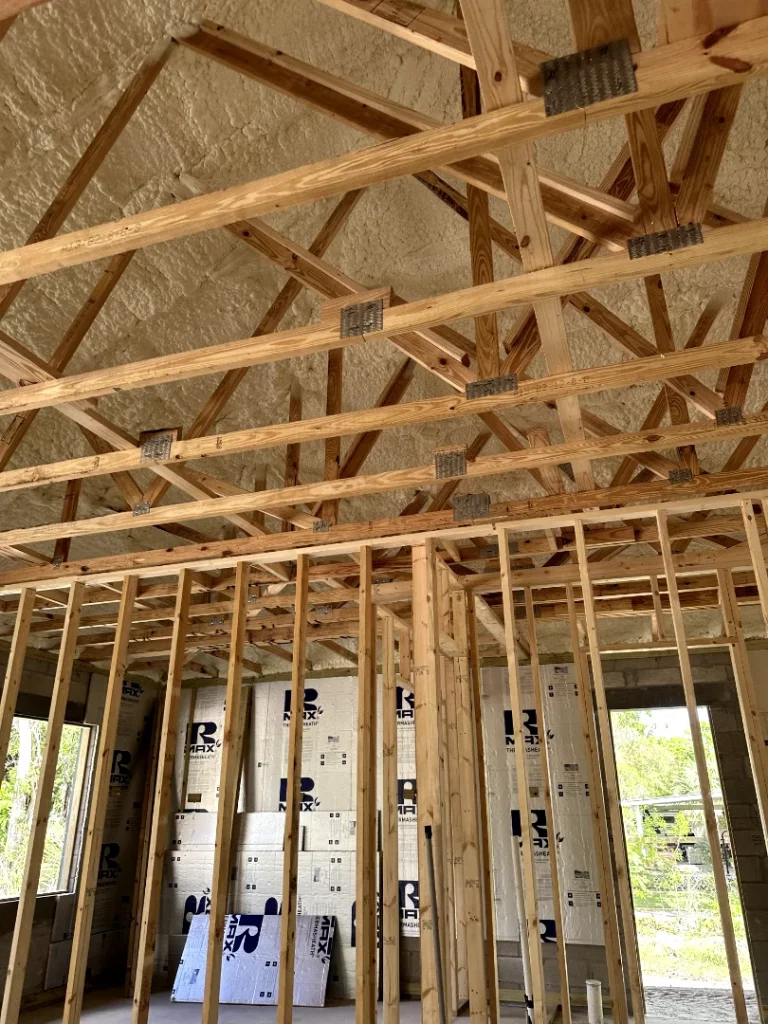
| New construction | Insulate to code-plus during the build | Applying insulation before drywall is far easier and cheaper than retrofitting |
| Retrofit home (10+ years old) | Inspection, then blown-in top-up over existing fill | Old insulation rarely needs removal unless damaged |
| Damp, moldy, or pest-damaged attic | Removal and replacement first | Never insulate over wet or contaminated material |
| Detached garage, barn, or shop | Pole barn insulation | Large open spans benefit from foam or batt systems |
| Vaulted ceilings or minimal access | Professional assessment before booking | Spray foam at the roof deck is often the only practical option |
Before you call anyone, gather four details: the approximate dimensions of your attic floor, the current depth of insulation in inches, your attic entry type (hatch, pull-down stairs, or doorway), and photos of the space if you can safely take them. With those in hand, compare estimates on equal footing and consider professional attic insulation services when evaluating which contractor can handle the work properly. Verify licensing and insurance, confirm the crew is trained and certified for insulation work, and make sure each bid itemizes air sealing, baffles, and hatch insulation. A complete estimate tells you what is included; a vague one hides what is missing.
The fastest way to find out what your attic insulation will cost is a straightforward assessment of your attic, your current insulation levels, and your comfort goals. Our team at ALL IN OVERHALL serves homeowners across Jupiter and Palm Beach County with attic insulation, open-cell and closed-cell spray foam, insulation removal and replacement, and pole barn insulation, and we document every job with the R-value we actually install. Call us at (561) 406-3835 or email [email protected] to get started.
Get your numbers from a crew that shows you exactly what they mean.
Most attic insulation projects run $1,500 to $15,000, with an average of about $5,000. Your attic’s size, material choice, and target R-value determine where you land in that range.
Yes. Open-cell spray foam averages about $5,000 and closed-cell about $8,000, while blown-in attic fill sits at the lower end. Spray foam earns its price by air sealing and insulating in one application.
Usually not. Unless existing insulation is wet, moldy, smelly, or contaminated with animal waste, new insulation can be installed right on top. Removal and replacement is typically a $1,500 to $7,500 add-on when it is genuinely needed.
South Florida falls in the warmest climate zones, where ENERGY STAR recommends R-30 to R-49 depending on whether your attic is currently uninsulated or already has a few inches of material. We confirm the exact target during your assessment.
Most blown-in attic projects are completed in a single day, while removal jobs and spray foam applications take longer due to prep and curing time. Timeline is one of the first questions we answer on every estimate.