What Factors Determine Attic Insulation Installation Costs?
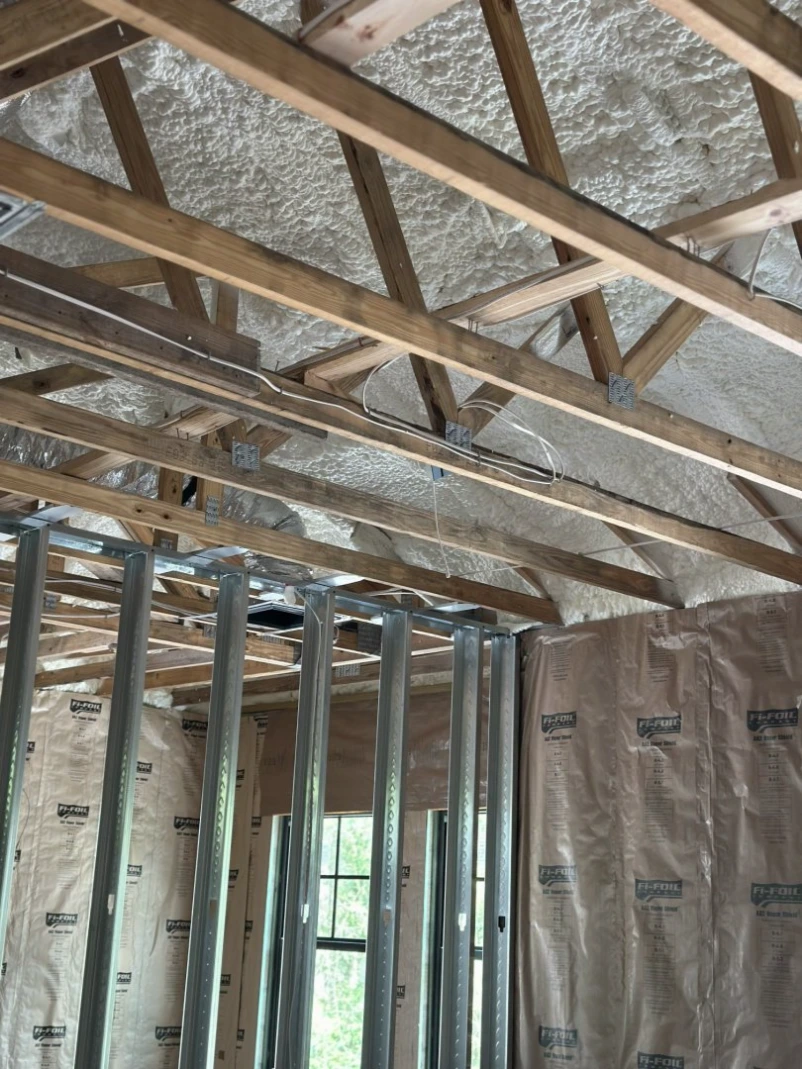
The cost of attic insulation installation depends on five main factors: attic size, insulation material, the R-value your climate requires,…


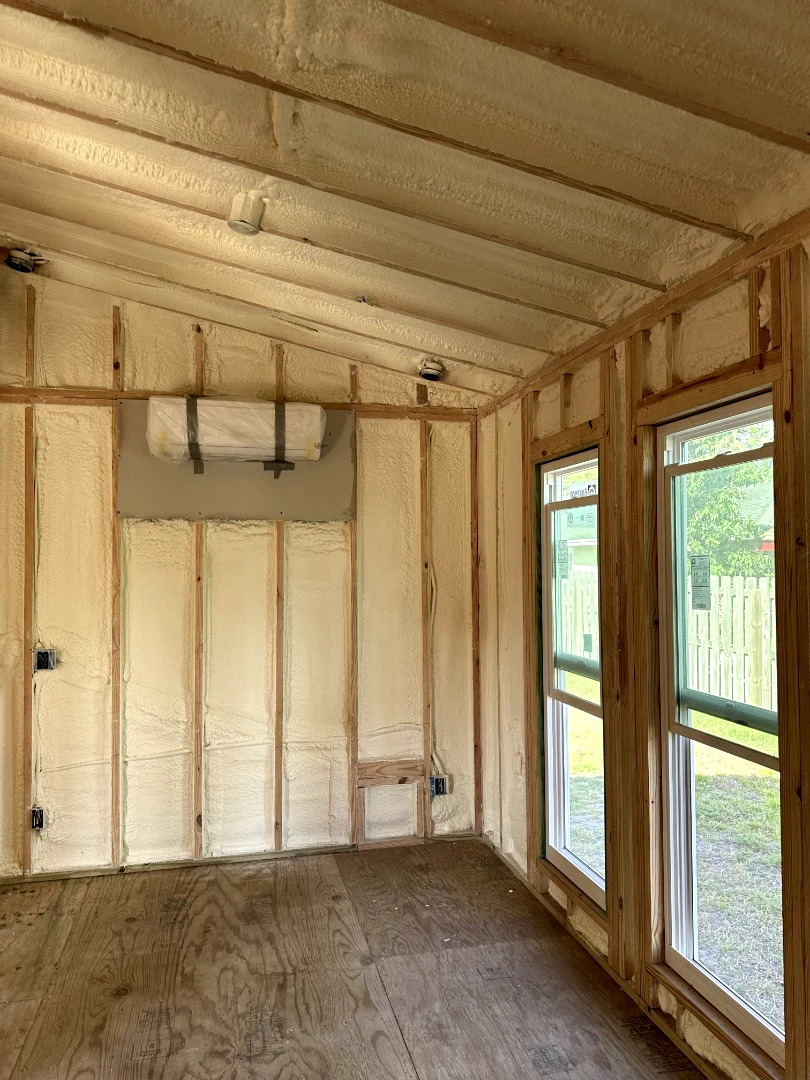
Choosing the right closed-cell spray foam insulation for your project in Jupiter, FL comes down to matching the product’s performance characteristics to your building’s specific needs, Florida’s demanding climate, and your project type. Jupiter sits in Palm Beach County, which falls under Florida Building Code Climate Zone 1, meaning your insulation must combat extreme heat, relentless humidity, and coastal moisture exposure. Closed-cell spray foam delivers an R-value of roughly R-6 to R-7 per inch, acts as both an air and vapor barrier, and adds structural rigidity, making it one of the strongest insulation options available for South Florida construction. The right choice depends on whether you are building new, retrofitting an existing home, insulating an attic, or tackling a commercial project, and each scenario calls for a slightly different approach in terms of thickness, application method, and product selection, especially when evaluating closed-cell spray foam cost in Jupiter, FL.
Jupiter’s subtropical climate creates a unique set of challenges for building insulation. Summer temperatures routinely climb above 90°F, and humidity levels hover between 80 and 90 percent for much of the year. This constant moisture load means that insulation must do more than slow heat transfer; it must also resist water vapor infiltration and prevent condensation from forming inside wall cavities and attic spaces.
Closed-cell spray polyurethane foam (ccSPF) is particularly well-suited for this environment. According to the U.S. Department of Energy, closed-cell polyurethane foam contains high-density cells filled with a low-conductivity gas, giving it a superior R-value per inch compared to open-cell foam or traditional fiberglass. This matters in Jupiter, where cooling loads dominate energy consumption for most of the year.
The dense cell structure also makes ccSPF a Class II vapor retarder when applied at sufficient thickness, which helps prevent moisture from migrating through the building envelope. In a coastal community like Jupiter, where salt air and storm-driven rain are constant concerns, that moisture resistance is a major advantage.
| Property | Closed-Cell Spray Foam | Open-Cell Spray Foam |
|---|---|---|
| R-Value per Inch | R-6 to R-7 | R-3.6 to R-3.8 |
| Density | ~2 lb/ft³ | ~0.5 lb/ft³ |
| Vapor Barrier | Yes (at 1.5″+ thickness) | No |
| Air Barrier | Yes | Yes (at 5.5″+) |
| Moisture Resistance | High (impermeable) | Low (vapor permeable) |
| Structural Strength | Adds racking strength | Minimal |
| Best For | Crawl spaces, exterior walls, roofs, and flood-prone areas | Interior walls, soundproofing, and large open cavities |
| Cost | Higher material cost | Lower material cost |
For Jupiter homeowners and builders, closed-cell foam generally wins when moisture control is the priority. The University of Florida’s Program for Resource Efficient Communities notes that closed-cell spray polyurethane achieves R-values of 5.8 to 6.8 per inch, making it the most effective insulation material readily available for residential applications in Florida’s hot-humid climate zone.
Open-cell foam has its place, particularly in interior wall cavities where sound dampening is desired and moisture exposure is minimal. But for exterior-facing applications, crawl spaces, attics with ductwork, and any area prone to humidity, closed-cell is the safer bet.
New builds offer the most flexibility for closed-cell spray foam installation. Our team can apply foam to wall cavities, roof decks, crawl spaces, and rim joists before drywall and finishes go up, creating a continuous air and thermal barrier. Building Science Corporation’s Residential Spray Foam Guide emphasizes that unvented conditioned attics using spray foam are particularly effective in warm climates where mechanical systems and ductwork are typically located in attic spaces.
For new construction, we generally recommend:
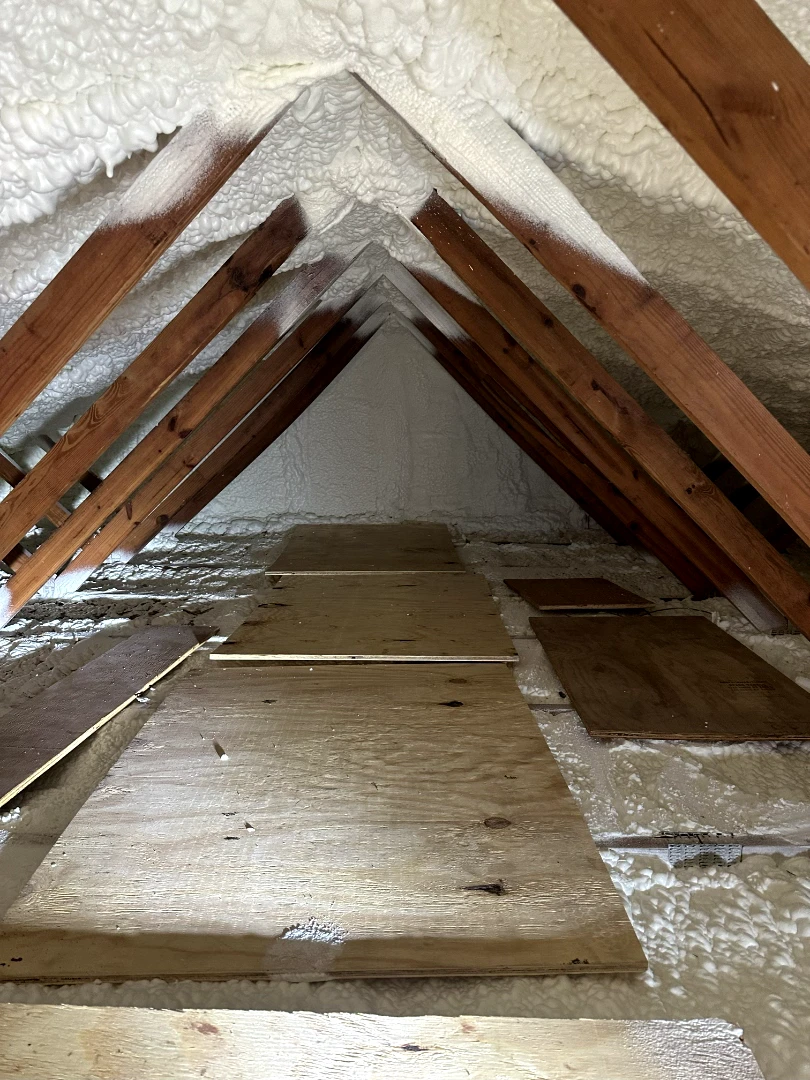
Retrofit projects in Jupiter often focus on attics first, since the ceiling is where the most heat gain occurs. According to the University of Florida’s research, more heat per square foot travels through your ceiling than any other structure in a house, making attic insulation the best return on investment for existing homes, as explained in this closed-cell spray foam guide.
In retrofits, access is the biggest challenge. Vaulted ceilings, tight crawl spaces, and finished walls all add complexity. Our pricing reflects this: easier access lowers the project cost, while difficult-to-reach areas increase it.
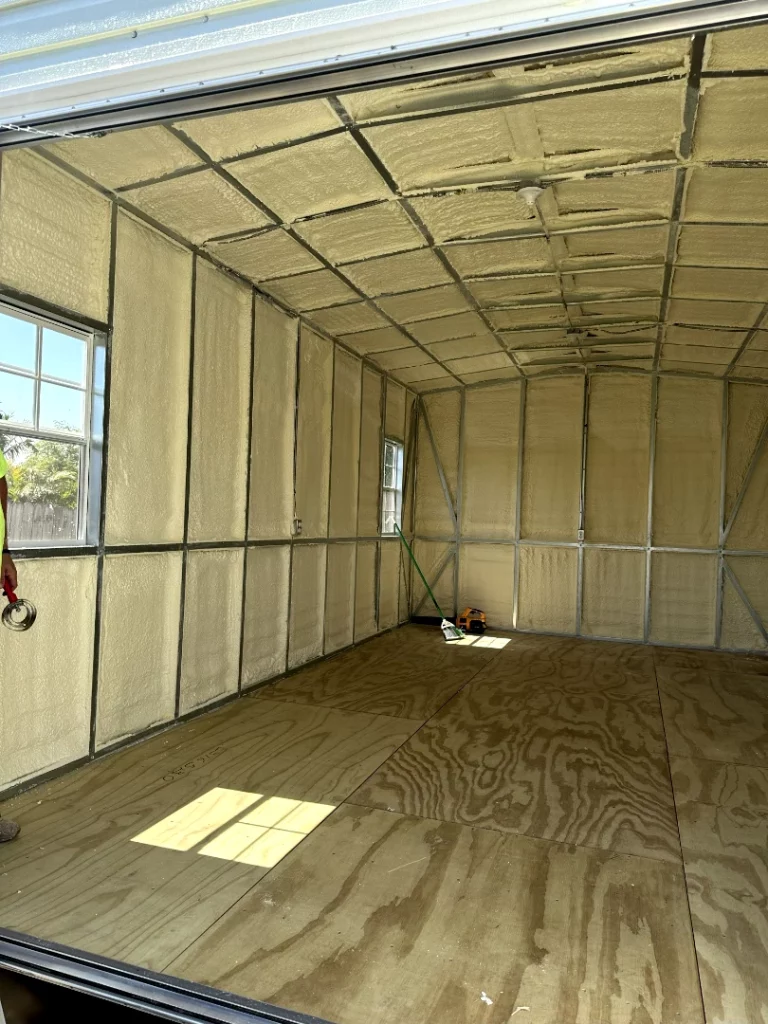
Commercial projects in Jupiter benefit from closed-cell foam’s ability to provide both insulation and structural reinforcement. Metal buildings, pole barns, and warehouses all see significant performance gains when spray foam is applied to the roof and walls. These projects tend to be larger in scale, which increases the total investment but often reduces the per-square-foot cost.
Jupiter falls within Palm Beach County, which is classified as Climate Zone 1 under the Florida Building Code. The minimum attic insulation requirement for this zone is R-30. With closed-cell spray foam achieving roughly R-6.5 per inch, meeting code requires approximately 4.5 to 5 inches of foam in the attic.
However, code minimums and optimal performance are not the same thing. Many Jupiter homeowners choose to exceed code by insulating the roof deck with closed-cell foam, creating an unvented conditioned attic. This approach moves the entire attic inside the building envelope, which dramatically reduces the cooling load on ductwork and HVAC equipment located in the attic space.
The International Residential Code (IRC) Section R316 also requires that spray foam be separated from interior living spaces by an approved thermal barrier, typically 1/2-inch gypsum wallboard. This is an important consideration for both new construction and retrofit planning.
Larger areas naturally require more material and labor. This is the single biggest cost driver for any spray foam project.
Tight spaces, vaulted ceilings with limited clearance, and finished walls that require injection methods all increase project complexity. Open, unfinished spaces are faster and more cost-effective to insulate.
Thicker applications mean more material. If you are targeting R-30 in an attic versus R-13 in a wall cavity, the material cost difference is substantial.
The raw cost of the foam product itself fluctuates with the chemical supply chain. As our pricing data confirms, material and product cost is the single largest factor affecting pricing.
If old insulation needs to be removed before new spray foam can be applied, that adds labor and disposal costs. This is common in retrofit projects where fiberglass batts or blown-in cellulose have degraded over time.
| Project Type | Recommended Approach | Key Considerations |
|---|---|---|
| New construction | Full envelope closed-cell foam | Plan for roof deck, walls, and crawl space |
| Existing home attic | Closed-cell foam on the ceiling or the roof deck | Prioritize moving ductwork inside the thermal envelope |
| Crawl space | Closed-cell foam on floor framing | Essential for ground moisture blocking |
| Pole barn or metal building | Closed-cell foam on walls and roof | Provides both insulation and structural benefit |
| Retrofit with vaulted ceilings | Injection foam or limited-access methods | May require interior wall removal in some cases |
All In OverHall specializes in closed-cell spray foam insulation for residential and commercial projects throughout Jupiter and the surrounding Palm Beach County area. Our team understands the unique demands of South Florida’s climate and builds insulation solutions that deliver real energy savings, moisture protection, and long-term comfort. Whether you are planning new construction, upgrading an older home’s attic, or insulating a commercial building, we provide detailed assessments and transparent pricing so you know exactly what to expect.
Request a Quote | Schedule an On-Site Assessment
Contact our team at [email protected] or call (561) 406-3835 to discuss your project. We serve the 33478 zip code and surrounding communities, and we are ready to help you make the right insulation decision for your property.
Closed-cell spray foam qualifies as a Class II vapor retarder at approximately 1.5 inches of thickness, which is easily achievable in most wall and attic applications in Climate Zone 1.
Yes. According to Wikipedia’s spray foam reference, spray foam is inert and non-toxic once fully cured. The curing process involves off-gassing, which is why proper ventilation and professional installation with appropriate safety protocols are essential during application.
Closed-cell spray foam adds structural racking strength to walls and roof assemblies, which can improve a building’s resistance to wind stress. Its moisture impermeability also helps protect against water intrusion during storm events.
Jupiter is in Florida Building Code Climate Zone 1, which requires a minimum R-30 attic insulation. Many homeowners choose to exceed this for better energy performance.
Most residential projects are completed in one to two days, depending on the scope. Curing time is relatively short, and the space is typically safe to reoccupy within 24 hours after application is complete and proper ventilation has been maintained.