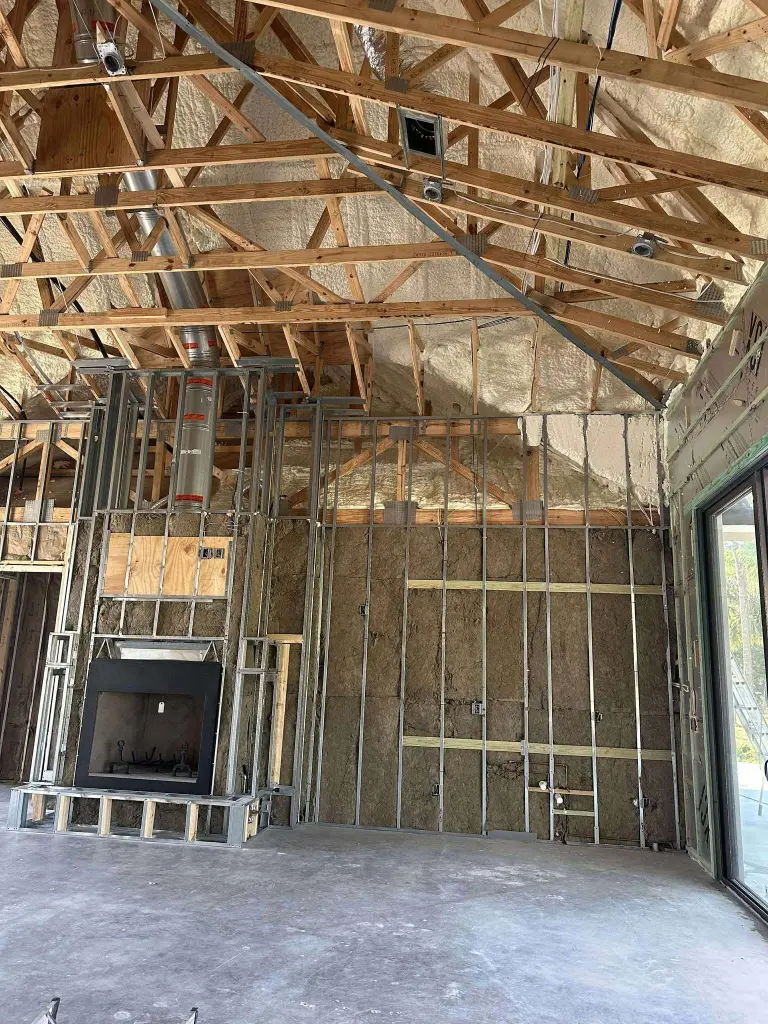
Why Does Old Insulation in Jupiter, FL Stop Protecting Your Home Effectively Over Time?
Old insulation in Jupiter, FL stops protecting your home because South Florida’s tropical climate slowly breaks the material down from…


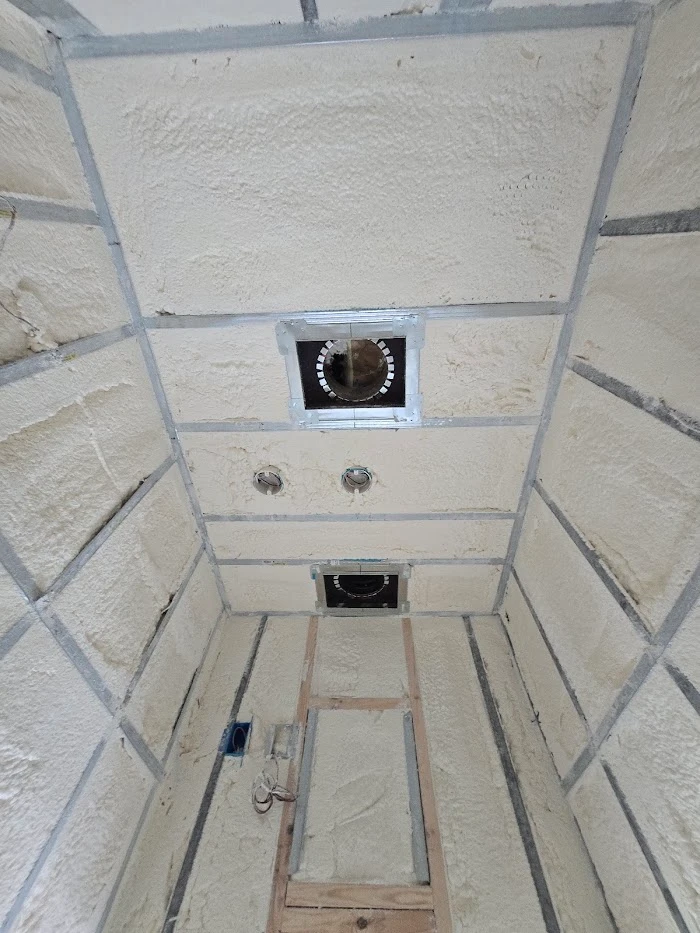
Closed-Cell Spray Foam Insulation is a high-performance insulation system that provides one of the highest R-values per inch while creating an effective air barrier and vapor barrier in a single application. At approximately 2 inches thick, it helps reduce energy loss, control moisture, and strengthen the building envelope for long-term performance.
When you walk into a comfortably temperature-controlled home on a hot summer day or a cold winter night, you are experiencing the benefits of a well-insulated building envelope. Unlike traditional insulation materials, closed-cell spray foam combines insulation, air sealing, and moisture protection into one seamless system, making it an effective solution for residential and commercial properties.
Closed-cell spray foam insulation is a two-component polyurethane material that expands after application to form a dense, rigid insulation layer. Unlike open-cell foam, its sealed cellular structure resists air movement, water penetration, and heat transfer.
When the two chemical components mix at the spray gun, the foam expands approximately 30–40 times its liquid volume, filling cracks, gaps, and cavities with a continuous insulation layer. Its density, typically 1.75–2.2 pounds per cubic foot, provides durability and thermal performance.
Closed-cell spray foam delivers an R-value between R-6.0 and R-7.0 per inch, allowing buildings to achieve high insulation performance with less thickness than fiberglass or cellulose. Because it seals air leaks while insulating, it also improves indoor comfort, HVAC efficiency, and moisture protection.
Expert Tip: Installed R-value depends on proper temperature, humidity, and application technique. Experienced installers adjust spraying conditions to ensure performance.
Yes. At approximately 2 inches of thickness, closed-cell spray foam achieves a permeance rating below 1.0 perm, qualifying as a Class I vapor barrier under most building codes.
According to research by the Building Science Corporation, managing moisture transport is vital for a building’s longevity. Unlike fiberglass or cellulose insulation, closed-cell foam blocks moisture movement while insulating, eliminating the need for a separate vapor barrier in many wall, roof, and crawl space assemblies. This helps prevent condensation, mold growth, and moisture-related structural damage, especially in humid climates and below-grade applications.
Air leakage can account for a significant percentage of heating and cooling energy loss in a home, a fact highlighted in energy-efficiency guidelines from the U.S. Department of Energy. Closed-cell spray foam expands into cracks, seams, and penetrations, creating a continuous air barrier that traditional batt insulation cannot achieve.
Because the foam seals around framing, plumbing, wiring, and other penetrations, it minimizes drafts, improves HVAC efficiency, and maintains more consistent indoor temperatures. This aligns with building performance benchmarks set by ENERGY STAR®.
Its thermal performance comes from three primary mechanisms:
Standard closed-cell foam typically ranges between 1.75 and 2.2 pounds per cubic foot, while high-density formulations reach 2.5–3 pounds per cubic foot or more for specialized applications requiring additional strength.
High-density foam is commonly used for:
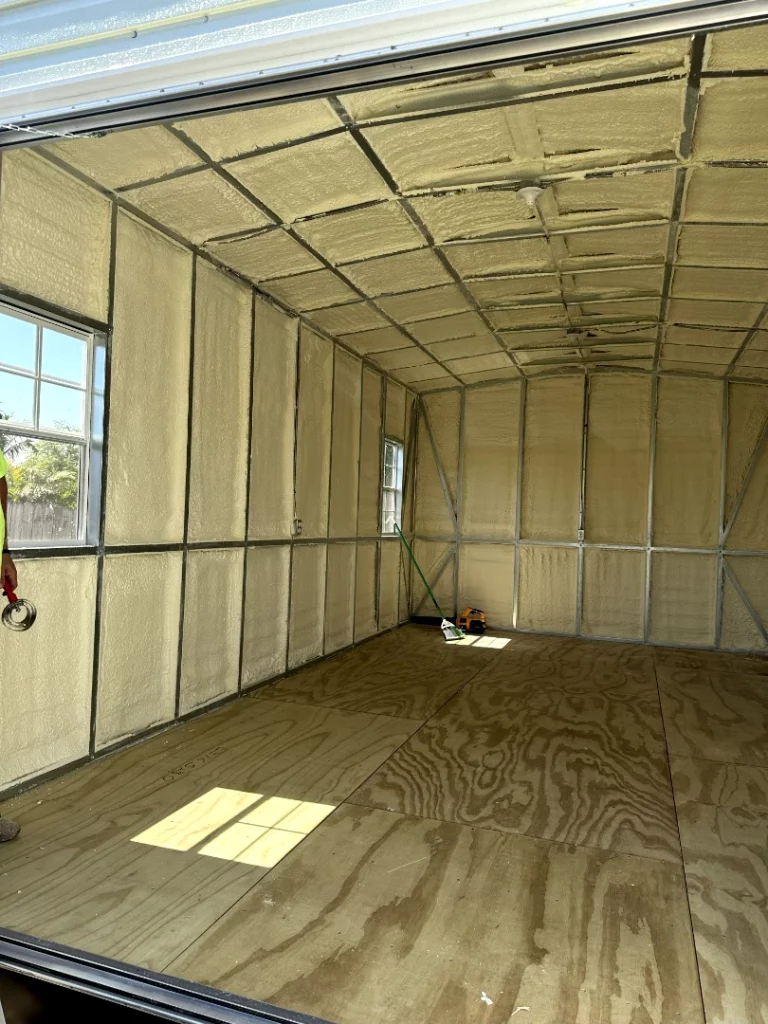
Choosing between standard and high-density formulations depends on the building design, climate, and project requirements, rather than simply selecting the densest option.
Securing a professional spray foam installation is critical to achieving the expected insulation performance, air sealing, and moisture control.
Before spraying begins, installers protect surrounding surfaces, establish ventilation, verify substrate conditions, and prepare the work area. Certified installers wear respirators, protective suits, gloves, and eye protection throughout the application process to ensure safe handling of the spray foam components.
Closed-cell spray foam is applied in multiple lifts, typically 1–2 inches per pass, allowing the material to cure properly without excessive heat buildup. Professional installers monitor:
These factors directly influence insulation performance and long-term durability.
Expert Tip: Consistent cell structure and uniform thickness are strong indicators of a quality spray foam installation.
Once applied, closed-cell spray foam generally reaches full cure within 24–48 hours. During this period, the foam completes its chemical reaction and achieves its final strength and thermal performance. Professional contractors remove overspray, verify installed thickness, and document the completion of the project.
Closed-cell spray foam is typically priced by the board foot (one square foot at one inch thick). Installed costs vary by region, project complexity, and required thickness. Local project pricing trends can be referenced on the HomeGuide Spray Foam Cost Guide.
| Application Area | Typical Thickness | Estimated Cost |
|---|---|---|
| Exterior Walls | 2 inches | $2.50–$5.00 per sq. ft. |
| Roof Assembly | 4 inches | $4.00–$7.00 per sq. ft. |
| Foundation Walls | 2 inches | $2.50–$5.00 per sq. ft. |
| Typical 1,500 sq. ft. Home | Varies | $4,700–$11,250 |
Every property has different insulation needs, and the right closed-cell spray foam solution depends on your building design, climate, and performance goals. The All in OverHall team will evaluate your project, recommend the appropriate insulation thickness, and provide transparent pricing before work begins.
Whether you’re insulating walls, attics, crawl spaces, foundations, or commercial buildings, we are here to help you make an informed decision.
Contact All in OverHall today for a free consultation and customized quote.
Closed-cell foam provides a higher R-value (R-6.0–R-7.0 per inch), acts as a vapor barrier, and adds structural strength. Open-cell foam has a lower R-value, costs less, and allows greater vapor permeability.
An insulated home should be airtight but also properly ventilated. Mechanical ventilation provides healthier indoor air quality than uncontrolled air leakage.
For many homeowners, yes. Lower utility costs, improved comfort, moisture protection, and a long service life often make closed-cell spray foam worth the investment over the long term.
Properly installed closed-cell spray foam is designed to last the lifetime of the building without settling or losing its insulating performance.
No. Unlike open-cell foam or traditional fiberglass, closed-cell spray foam has a water-resistant cellular structure. Because its cells are completely closed and packed tightly together, it does not absorb or hold liquid water.