What Factors Determine Attic Insulation Installation Costs?
The cost of attic insulation installation depends on five main factors: attic size, insulation material, the R-value your climate requires,…

Inadequate thermal protection in your roof space often leads to uncomfortable indoor temperatures, high utility bills, and moisture damage. Resolving these issues involves sealing hidden bypasses, maintaining clear ventilation, and applying the correct thickness of thermal material. All In Overhall sees firsthand how attic insulation mistakes damage residential and commercial properties in our hot, humid climate. This guide details how to identify and resolve these issues to protect your property.
If you’re looking for a complete overview of attic insulation, including materials, benefits, installation methods, and maintenance tips, check out our comprehensive Attic Insulation Guide.
Many people believe that laying down new fiberglass rolls is enough to stop heat transfer. However, blocking airflow is just as critical as blocking heat. Air leaks around recessed lights, flue pipes, and electrical wires allow conditioned indoor air to escape directly into your roof space. This oversight is one of the most frequent attic insulation mistakes that property owners make.
Our team resolves these attic insulation problems by performing comprehensive air sealing before placing any insulation. We locate thermal bypasses and seal them using fire-rated materials, ensuring your home forms a tight thermal envelope.
Bonus Tip: Before adding any thermal barriers, use expanding foam or caulk to seal every visible gap around wires and light fixtures in the ceiling and floor.
Roof spaces require constant airflow to prevent heat buildup and moisture issues. Eave and soffit vents allow fresh air to enter at the bottom of the roof line, while ridge vents let hot air escape at the peak. Covering soffit vents with loose-fill material stops this airflow entirely, causing temperatures to skyrocket.
Without proper ventilation, moisture from bathrooms and kitchens condenses on the cold roof deck, leading to wood rot. To prevent this, we install rigid cardboard or plastic baffles along the rafters before installing any new attic insulation. These baffles maintain a clear path for air to flow from the eave vents into the upper roof space.
Not all insulating products perform the same way in every environment. Using the wrong material or applying it unevenly creates thin spots where heat easily transfers. For example, using standard fiberglass batts in an irregular space with many wires and pipes leaves large gaps.
In hot, high-humidity regions like South Florida, material choice is even more critical. Standard fiber materials can absorb moisture from our coastal air, whereas professional setups are designed to resist both heat transfer and moisture retention.
| Insulation Material | Recommended R-Value Range | Common Application Areas | Moisture Resistance |
|---|---|---|---|
| Fiberglass Batts | R-13 to R-38 | Standard joist spacing | Low (absorbs moisture) |
| Blown-In Fiberglass | R-30 to R-60 | Irregular joists and deep cavities | Medium (quick drying) |
| Cellulose | R-30 to R-60 | Hard to reach areas | Medium (treated with borate) |
| Spray Foam | R-15 to R-60 | Roof decks and tight crevices | High (acts as vapor barrier) |
For hard-to-reach corners and uneven joists, we recommend blown-in attic insulation to achieve a continuous thermal blanket. This method fills every small gap that hand-cut rolls cannot reach.
Adding new layers on top of old, contaminated, or compressed material is a recipe for trouble. If your current setup contains animal droppings, mold, or water damage, covering it up only traps the moisture and spreads the decay.
We address this through thorough attic insulation repair procedures. Our process includes removing all compromised materials, sanitizing the attic deck, and addressing the root cause of any leaks before installing clean materials.
Bonus Tip: Always inspect the bottom layer of your current insulation for dark spots, which indicate active mold growth or air filtration leaks.
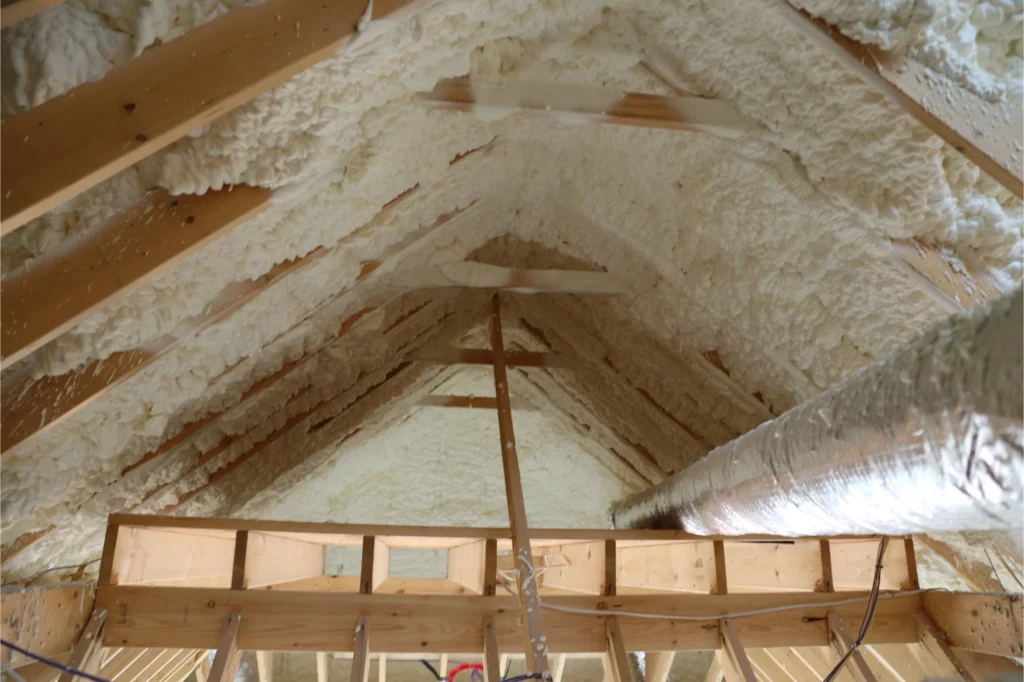
The R-value measures how well a material resists heat flow, and different regions require specific levels. Many properties suffer from under-insulation simply because the initial layers did not meet local climate standards.
When the current material is too thin or degraded, a complete attic insulation replacement is often the most cost-effective path. All In Overhall helps property owners calculate the exact depth needed to match regional energy codes, ensuring your home remains cool during hot summer months.
Before you choose a path forward, consider these factors to get the best results:
Research by the Lawrence Berkeley National Laboratory demonstrates that proper retrofitting pays for itself over time by reducing the wear and tear on your heating and cooling equipment.
Selecting the correct material, maintaining open ventilation pathways, and performing complete air sealing are the foundations of an efficient home. Ignoring these steps leads to high utility bills and structural damage over time. Take the time to inspect your roof space and address any thin spots or blocked vents to protect your property and family.
We help you keep your home comfortable and energy-efficient year-round. Contact All In Overhall by calling (561) 406-3835 or emailing [email protected] to schedule your free quote. Our experienced team will evaluate your roof space, identify existing issues, and guide you through the ideal repair plan to keep your home dry, safe, and cost-effective. Let us help you protect your property.
Yes, if the old material is dry, clean, and free of mold, you can safely add new layers on top to increase your overall thermal R-value.
High-quality materials can last between 20 and 80 years, but moisture damage, animal infestations, and compression can significantly shorten this lifespan.
Yes, it keeps outdoor heat from radiating down into your living spaces, lowering indoor temperatures and reducing the workload on your air conditioning system.
Blown-in fiberglass and spray foam work exceptionally well in humid areas because they resist moisture absorption better than organic materials like cellulose.
If your attic is extremely hot or you notice dark mold patches near the lower roof edges, your soffit vents are likely covered.