What Factors Determine Attic Insulation Installation Costs?
The cost of attic insulation installation depends on five main factors: attic size, insulation material, the R-value your climate requires,…

Spray Foam Energy Guide explains how spray foam insulation keeps a home cooler by addressing two problems at once: it stops air movement and slows heat conduction. Rather than sitting loosely in a cavity the way batts do, it expands on contact and locks into every seam, so hot outdoor air never gets a steady path inside. Homeowners usually ask us two things before booking: will spray foam insulation keep pipes from freezing through winter, and how long does spray foam take to dry before the family can come back in? The short answers are yes and about a day, and the result is a home that holds its temperature instead of fighting a constant trickle of hot outdoor air, especially once the major leaks in the air barrier have been sealed by our team.
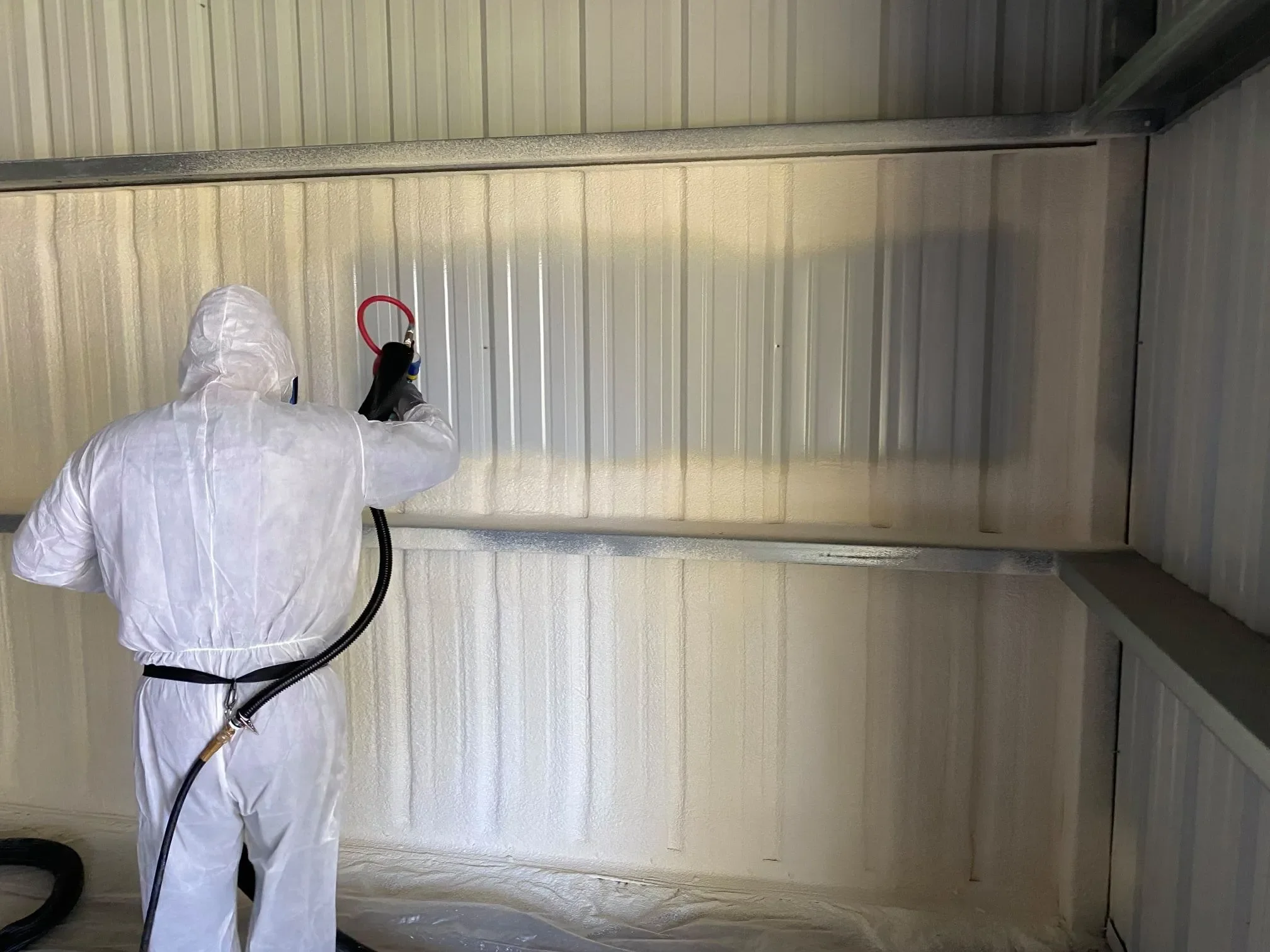
Air infiltration accounts for a large share of summer heat gain in the average home. Unlike batts or rolls, spray foam works as insulation and an air barrier in a single step. Once it is sprayed into a wall cavity or attic floor, the material expands rapidly and reaches into the small openings around electrical boxes, plumbing stacks, and baseboards that behave like a thousand tiny windows left open all summer.
The same expansion that makes spray foam for pipes such a reliable sealant is what stops the chimney effect, the process where hot air enters low in a structure and pushes cooled air out through the top. Cutting off that flow is the core mechanism behind a cooler home, and it works even in houses that already have some existing insulation in place.
R-value measures a material’s resistance to heat flow, and a higher number means better insulating power. Closed-cell foam forms a dense structure that resists heat conduction more effectively than most alternatives.
| Insulation Type | R-Value per Inch (Approx.) | Air Sealing | Moisture Barrier |
|---|---|---|---|
| Open-Cell Spray Foam | 3.5 to 3.8 | Excellent | No |
| Closed-Cell Spray Foam | 6.0 to 7.0 | Excellent | Yes |
| Fiberglass Batts | 2.9 to 3.8 | Poor | No |
| Blown-in Cellulose | 3.2 to 3.7 | Moderate | No |
| Mineral Wool | 3.0 to 3.3 | Poor | No |
When homeowners weigh residential spray foam insulation vs fiberglass, the difference usually comes down to more than R-value alone. Fiberglass can technically match spray foam’s per-inch rating in some cases, but it does little to stop air movement, which is where most summer heat gain actually happens. A sealed cavity stays cooler than an insulated one that still leaks.
Attics become the hottest part of a home during peak summer months, with poorly insulated spaces climbing well above 140 degrees Fahrenheit. That heat radiates down through the ceiling, which is a major reason upstairs bedrooms stay uncomfortable long after the sun goes down.
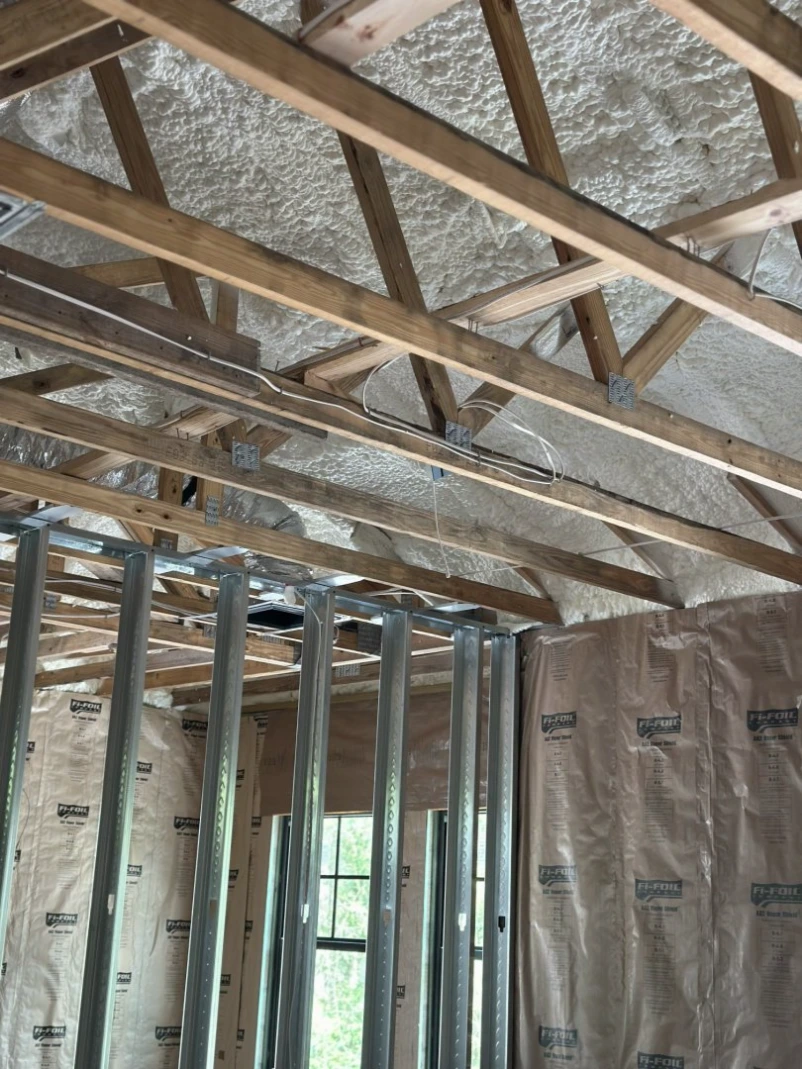
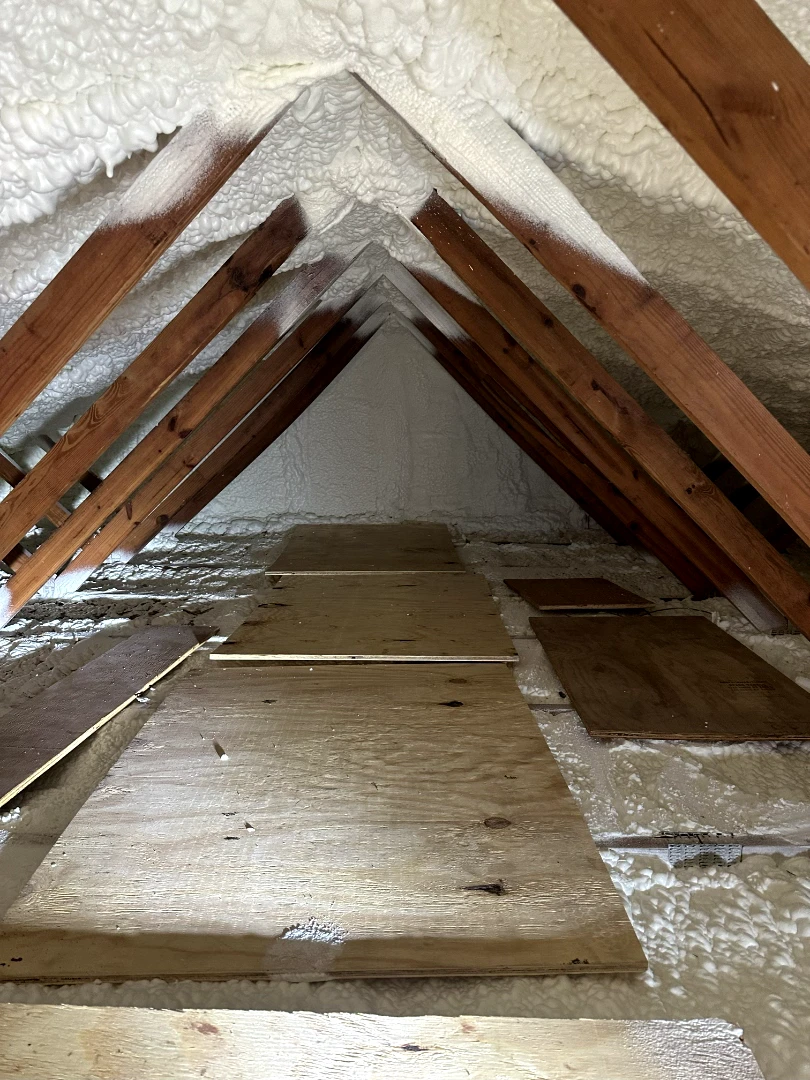
Applying spray foam attic insulation to the underside of the roof deck, instead of only the attic floor, creates what is known as a conditioned attic. Moving the thermal boundary to the roofline keeps the attic within a few degrees of the living space below, which matters most when ductwork and water lines run through that area, since spray foam insulation for water pipes shares the same goal of holding the cavity near indoor temperature. Homeowners figuring out how to keep upstairs cool in summer often find that sealing the attic hatch matters almost as much as the insulation itself, because even a well-sealed roofline leaks heat through an unsealed access point. The ENERGY STAR program publishes recommended R-values and attic sealing guidance that make a useful reference point when planning an upgrade.
Sunlight heats siding and roofing all day, and those surfaces then radiate heat inward. West-facing walls absorb the most direct afternoon sun, which is why rooms on that side of the house tend to feel the warmest. Dense closed-cell foam slows that conductive heat transfer at the wall, while the air seal it forms stops the hot surface from baking the room through convection. The two effects together are what flatten out those late-afternoon temperature swings.
Yes, when it is installed by a trained professional using proper equipment and mixing ratios. This question comes up constantly on homeowner forums, including Reddit plumbing discussions and Quora threads, and the consensus matches standard industry practice: the finished, fully cured product is chemically stable, bonds safely to copper and PEX, and does not off-gas under normal conditions. Occupants and pets do need to step out during application and cure, and the American Red Cross notes that insulating the spaces around supply lines is standard advice for protecting plumbing year-round.
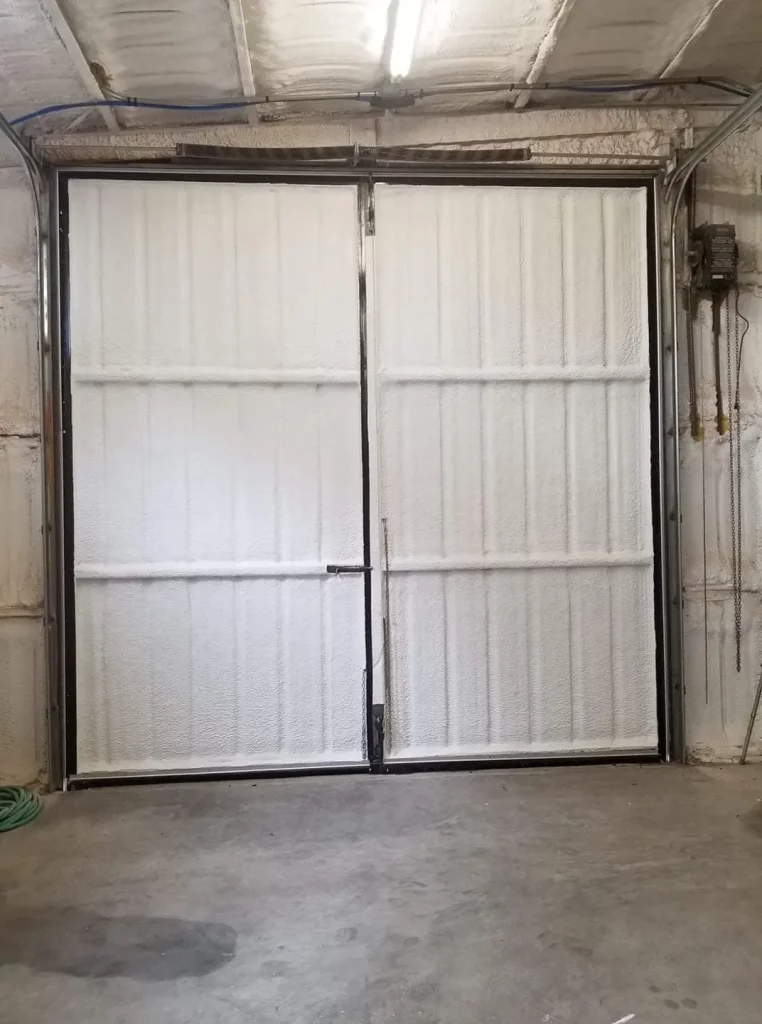
Spray foam cure time moves faster than most homeowners expect. The liquid expands and becomes tack-free within seconds to a few minutes, which is why a whole house is usually sprayed in a single day. There is a difference between foam that feels firm and foam that is fully cured, though, and the second one is what matters for safety and performance.
Spray foam drying time depends on four main factors: ambient and substrate temperature, humidity, lift thickness, and the mixing ratio delivered by the equipment. Warm conditions in the 70 to 85 degree range with moderate humidity produce the fastest, cleanest cure. Cold surfaces, overly thick passes, and off-ratio mixing all slow the chemical reaction and can leave soft spots inside the foam.
For planning purposes, spray foam insulation cure time under normal conditions runs about 24 hours, with some formulations taking up to 72 hours to reach final density and R-value. The EPA notes that many manufacturers recommend a 24-hour re-occupancy period after professional two-component installation, which is the window our crew builds into every schedule. Once the cure is complete, the finished foam is chemically stable and inert, so the same material that came out of the gun as a liquid behaves like solid plastic a day later.
Many homeowners notice the biggest change in how often their air conditioner cycles on and off. In a leaky home, the system runs constantly to compensate for lost cool air. Once spray foam insulation is in place, the home holds its temperature far longer, so the AC runs less often, which extends equipment life and lowers monthly utility bills, a pattern that holds up across completed projects. Many of those same projects wrap up before winter, and customers come back to report that the same seal keeps cold water lines from frosting over, since spray foam around pipes blocks the drafts that pull heat out of them first.
Keeping a home cool through the summer comes down to controlling air movement and heat conduction at the same time. Before deciding on an approach, it helps to assess current insulation levels and find where the most heat is entering the structure. That starting point, more than any single product choice, determines how much of a difference the upgrade actually makes.
Ready to see how much of a difference proper sealing and insulation could make in your home? Call All In OverHall at (561) 406-3835 or email [email protected] for a free quote.
The foam is tack-free within minutes and fully cured in 24 to 72 hours, with 24 hours being the typical re-entry window.
It hardens to the touch within seconds, but it needs a full day or more to reach final density, strength, and R-value.
Cold substrates slow the chemical reaction, so professional installers warm the space or adjust the formulation to keep the cure on schedule.
Yes, by sealing the cold-air leaks around plumbing runs, though exposed lines in unheated spaces still benefit from heat cable.
It is generally best to remove old or damp insulation first so the foam can bond directly to wood or masonry and form a complete seal.