What Factors Determine Attic Insulation Installation Costs?
The cost of attic insulation installation depends on five main factors: attic size, insulation material, the R-value your climate requires,…

Leaving contaminated or pest-damaged insulation in your attic and walls sets off a chain of escalating problems that affect your family’s health, your home’s structural integrity, and your monthly energy bills. Moisture from pest waste or roof leaks creates conditions where mold colonies can establish within 24 to 48 hours. Once mold takes hold in porous insulation materials, proper insulation removal becomes necessary to address the contaminated material safely and prevent the problem from worsening. Rodent urine, droppings, and nesting debris introduce bacteria and allergens that compound the problem. The longer contaminated insulation sits, the more it compresses, degrades, and loses its thermal resistance, forcing your heating and cooling system to work harder while simultaneously polluting the air it circulates.
Mold can begin growing on wet insulation materials within 24 to 48 hours, and porous materials like fiberglass batts and blown-in cellulose cannot be fully cleaned once colonized
Your attic is not a sealed vault. Air moves through gaps around light fixtures, pull-down stairs, duct registers, and penetrations for plumbing and wiring. When insulation in that space harbors mold, rodent waste, or decaying organic material, those contaminants hitch a ride on the air currents that naturally flow between your attic and your living spaces. The EPA identifies attic pollutant sources as one of the commonly missed opportunities during energy retrofits, specifically recommending removal or isolation of these sources to protect occupant health.
Biological contaminants, including mold spores, pest allergens, and bacteria, all qualify as pollutants that worsen with moisture and poor ventilation. According to the EPA, biological contaminants in indoor environments can cause allergic reactions, asthma episodes, and hypersensitivity pneumonitis. The agency identifies three strategies for addressing these pollutants: source control, ventilation, and filtration. Source control, which means removing the contaminated material at its origin, is identified as the most effective approach.
When contaminated insulation stays in place, you are relying entirely on ventilation and filtration to manage a pollution source that continues to produce contaminants around the clock. That is an uphill battle no HVAC filter can fully win.
Contaminated insulation does not stay contained. The problems follow a predictable progression:
| Stage | What Happens | Impact on Home |
|---|---|---|
| Initial contamination | Moisture, pest waste, or rodent nesting introduces biological material into insulation | Insulation begins absorbing and holding moisture beyond its design capacity |
| Mold colonization | Mold spores germinate on damp, organic-facing surfaces of insulation backing or wood | Air quality drops; musty odors begin migrating into living spaces |
| Structural compromise | Sustained moisture against roof decking and joists causes wood rot and sheathing deterioration | Load-bearing members weaken; repair costs climb substantially |
| Thermal failure | Compressed, wet, and displaced insulation loses R-value; air gaps form where pests tunnel | HVAC runs longer cycles; energy waste increases month over month |
The National Center for Healthy Housing notes that excessive moisture in the home can cause or contribute to structural damage and create conditions that attract cockroaches, dust mites, and other pests, creating a compounding cycle of contamination. Each stage makes the next one worse and more expensive to resolve.
Rodents, squirrels, raccoons, and insects do not simply pass through insulation. They tunnel through it to create nests, compressing and displacing the material in the process. Every tunnel they create is a channel that air flows through instead of being blocked by insulation. The waste they leave behind, urine, feces, shed hair, and nesting debris, saturates the surrounding insulation with moisture and organic material.
That organic material feeds mold colonies. The CDC has noted that insulation contaminated with rodent urine and droppings should be placed into plastic bags for removal and disposal, not left in place. The agency specifically warns against sweeping or vacuuming contaminated materials because the act of disturbing them aerosolizes hazardous particles. In a home where contaminated insulation remains undisturbed in the attic, professional insulation removal can help address the compromised material before those particles continue circulating through the home.
Pest-damaged insulation also creates entry points. The gaps and tunnels that animals create in your insulation layer correspond to gaps in your home’s thermal envelope. Those same pathways can allow new pests to enter, and they make it easier for outside humidity to penetrate and further fuel mold growth.
Insulation works by trapping still air in tiny pockets within its structure. When that structure is compressed by foot traffic, saturated with moisture, or chewed apart by pests, those pockets collapse, and the material loses its ability to resist heat transfer. Wet insulation can lose nearly all of its insulating value, and it can take a very long time to dry out in a poorly ventilated attic.
The EPA and Department of Energy estimate that proper sealing and insulating measures can save homeowners up to 20 percent on heating and cooling costs, or up to 10 percent on total annual energy bills. Damaged insulation produces the reverse effect. Your HVAC system runs longer cycles to compensate for the heat gain in summer and heat loss in winter that your insulation should be preventing.
This is a cost that compounds every month. It shows up on your utility bill before it shows up as visible damage in your attic, which is why many homeowners do not connect the dots between rising energy costs and the condition of their insulation.
Different contamination sources produce different health hazards. Understanding what is in your insulation helps you prioritize the urgency of removal.
| Contamination Source | Primary Health Hazards | Populations at Greatest Risk |
|---|---|---|
| Mold growth | Allergic rhinitis, asthma exacerbation, respiratory irritation, hypersensitivity pneumonitis | Children, elderly, immunocompromised individuals, those with asthma |
| Rodent waste | Bacterial exposure, allergen sensitization, hantavirus risk in severe cases, respiratory irritation | All occupants; particularly those with compromised immune systems |
| Insect debris and nesting | Dust mite allergens, cockroach allergens, bacterial contamination | Asthma and allergy sufferers, young children |
| Moisture-saturated insulation | Elevated humidity throughout home, increased dust mite populations, mold proliferation | Entire household, especially respiratory-sensitive individuals |
The National Center for Healthy Housing reports that approximately 6 to 10 percent of the general population, and 15 to 50 percent of individuals genetically prone to allergies, are allergic to mold, making this a widespread concern that should not be dismissed as a minor nuisance.
You do not need to pull up all your attic flooring to identify a problem. Several visible and olfactory indicators point to contaminated insulation that needs to come out:
Any single one of these signs warrants a professional attic inspection. Multiple signs together mean you are likely past the point where spot treatment is sufficient.
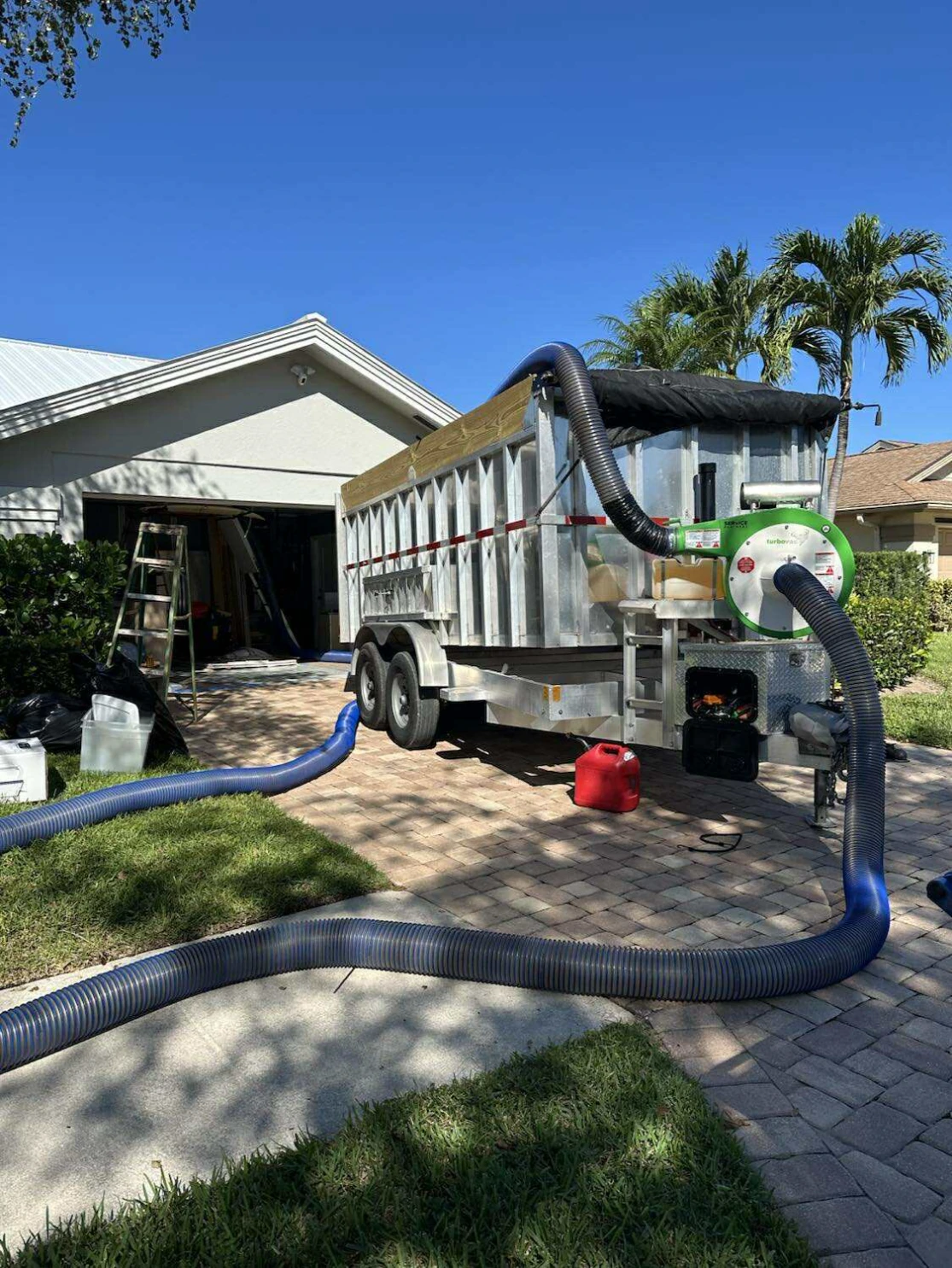
The process of removing contaminated insulation is not a weekend DIY project, and in many cases attempting it yourself can make the problem worse by aerosolizing contaminants throughout your home. Our trained crew follows a systematic approach:
Our insulation removal and replacement projects typically fall between $1,500 and $7,500, with most homeowners in the $3,000 range. Factors that influence the investment include attic square footage, accessibility, the extent of contamination, and whether structural repairs are needed before new insulation can be installed. Homes with difficult access or larger square footage will trend higher, while easily accessible attics with straightforward removals fall on the lower end.
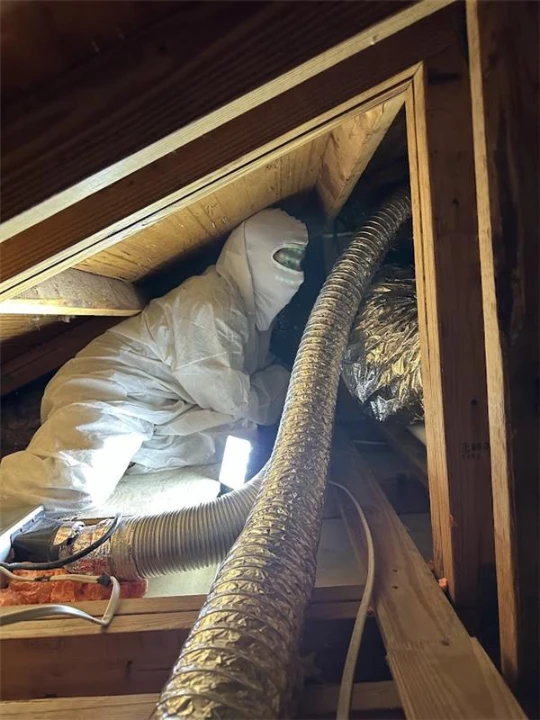
Choosing a team to handle contaminated insulation removal matters as much as deciding to do it. A qualified contractor will conduct a thorough inspection before quoting a price, explain what they find and why removal is necessary, outline the full scope including any pest exclusion or moisture remediation needed, use proper containment and protective equipment during the job, and provide documentation of disposal for contaminated materials.
If someone offers to simply lay new insulation over the top of contaminated material without removing it first, that is a red flag. Covering up contaminated insulation does not eliminate the pollutant source; it simply hides it while it continues to affect your air quality.
Contaminated and pest-damaged insulation is not a problem that improves on its own. Every month you wait, the damage to your air quality, your energy bills, and your home’s structure gets worse. At All In OverHall, our team specializes in insulation removal and replacement for homes throughout South Florida, including rural, suburban, and mixed-market areas. We handle the full process from inspection and sanitization through pest exclusion and fresh insulation installation, so your home starts clean and stays protected.
Reach us at [email protected] or call (561) 406-3835 to get started. Your family’s health and your home’s performance are worth the investment.
Mold can begin colonizing damp materials, including insulation and its paper or organic backing, within 24 to 48 hours after moisture exposure. The speed depends on temperature and humidity levels, but once mold is established in porous insulation, it cannot be fully cleaned and must be removed.
No. Layering new insulation over contaminated material traps the pollutants in place and does not eliminate the source. The EPA specifically identifies removal or isolation of attic pollutant sources as a recommended action during any retrofit work. The contaminated material must come out first.
Yes. Rodents and insects tunnel through insulation, compressing and displacing it, which destroys the air-trapping pockets that give insulation its R-value. Wet insulation from pest waste also loses most of its thermal effectiveness. Your HVAC system compensates by running longer cycles, which shows up as higher utility costs.
Persistent or worsening allergy symptoms, unexplained coughing, nasal congestion, wheezing, eye irritation, or increased asthma episodes that correlate with time spent indoors can all point to indoor air quality issues from contaminated insulation. Children, the elderly, and immunocompromised individuals tend to show symptoms first.
Watch for warning signs from your living spaces: musty or unusual odors from ceiling vents, visible staining on ceilings or walls near attic areas, unexplained increases in energy costs, or sounds of activity in the attic. A professional inspection is the only reliable way to assess the full condition of your insulation.