What Factors Determine Attic Insulation Installation Costs?
The cost of attic insulation installation depends on five main factors: attic size, insulation material, the R-value your climate requires,…

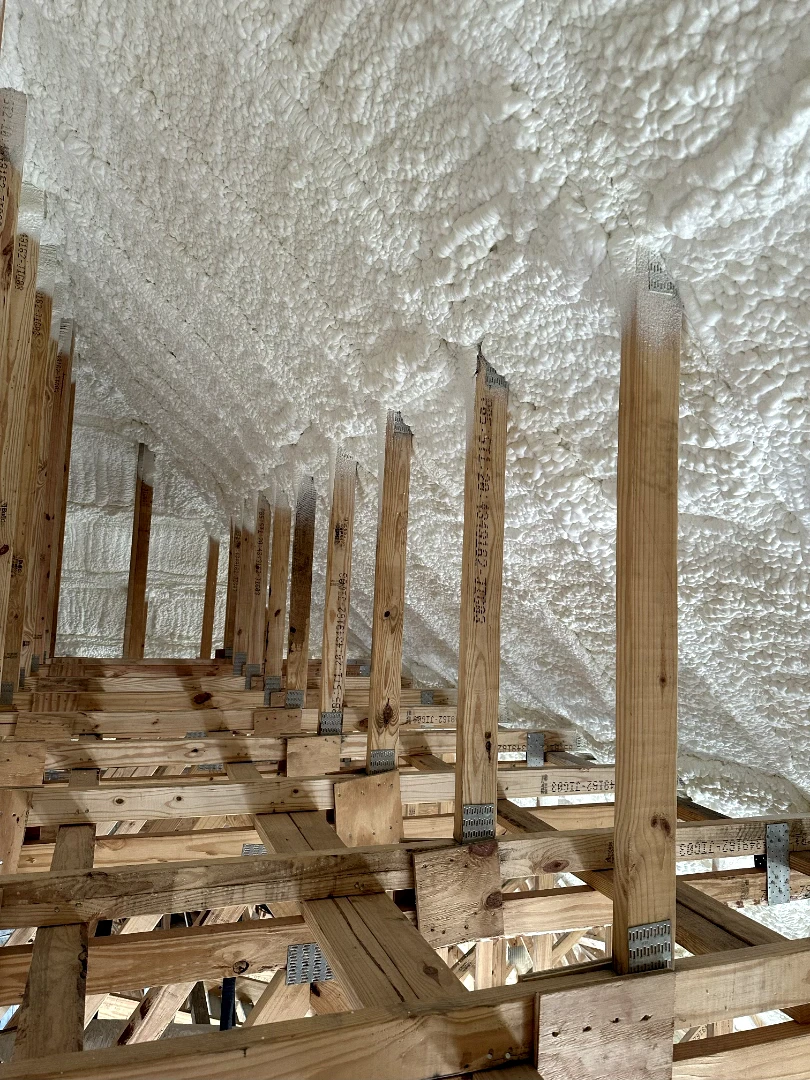
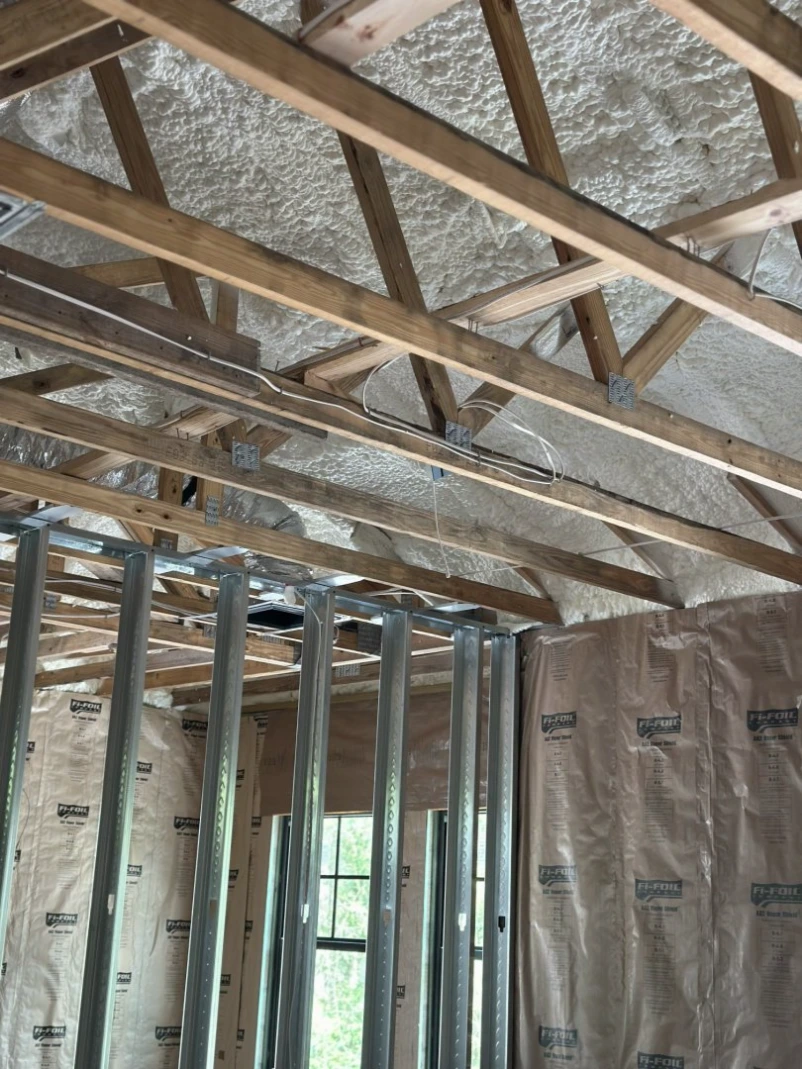
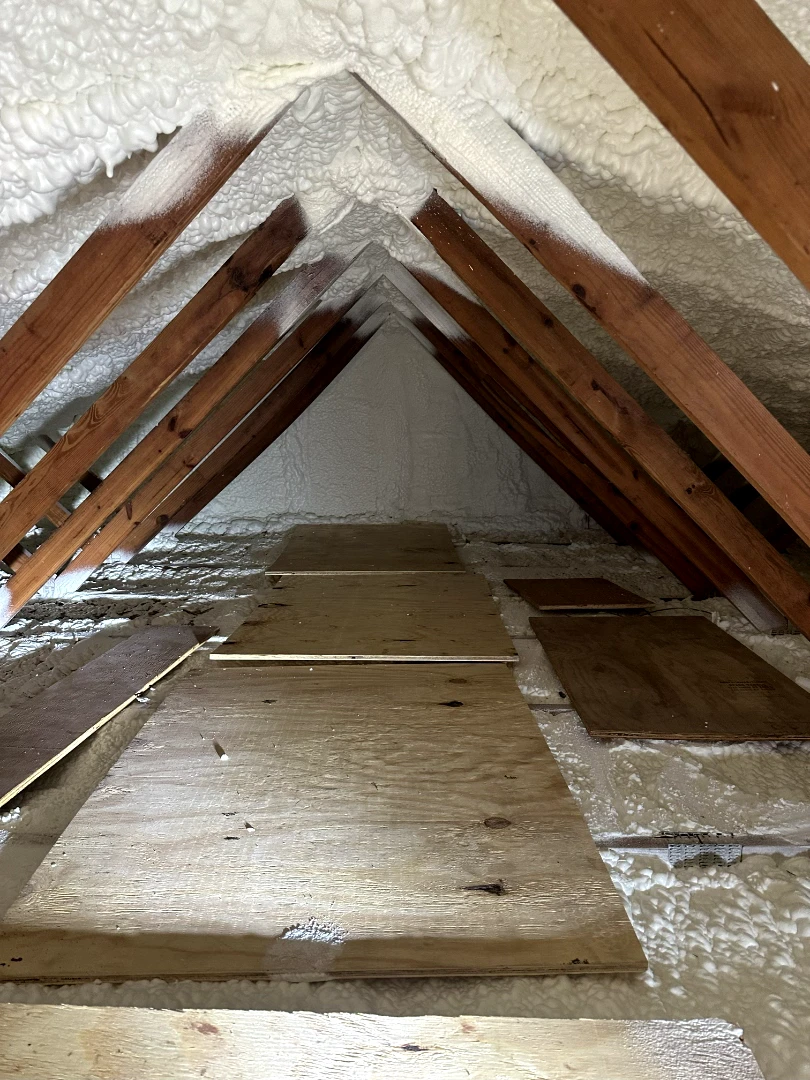
Investing in open-cell spray foam insulation for your Okeechobee, FL, property is a decision that hinges on understanding how quickly energy savings will offset your upfront costs. Okeechobee sits in IECC Climate Zone 2, a hot-humid region where cooling loads dominate energy bills for roughly eight months of the year. Open-cell spray foam, with its R-3.6 per inch thermal performance and superior air-sealing capabilities, addresses both heat transfer and air infiltration, the two biggest drivers of energy waste in Florida homes. The right approach depends on factors like your current insulation condition, the size and layout of your home, and whether you qualify for federal tax credits that can shorten your payback period, as detailed in this open-cell spray foam guide for Florida homes.
Open-cell spray polyurethane foam (ocSPF) expands to roughly 150 times its liquid volume during application, filling every gap, crack, and void in wall cavities, attic spaces, and rim joists. According to the U.S. Department of Energy’s Building America program, open-cell SPF delivers an aged R-value of approximately 3.6 per inch and is classified as air-impermeable at typical application thicknesses. This combination of thermal resistance and air sealing is what sets spray foam apart from fiberglass or cellulose, which allows air movement through and around the insulation material.
In Okeechobee’s hot-humid climate, the vapor permeability of open-cell foam is actually a benefit. The DOE’s Building America guide classifies open-cell SPF as “acceptable” for frame wall cavities in hot-humid climates because it allows any moisture that enters the wall assembly to dry toward the conditioned interior space. This matters because Okeechobee’s outdoor humidity levels regularly exceed indoor conditions, and trapping moisture between two impermeable layers can lead to mold and decay.
The payback period for any insulation investment is straightforward: divide the total project cost by the estimated annual energy savings. For example, if your open-cell spray foam project costs $5,000 and you save $800 per year on cooling and heating, the payback period is approximately 6.25 years. After that point, the savings represent a net financial gain for the remaining life of the insulation, which typically spans 20 to 30 years or more, as explained in the open-cell spray foam cost guide.
The challenge is accurately estimating those annual savings, since they depend on multiple variables unique to your property.
| Factor | Impact on Payback | Notes |
|---|---|---|
| Current insulation quality | High | Homes with no or degraded insulation see faster returns |
| Home size and layout | Medium | Larger homes have higher project costs but also more savings potential |
| HVAC system efficiency | Medium | Older, less efficient systems amplify the benefit of better insulation |
| Electricity rates | Medium | Higher rates mean faster payback per dollar saved |
| Application area (attic vs. walls) | High | Attic insulation in Zone 2 has the largest impact on cooling loads |
| Federal tax credit eligibility | High | 30% credit on material costs reduces the effective investment |
| Access to insulation area | Low to Medium | Difficult access increases labor time and cost |
Based on our current project data, here is what you can expect for open-cell spray foam insulation through All In OverHall:
| Service | Typical Low | Typical Average | Typical High |
|---|---|---|---|
| Open-cell spray foam | $1,500 | $5,000 | $15,000 |
| Attic insulation | $1,500 | $5,000 | $15,000 |
| Insulation removal and replacement | $1,500 | $3,000 | $7,500 |
The primary factors that push a project toward the higher end include greater thickness requirements, larger square footage, and the need to remove existing insulation before applying spray foam. Projects with straightforward attic access and moderate square footage tend to fall in the average range.
The Energy Efficient Home Improvement Credit (Section 25C) allows homeowners to claim 30% of the cost of qualifying insulation and air sealing materials, up to a $1,200 annual cap. According to the U.S. Department of Energy, the insulation materials must meet the 2021 IECC standards to qualify. Note that this credit applies to material costs only, not labor, and the home must be your primary residence and an existing structure, not new construction.
For a $5,000 open-cell spray foam project where materials represent roughly 50-60% of the total cost, the credit could reduce your effective investment by $750 to $900. That shortens a 6-year payback to roughly 5 years, putting you in the net-savings zone sooner.
ENERGY STAR’s methodology, based on DOE-2 hourly simulation modeling across all U.S. climate zones, estimates that homeowners in Climate Zone 2 can achieve roughly 6% savings on total household energy costs and 9% on heating and cooling costs specifically by air sealing and insulating to IECC requirements. For a typical Okeechobee household spending $250 to $350 per month on electricity (with cooling comprising 40-50% of that total), this translates to meaningful annual savings.
| Monthly Electric Bill | Estimated Annual Cooling Cost | 9% Cooling Savings | 6% Total Savings |
|---|---|---|---|
| $250 | $1,350 | $122 | $180 |
| $300 | $1,620 | $146 | $216 |
| $350 | $1,890 | $170 | $252 |
| $400 | $2,160 | $194 | $288 |
These estimates reflect code-minimum improvements. Homes upgrading from no insulation or badly degraded insulation may see savings well above these averages, as the baseline energy waste is substantially higher.
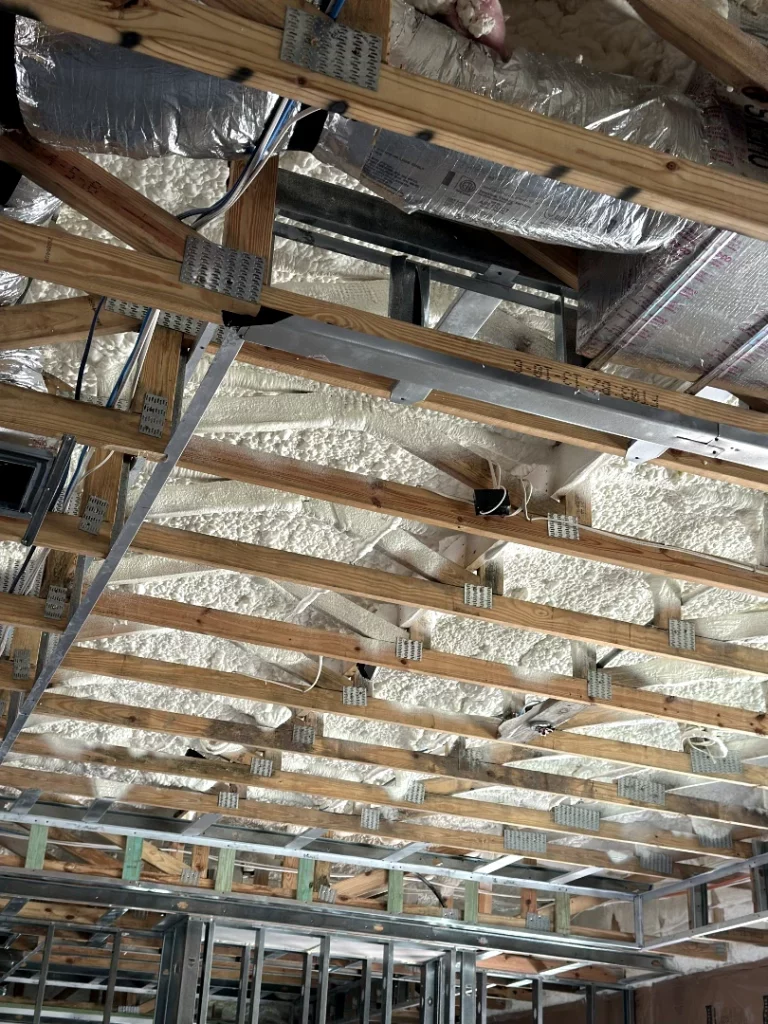
Combining our project pricing data with the energy savings estimates above, here are realistic payback scenarios for Okeechobee homeowners:
| Scenario | Project Cost | Annual Savings | Tax Credit | Net Investment | Payback Period |
|---|---|---|---|---|---|
| Small attic, modest home | $1,500 | $180 | $270 | $1,230 | ~6.8 years |
| Average whole-home project | $5,000 | $250 | $600 | $4,400 | ~17.6 years |
| Large home, comprehensive | $10,000 | $400 | $1,200 | $8,800 | ~22 years |
The numbers above illustrate why targeting the right areas matters. A focused attic insulation project at the lower end of the pricing range delivers a faster payback than a comprehensive whole-home approach. Many Okeechobee homeowners choose to phase their projects, starting with the attic where the return is strongest and expanding to walls and other areas over time.
You know your open-cell spray foam investment is on track when your contractor performs a thorough assessment of your existing insulation and building envelope before quoting, explains which areas of your home will deliver the best return per dollar invested, provides clear documentation of the R-values and thicknesses they plan to install, discusses vapor permeability and moisture management specific to Okeechobee’s humid climate, and helps you understand your eligibility for federal tax credits before the project begins.
Our team at All In OverHall follows this process on every project. We evaluate access conditions, recommend the right thickness for your specific walls or attic, and make sure you understand the numbers behind your investment before any foam is sprayed.
When it comes to open-cell spray foam insulation in Okeechobee, FL, All In OverHall brings the expertise, product knowledge, and honest evaluation your investment deserves. We help you calculate realistic payback periods based on your actual home, not generic estimates, and we install insulation that performs for decades. Call us at (561) 406-3835 or email [email protected] to get started.
Request a Quote | Schedule an Energy Assessment
Let our team show you exactly what open-cell spray foam can do for your Okeechobee property.
Open-cell spray foam does not degrade or settle over time when properly installed. It maintains its R-value and air-sealing performance for the life of the building, typically 20 to 30 years or more.
Yes. Open-cell foam is vapor-permeable, which means it allows walls and ceilings to dry toward the interior. This is an advantage in hot-humid climates like Okeechobee, where trapping moisture between impermeable layers can cause problems.
Yes. The federal Energy Efficient Home Improvement Credit covers 30% of material costs for insulation meeting IECC standards, up to $1,200 annually. The home must be your existing primary residence. Consult a tax professional for your specific situation.
Open-cell is generally more cost-effective for wall cavities and attic applications in Climate Zone 2 because its lower per-inch cost and vapor permeability suit Florida’s hot-humid conditions. Closed-cell may be preferred for areas prone to bulk water exposure, like crawl spaces.
Our minimum project size is 400 square feet. This allows us to deliver a thorough, high-quality installation while keeping the investment practical for homeowners.