What Factors Determine Attic Insulation Installation Costs?
The cost of attic insulation installation depends on five main factors: attic size, insulation material, the R-value your climate requires,…


For older homes in Wellington dealing with significant air leaks, closed-cell spray foam insulation is the most effective single solution because it simultaneously seals gaps and insulates, addressing both problems in one application. In hot-humid Climate Zone 2A where Wellington sits, the combination of air sealing and thermal resistance matters more than R-value alone. That said, the right approach depends on your home’s specific conditions: attic configuration, budget, and whether insulation removal services are needed before installing new insulation. A hybrid approach using closed-cell spray foam for air sealing at the ceiling plane followed by blown-in insulation for bulk coverage often delivers the best balance of performance and value for retrofit situations.
Wellington’s climate is classified as IECC Climate Zone 2A, a hot-humid region where cooling loads dominate energy use year-round. According to the Alliance to Save Energy’s IECC Compliance Guide, homes in Climate Zone 2 require a minimum ceiling R-value of R-30 and a wood-frame wall R-value of R-13. The DOE goes further, recommending R-30 to R-49 for existing attic spaces in this zone.
Older homes built in Palm Beach County before modern energy codes often have little more than a few inches of settled fiberglass batts, if anything at all. Construction methods from decades ago left gaps around framing, penetrations for electrical wiring and plumbing, and unsealed top plates that create direct pathways for conditioned air to escape. In a hot-humid climate, these leaks do more than waste energy. They allow warm, moisture-laden outdoor air to infiltrate wall cavities and attic spaces, creating conditions for condensation, mold growth, and wood rot.
The DOE’s Consumer Guide to Air Sealing identifies at least 19 key areas in a typical home where air leaks reduce energy efficiency and durability. In older Wellington homes, the stack effect works in reverse during cooling season: hot air pushes inward through upper-level leaks while conditioned air is forced out through lower-level gaps, creating a continuous cycle of energy loss and moisture intrusion.
Not all insulation handles air leaks the same way. Here is a comparison of the main options relevant to retrofitting older homes:
| Insulation Type | Air Sealing Ability | R-Value Per Inch | Vapor Barrier | Best Application in Older Homes |
|---|---|---|---|---|
| Closed-cell spray foam | Acts as air barrier | R-5.1 to R-6.5 | Yes (at 1.5″+) | Roof decks, rim joists, ceiling plane sealing |
| Open-cell spray foam | Air barrier at 5.5″+ | ~R-3.8 | No | Wall cavities, sound damping, large open areas |
| Blown-in cellulose | Moderate gap filling | ~R-3.5 per inch | No | Attic floor top-up over existing insulation |
| Blown-in fiberglass | Poor air sealing | R-2.9 to R-3.8 | No | Attic floors with prior air sealing completed |
| Fiberglass batts | No air sealing | R-2.9 to R-3.8 | No | Not recommended for retrofit air leak fixes |
The key distinction is whether a material creates a continuous air barrier. According to the Building Science Corporation’s Residential Spray Foam Guide, spray foam insulation has the unique ability to provide continuity of water control, air control, vapor control, and thermal control layers in a single application. This is what sets it apart from fiberglass and cellulose in homes where air leaks are a primary concern.
Closed-cell spray foam delivers an R-value of R-5.1 to R-6.5 per inch and functions as both an air barrier and a Class II vapor retarder when installed at 1.5 inches or greater. In Climate Zone 2A, this dual function matters because moisture control is just as important as thermal resistance. Building Science Corporation notes that both open- and closed-cell spray foam work effectively in warm climates, with closed-cell offering the added benefit of condensation control.
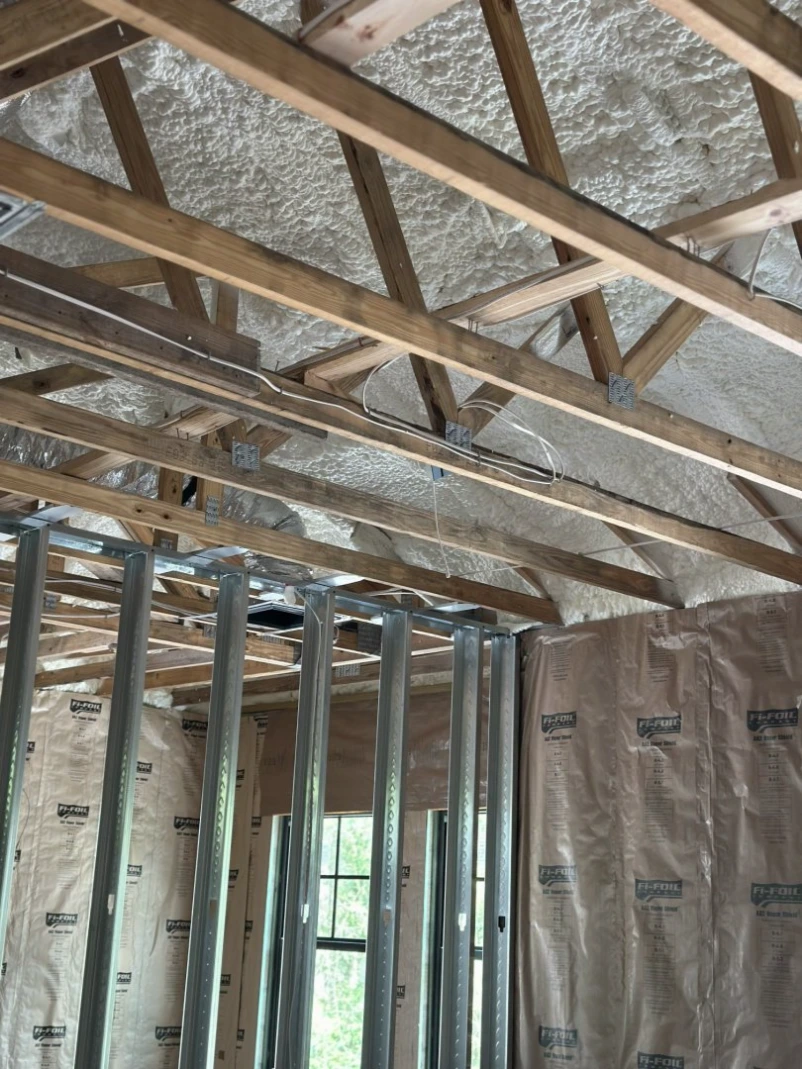
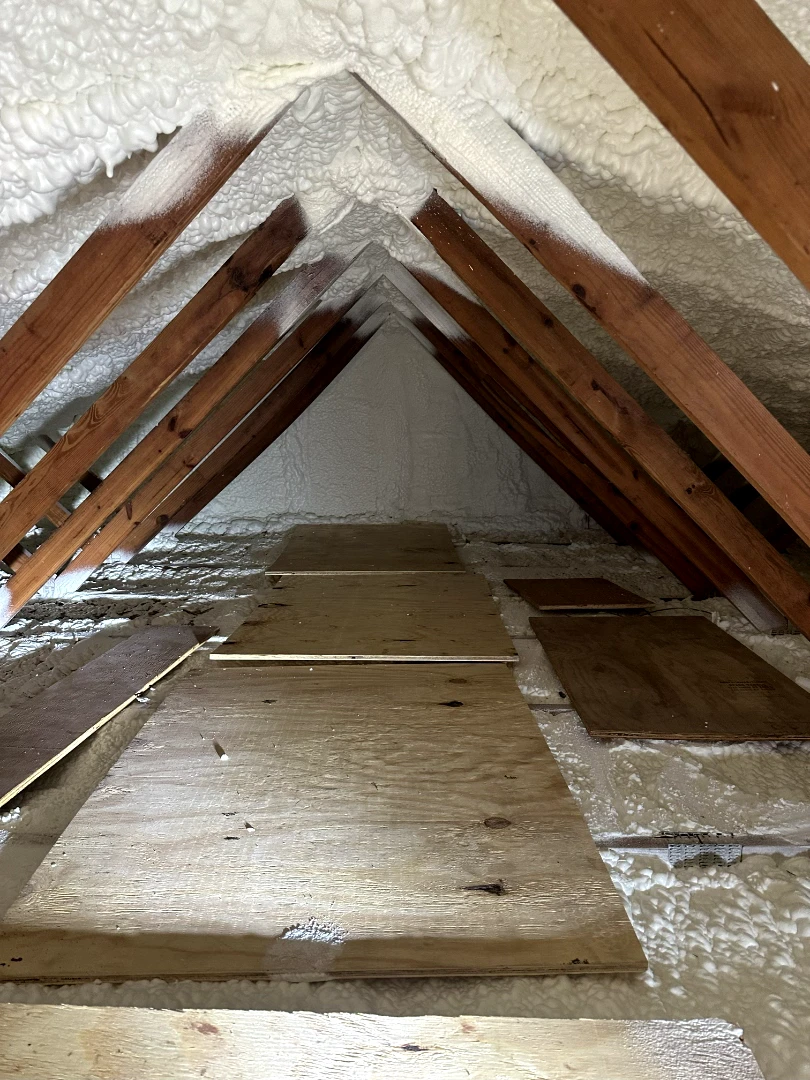
For older Wellington homes, closed-cell spray foam is particularly effective when applied to the underside of the roof deck, converting a vented unconditioned attic into a conditioned space. This eliminates the thermal penalty of ductwork running through hot attic spaces, making insulation replacement costs an important consideration when evaluating upgrades for Florida homes where mechanical systems and ductwork are located in the attic rather than a basement.
Typical investment for closed-cell spray foam ranges from $2,000 on the low end, with an average of $8,000 depending on the scope of the project. Larger square footage and difficult access to the area being insulated are the primary factors that increase pricing.
Open cell spray foam expands significantly during application, filling cracks and voids to form an effective air seal at depths of 5.5 inches or more. It delivers roughly R-3.8 per inch and provides sound reduction, making it a solid choice for interior wall cavities and areas where sound dampening adds value. However, it does not function as a vapor barrier, which means additional moisture management may be needed in humid climates.
Typical investment for open-cell spray foam starts around $1,500 and averages $5,000, making it a more accessible option for homeowners working within a tighter budget. It is a practical choice when the primary concern is air sealing rather than moisture control.
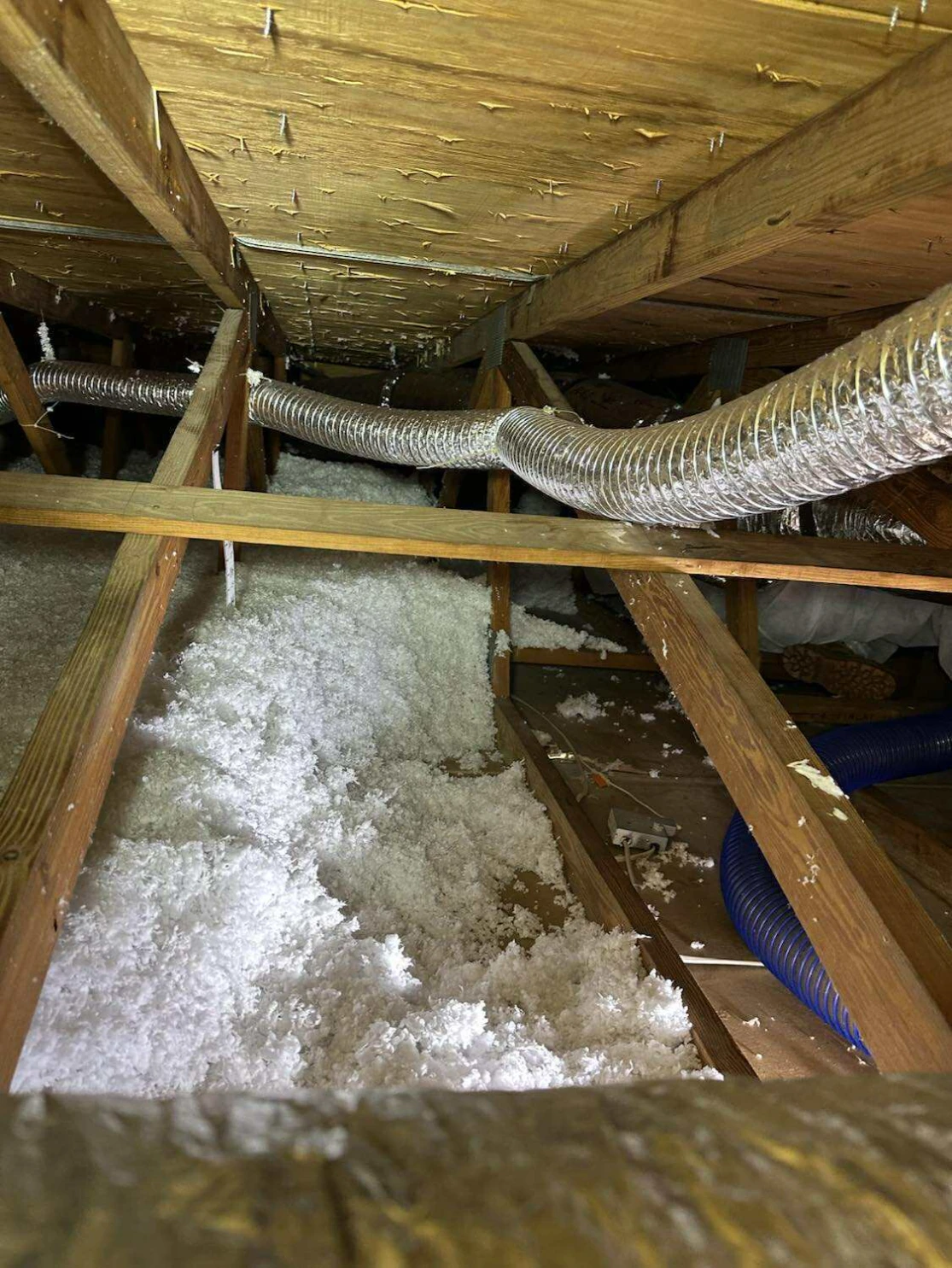
Blown-in cellulose and fiberglass are effective for adding R-value to an attic floor at a lower material cost than spray foam. However, they do not stop air movement through gaps and penetrations. For these materials to perform well in an older home, the ceiling plane must already be air-sealed. The DOE notes that adding insulation without addressing air leaks first is comparable to wearing a thick sweater in a windstorm; the air still flows through the gaps.
Attic insulation using blown-in materials typically ranges from $1,500 to $15,000 depending on depth and square footage. This option works best as part of a hybrid strategy.
For many older Wellington homes, the most practical and cost-effective path is a hybrid approach that combines the strengths of different insulation types:
This approach uses spray foam where air sealing matters most while relying on less expensive blown-in insulation to achieve the target R-value across the full attic area. Building Science Corporation describes this method for vented unconditioned attics, where spray foam creates an airtight “bathtub” that is then filled with air-permeable insulation such as fiberglass or cellulose.
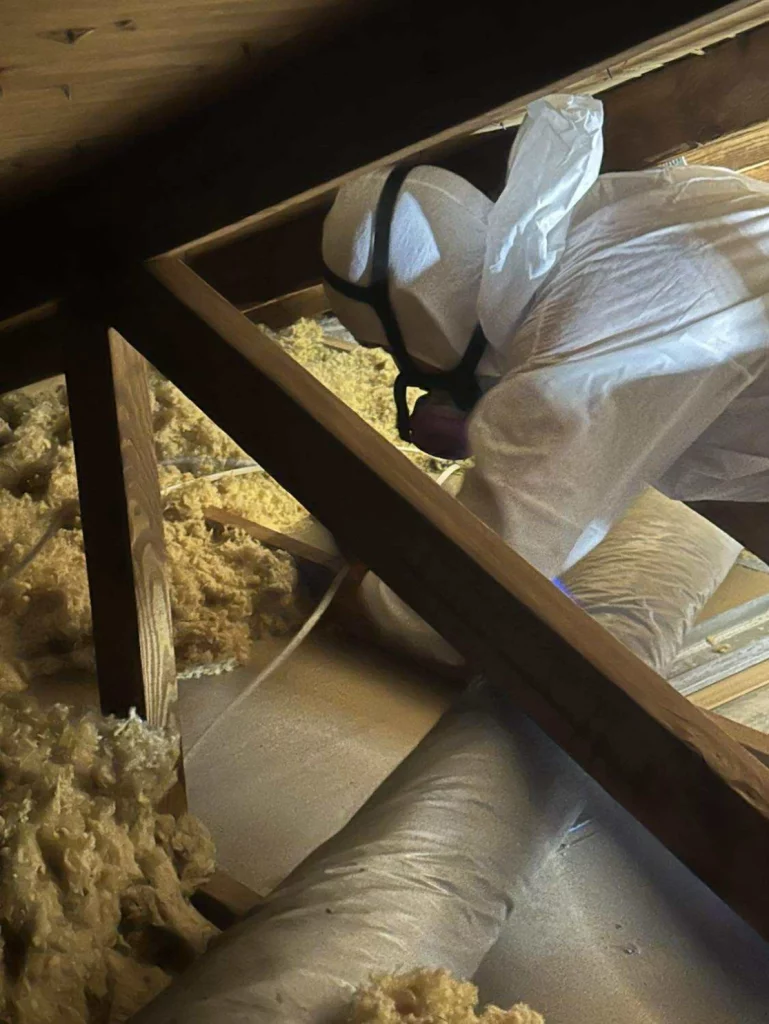
Insulation removal and replacement projects typically range from $1,500 to $7,500, with the main variables being access difficulty and whether the existing material is heavily compacted or contaminated.
Adding insulation without air sealing first. This is the single most frequent error. Fiberglass or cellulose layered over an unsealed attic floor will not stop air leaks. The DOE explicitly warns that a poorly air-sealed attic with high R-value insulation can perform worse than a properly sealed attic with a lower R-value.
Ignoring moisture management. In a hot-humid climate, sealing air leaks without considering vapor drive can trap moisture inside wall or ceiling assemblies. Closed-cell spray foam addresses this directly, but open-cell and fibrous insulations require careful vapor control planning.
Choosing insulation based on R-value alone is a mistake. R-value measures thermal resistance in a lab setting. Real-world performance depends heavily on airtightness. A home with R-49 attic insulation and major air leaks will underperform a home with R-30 and a properly sealed envelope, so local service ratings can help homeowners assess a contractor’s track record before choosing an insulation professional.
Leaving ductwork in unconditioned attic space. Many older Wellington homes have HVAC ducts running through vented attics. In a hot-humid climate, this creates both a thermal penalty and condensation risk. Converting the attic to a conditioned space with spray foam on the roof deck addresses both problems.
| Home Profile | Recommended Approach | Why |
|---|---|---|
| Pre-1980s block/stucco home, vented attic, ducts in attic | Full attic spray foam conversion (closed-cell on roof deck) | Protects ductwork, eliminates condensation risk, creates conditioned attic space |
| 1990s-2000s home, settled fiberglass, moderate leaks | Hybrid: spray foam air seal at ceiling plane + blown-in top-up | Addresses leaks where they matter, adds bulk R-value cost-effectively |
| Home with cathedral/vaulted ceilings, no attic access | Closed-cell spray foam between rafters | Only viable method when there is no attic floor to insulate |
| Budget-conscious retrofit, accessible attic, manageable leaks | Air seal with targeted spray foam + blown-in cellulose to R-30+ | Lowest total investment while still solving the air leak problem |
All In OverHall specializes in insulation replacement for older homes throughout the Wellington, FL area, including closed-cell and open-cell spray foam, insulation removal and replacement, and attic insulation. Our team assesses each home’s specific air leak issues and climate zone requirements before recommending the right combination of materials and methods.
Call us at (561) 406-3835 or email [email protected] to discuss your home’s insulation needs with our team.
Common signs include uneven temperatures between rooms, higher-than-expected energy bills, visible dust streaks near attic insulation (indicating air movement), and drafts around windows, doors, and electrical outlets. A professional blower door test provides the most accurate measurement.
Adding fiberglass over an unsealed attic floor will not fix air leaks. The DOE recommends sealing air leaks before or during insulation installation. Without air sealing, you may increase R-value while still losing significant energy through gaps.
Yes. Closed-cell spray foam functions as both an air barrier and a Class II vapor retarder when installed at the proper thickness. Building Science Corporation confirms both foam types perform effectively in hot-humid climates, with closed-cell offering additional condensation control.
ENERGY STAR reports that sealing air leaks and adding insulation can provide up to 10% savings on total annual energy bills. The actual impact depends on the severity of existing leaks, current insulation levels, and your HVAC system’s efficiency.
Timelines vary based on the size of the home and whether old insulation needs removal first. A straightforward attic insulation project on a 1,500 to 2,500 square foot home typically takes one to two days. Full spray foam applications may require additional time for curing and inspection.