Why Closed-Cell Spray Foam Insulation Is Ideal for Indoor Pools in Lantana, FL
Closed-cell spray foam insulation stands out as the optimal solution for indoor pools in Lantana, Florida, due to its exceptional…


When you walk into a perfectly temperature-controlled home on the hottest day of summer or the coldest night of winter, you’re experiencing the invisible power of effective insulation. But not all insulation is created equal. While traditional materials like fiberglass and cellulose have served their purpose for decades, closed-cell spray foam insulation represents a technological leap forward in building science. This guide comes from years of hands-on experience working with countless properties, from new construction to historic renovations, where the difference between good insulation and great insulation became strikingly clear.
Closed-cell spray foam isn’t just another insulation option it’s a comprehensive building envelope solution that addresses thermal performance, air leakage, moisture control, and structural integrity all at once. The material’s unique cellular structure and expanding application method create a seamless barrier that traditional insulation simply cannot match. Whether you’re building a new home, retrofitting an existing structure, or addressing persistent comfort and energy issues, understanding this technology could transform how you think about your building’s performance.
In this complete guide, you’ll discover everything you need to know about closed-cell spray foam insulation. We’ll start with the fundamental science behind how it works, then move through practical applications across your entire building envelope from foundation walls to attic rafters. You’ll learn about installation best practices, cost considerations, common challenges and their solutions, and how to measure the return on your investment. By the end, you’ll have the knowledge to make informed decisions about whether closed-cell spray foam is right for your project and how to ensure it’s installed correctly for maximum performance and longevity.
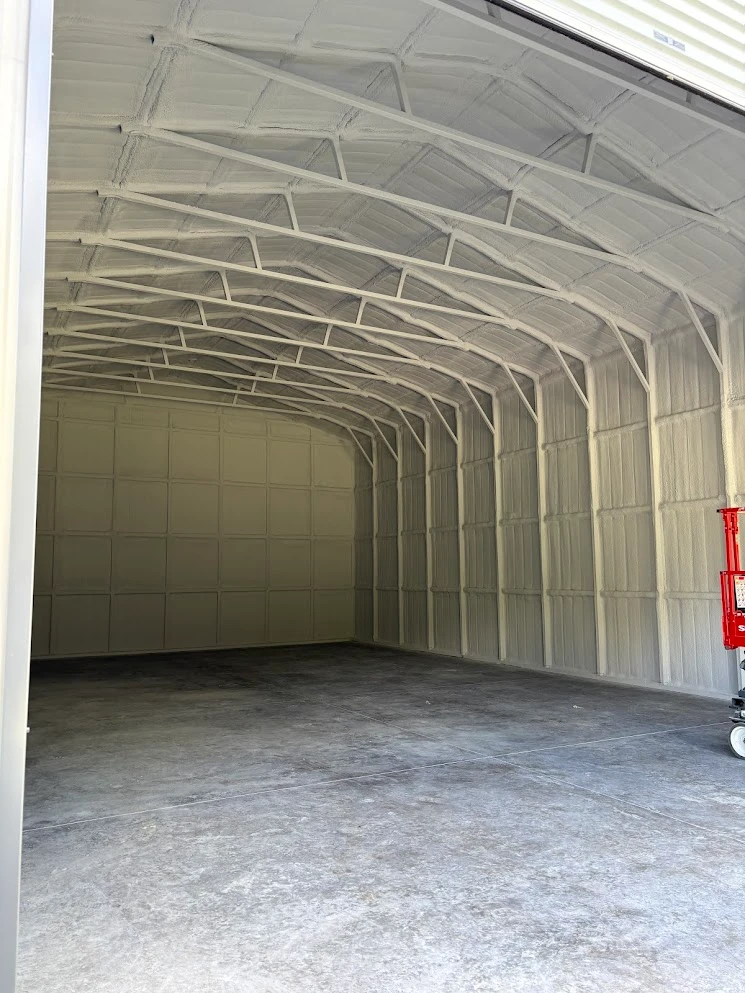
Closed-cell spray foam insulation is a two-component polyurethane system that expands significantly upon application, creating a dense, rigid insulation material with unique performance characteristics. Unlike its open-cell counterpart, closed-cell foam features completely sealed cells that trap blowing agents within their structure, giving it superior insulating properties and making it resistant to moisture penetration.
The chemistry behind closed-cell spray foam involves an isocyanate component reacting with a polyol resin when mixed at the application nozzle. This reaction is exothermic, causing the material to expand by 30-40 times its liquid volume and to fill cavities, cracks, and gaps with a continuous insulating layer. What sets closed-cell foam apart is its high density, typically 1.75 to 2.2 pounds per cubic foot and its closed-cell structure, which gives it a Class 1 vapor barrier rating and makes it virtually impermeable to air and moisture.
The thermal performance of closed-cell spray foam is impressive, with R-values ranging from 6.0 to 7.0 per inch of thickness. This means you can achieve the same insulation performance with roughly half the thickness required by traditional fiberglass or cellulose insulation. For example, a 2-inch application of closed-cell foam can provide R-13 insulation, while you’d need nearly 4 inches of fiberglass to achieve the same thermal resistance.
Expert Tip: The actual R-value of installed spray foam can vary based on application conditions. Professional installers understand how temperature and humidity during application affect the final product and can adjust their technique accordingly to achieve optimal results.
The material’s structural benefits go beyond just insulation. At a 2-inch thickness, closed-cell spray foam can increase racking strength in wood-frame walls by up to 250%, making your building more resistant to wind and seismic forces. This structural contribution means you’re not just insulating; you’re also reinforcing your building envelope.
Understanding how closed-cell spray foam delivers its exceptional performance starts with looking at its unique cellular structure. Each individual cell in the foam acts as an isolated bubble, filled with a high-performance blowing agent rather than air. These trapped gases have much lower thermal conductivity than air, which is why closed-cell foam achieves such high R-values in minimal thickness.
The expansion process during application is what makes spray foam particularly effective at air sealing. As the foam expands, it fills every crack, crevice, and penetration point in your building envelope. This creates a monolithic insulation layer without the gaps, seams, and compression issues that plague traditional batt insulation. According to research from the Building Science Corporation, air leakage can account for 25-40% of heating and cooling energy loss in typical homes, a problem that closed-cell spray foam virtually eliminates.
The vapor-barrier properties of closed-cell foam derive from its density and cell structure. With a permeance rating of less than 1.0 perm at 2 inches thickness, it prevents moisture migration through building assemblies. This makes it particularly valuable in climate zones where moisture control is critical, or in applications like crawl spaces and basements where ground moisture can be problematic.
The thermal performance works through multiple mechanisms:
Key Takeaways:
Closed-cell spray foam insulation is available in various formulations designed for specific applications. The two main categories are high-pressure and low-pressure systems, each suited to different types of projects and installation conditions.
High-pressure spray foam systems use specialized equipment with heated hoses and typically produce a finer cell structure and higher yield. These are the systems you’ll see used by professional insulation contractors on new construction projects and large-scale retrofits. The high-pressure application provides greater control over foam expansion and thickness, making it ideal for large wall cavities, roofs, and commercial applications.
Low-pressure spray foam kits are designed for smaller projects and DIY applications. These two-component systems come in portable tanks with pre-set mixing ratios and are perfect for sealing gaps, insulating small areas, or handling spot repairs. While they produce the same type of closed-cell foam, their application is slower and less precise than that of professional high-pressure systems.
Applying closed-cell spray foam to your foundation walls provides both insulation and moisture protection. When applied to the interior of basement walls, it creates a continuous insulation layer with no thermal bridging through studs. The foam’s vapor-barrier properties also prevent ground moisture from entering your living space while allowing the concrete to dry to the interior, if needed.
For crawl spaces, closed-cell foam can be applied to the foundation walls and, in some cases, to the crawlspace floor. This transforms a vented crawlspace into a conditioned space, eliminating moisture issues and improving your home’s overall energy efficiency.
Expert Tip: When applying closed-cell foam to concrete or masonry foundations, ensure the surface is clean and dry. Professional installers often use specialized primers to improve adhesion on porous concrete surfaces.
In wall assemblies, closed-cell spray foam can be applied in several ways depending on your climate zone and project goals. The most common approach is flash-and-batt, where 1-2 inches of closed-cell foam is applied to the exterior sheathing before filling the remaining cavity with fiberglass or cellulose. This gives you the air sealing and vapor control benefits of foam while reducing material costs.
For maximum performance, you can fill the entire wall cavity with closed-cell foam. This approach is common in high-performance homes and retrofit projects where space is limited. The thin profile of closed-cell foam means you maintain more interior living space while achieving superior insulation values.
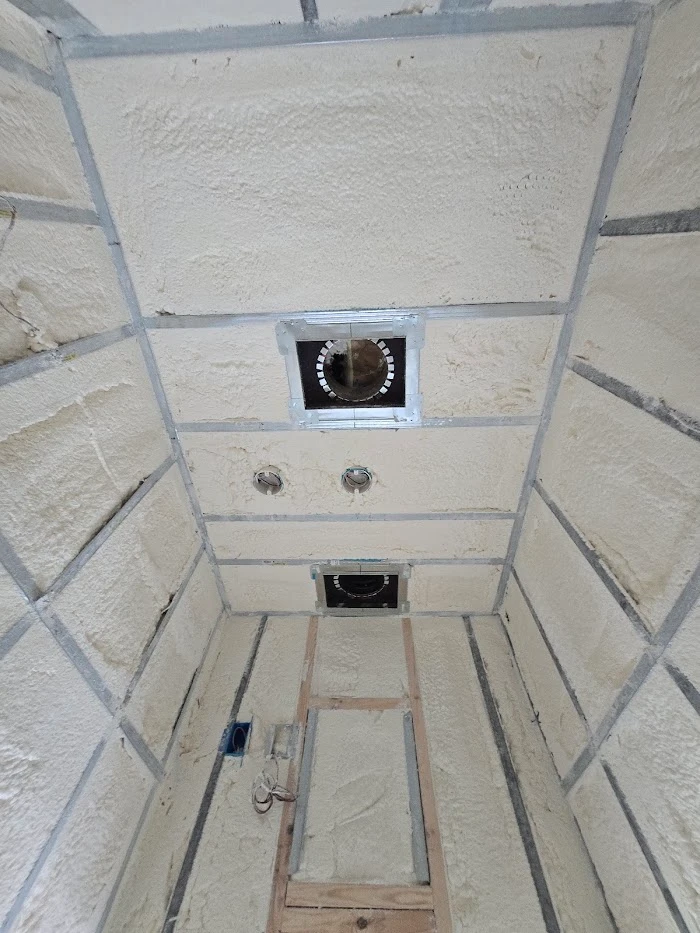
Closed-cell spray foam is particularly effective in roof assemblies, especially in cathedral ceilings and unvented attics. When applied to the underside of roof decking, it creates an insulated and air-sealed roof assembly that moves the thermal boundary to the roof line. This approach has several advantages:
Market data show that homes with foam-insulated roof assemblies experience 15-20% lower cooling loads than traditionally ventilated attics with fiberglass insulation, according to Energy Star program research.
Professional installation of closed-cell spray foam is a complex process that requires specialized equipment, safety protocols, and technical expertise. Understanding this process helps you evaluate potential contractors and assess the quality of their work.
Before any foam is sprayed, proper preparation is essential. This includes:
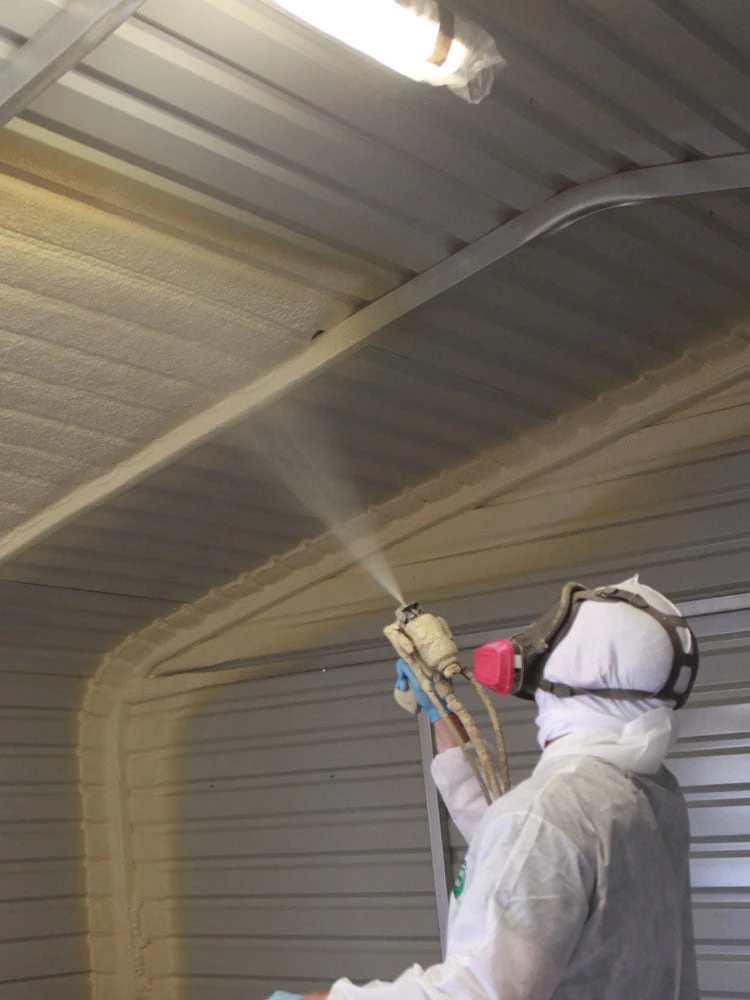
The installation crew must wear full personal protective equipment (PPE), including respirators, protective suits, gloves, and eye protection. This isn’t just about comfort, it’s about safety. The chemicals in spray foam can cause serious health issues if proper precautions aren’t taken.
The actual application process requires skill and precision. Professional installers must:
The foam is typically applied in multiple passes, with each pass limited to 1-2 inches of thickness. This prevents excessive heat buildup during the chemical reaction and ensures proper curing. Between passes, installers may trim overexpanded foam to prepare for the next layer.
Expert Tip: The quality of spray foam installation can often be judged by the consistency of the cell structure. Professionals should be able to show you cross-sections of their work to demonstrate uniform cell size and proper density.
After application, closed-cell spray foam cures, typically taking 24-48 hours. During this time:
Professional installers will ensure proper curing conditions and clean up any overspray or trimmings. They should also provide documentation showing the installed thickness and calculated R-values for your records.
The advantages of closed-cell spray foam extend far beyond just thermal insulation. When installed correctly, it provides multiple performance benefits that contribute to a more comfortable, durable, and efficient building.
The energy savings from closed-cell spray foam insulation can be substantial. Studies by the U.S. Department of Energy show that proper air sealing and insulation can reduce heating and cooling costs by 15-20% in typical homes. Closed-cell spray foam excels at both tasks:
Closed-cell spray foam’s moisture resistance makes it valuable in many climate applications:
The rigid nature of cured closed-cell foam adds structural integrity to your building:
While the chemicals in spray foam are petroleum-based, the overall environmental impact is often positive when considering the full lifecycle:
Key Takeaways:
Understanding the financial aspects of closed-cell spray foam insulation helps you make informed decisions for your project. While the upfront costs are higher than traditional insulation, the total value proposition often favors spray foam when all factors are considered.
Closed-cell spray foam is generally priced per board foot (one square foot at one-inch thickness), with rates varying based on your location, project complexity, and the specific formulation used.
For a typical 2,500 square foot home with 3,000 square feet of wall area, this might translate to:
| Application Area | Thickness | Board Feet |
|---|---|---|
| Exterior Walls | 2 inches | 6,000 |
| Roof Assembly | 4 inches | 10,000 |
| Foundation Walls | 2 inches | 2,000 |
| Total | 18,000 |
This comparison doesn’t account for the multiple functions that spray foam performs in a single application.
The return on investment for closed-cell spray foam comes from several sources:
The simple payback period for spray foam insulation typically ranges from 5-10 years when considering energy savings alone. However, when you factor in equipment downsizing, reduced maintenance, and increased property value, the effective payback period often drops to 3-5 years.
Expert Tip: The most cost-effective approach is often a hybrid system that uses 1-2 inches of closed-cell foam for air sealing and moisture control, then fills the remaining cavity with less expensive insulation like fiberglass or cellulose. This gives you most of the benefits at a fraction of the cost.
Even with professional installation, closed-cell spray foam projects can encounter challenges. Understanding these potential issues helps you prevent problems and address them effectively if they arise.
Overspray and Cleanup: The expanding nature of spray foam makes cleanup difficult if it gets where it shouldn’t be. Professional installers use extensive masking and protection, but some overspray is inevitable. Solution: Use drop cloths, plastic sheeting, and tape to protect windows, doors, and finished surfaces. Immediate cleanup with specialized solvents is essential for any accidental contact.
Thickness Control: Achieving consistent thickness can be challenging, especially in complex cavities. Too thin, and you don’t get the full R-value; too thick, and you risk excessive heat buildup during curing. Solution: Experienced installers use spray guns with adjustable patterns and take frequent measurements to ensure proper application depth.
Temperature Sensitivity: Spray foam application is sensitive to ambient and substrate temperatures. In cold conditions, the foam may not expand properly; in hot conditions, it may cure too quickly. Solution: Professional contractors monitor temperature conditions and may use heated hoses or adjust formulations based on environmental conditions.
Thermal Bridging: While spray foam reduces thermal bridging compared to batt insulation, it doesn’t eliminate it entirely at framing members. Solution: For maximum performance, consider exterior insulation applications that place the foam outside the framing assembly entirely.
Moisture Trapping: In some climate applications, closed-cell foam’s vapor barrier properties can trap moisture within wall assemblies. Solution: Proper building science analysis based on your specific climate zone and construction type is essential. In some cases, a hybrid approach using open-cell foam might be more appropriate.
Building code requirements for spray foam insulation vary by jurisdiction and have become more stringent in recent years. Common challenges include:
Expert Tip: Always verify that your installer is familiar with local code requirements and obtains necessary permits. The additional cost of compliance is far less than the expense of correcting code violations later.
One of the advantages of closed-cell spray foam insulation is its minimal maintenance requirements once properly installed. However, understanding how to monitor and maintain your insulation ensures optimal performance throughout the life of your building.
Closed-cell spray foam insulation is designed to last the lifetime of your building. The cured foam is chemically inert and doesn’t settle, compress, or degrade over time like some traditional insulation materials. Manufacturers typically warranty their products for 25 years or more, but the actual lifespan often exceeds 50 years when installed correctly.
While spray foam requires little active maintenance, periodic inspection helps ensure continued performance:
When you need to make modifications to areas with spray foam insulation:
Expert Tip: Keep detailed records of your insulation installation, including thickness measurements and R-value calculations. This documentation is valuable for future renovations and can enhance your property’s resale value.
While closed-cell spray foam is highly durable, extreme environmental conditions can affect its performance:
Regular inspection and prompt repair of any damage ensures your insulation continues performing as designed for decades to come.
When properly installed and cured, closed-cell spray foam is completely safe for occupied spaces. The chemical reaction creates an inert, stable plastic material. However, the installation process requires professional safety protocols, including proper ventilation and protective equipment. The foam should be fully cured (typically 24-48 hours) before occupants return to treated areas without additional ventilation.
Closed-cell foam has a higher R-value per inch (6.0-7.0 vs. 3.5-4.0 for open-cell), acts as a vapor barrier, and adds structural strength. Open-cell foam is more flexible, less expensive, and allows vapor diffusion. The choice depends on your climate, project goals, and budget. In many applications, a hybrid approach using both types provides optimal performance.
While DIY spray foam kits are available, professional installation is strongly recommended for anything beyond small spot repairs. Professional installers have the equipment, training, and experience to ensure proper application thickness, coverage, and safety. Improper installation can lead to performance issues, code violations, and health hazards.
Modern homes should be tight but properly ventilated. Closed-cell spray foam does create an excellent air barrier, which means you’ll need mechanical ventilation to maintain indoor air quality. Most building codes require mechanical ventilation in tight homes anyway. This controlled ventilation approach is actually healthier than relying on uncontrolled air leakage through your building envelope.
For many homeowners, yes. While the upfront cost is higher, the combination of energy savings, improved comfort, equipment downsizing opportunities, and increased durability often provides a favorable return on investment. The payback period typically ranges from 3-10 years, depending on your climate and energy costs.
Closed-cell spray foam insulation is designed to last the lifetime of your building. It doesn’t settle, compress, or deteriorate like traditional insulation materials. Manufacturers typically warranty their products for 25+ years, but properly installed spray foam can last 50+ years without performance degradation.
Throughout this comprehensive guide, we’ve explored how closed-cell spray foam insulation can transform your building’s performance through superior thermal resistance, air sealing, moisture control, and structural reinforcement. The decision to use this advanced insulation technology represents an investment in comfort, efficiency, and durability that pays dividends for decades.
Remember that successful implementation starts with proper planning. Consider your climate zone, building type, and specific performance goals when designing your insulation strategy. A hybrid approach using closed-cell foam for air sealing and moisture control, combined with other insulation types for thermal mass, often provides the best balance of performance and cost-effectiveness.
The quality of installation matters as much as the material itself. Choose experienced professionals who understand building science, follow safety protocols, and are familiar with local code requirements. Proper installation ensures you receive the full benefits of this remarkable insulation technology while avoiding common pitfalls that can compromise performance.
As you move forward with your project, use this guide as a reference to evaluate options, plan your approach, and verify that work is performed to the highest standards. The comfort and energy savings you’ll enjoy for years to come make the effort well worthwhile.
When you’re ready to improve your home’s insulation with closed-cell spray foam, professional expertise makes all the difference. The specialists at All in OverHall have the experience and knowledge to ensure your project delivers maximum performance and value. For a consultation about your specific insulation needs, contact All in OverHall at [email protected] or call (561) 406-3835 to discuss how closed-cell spray foam can benefit your property.