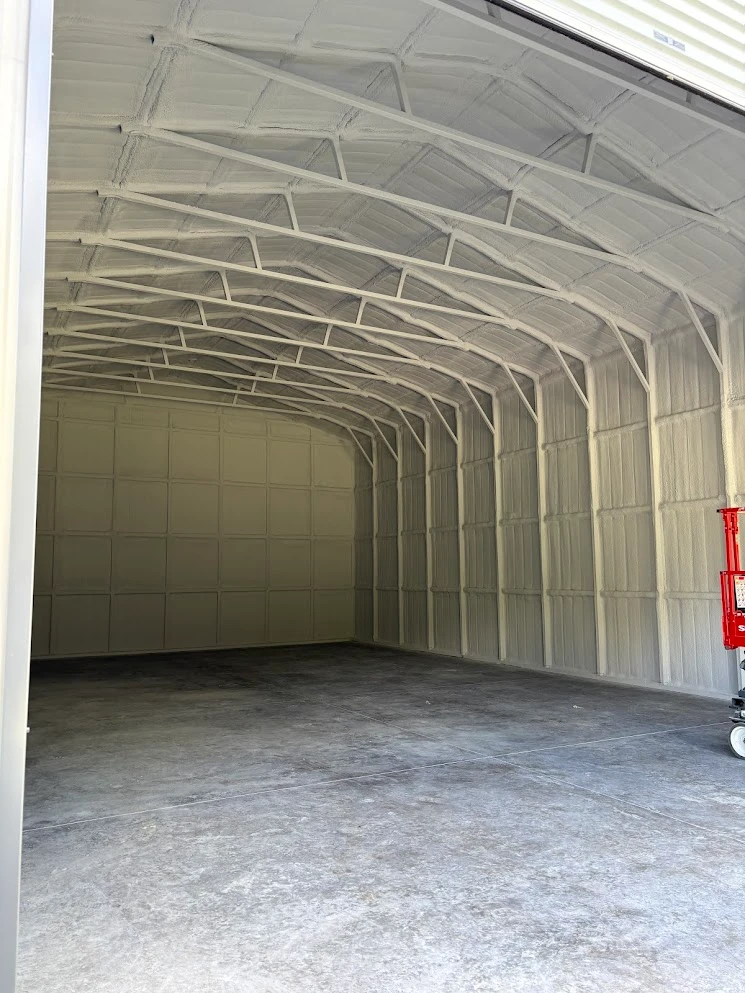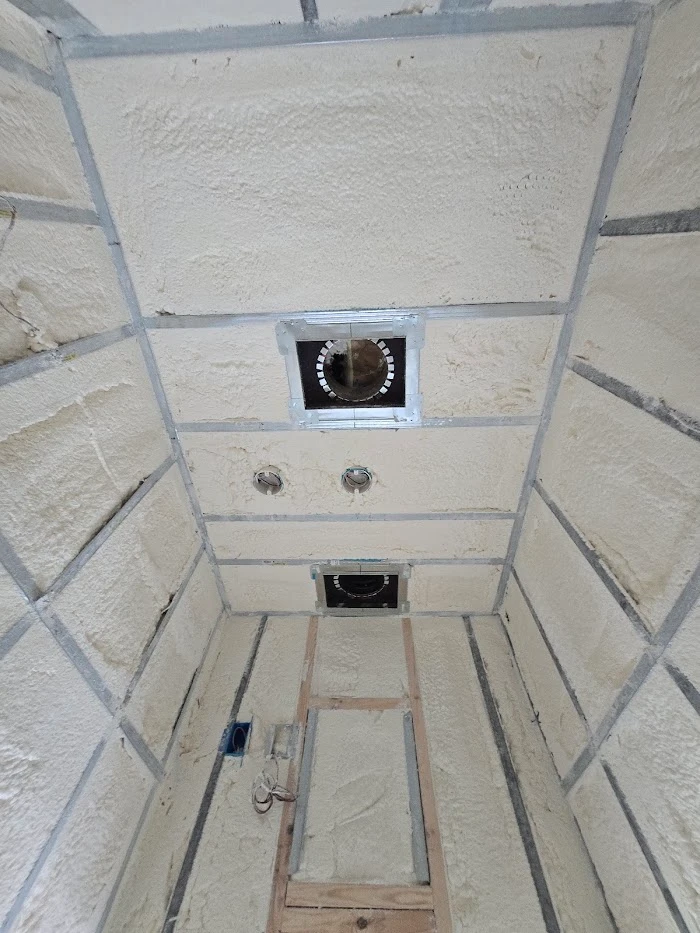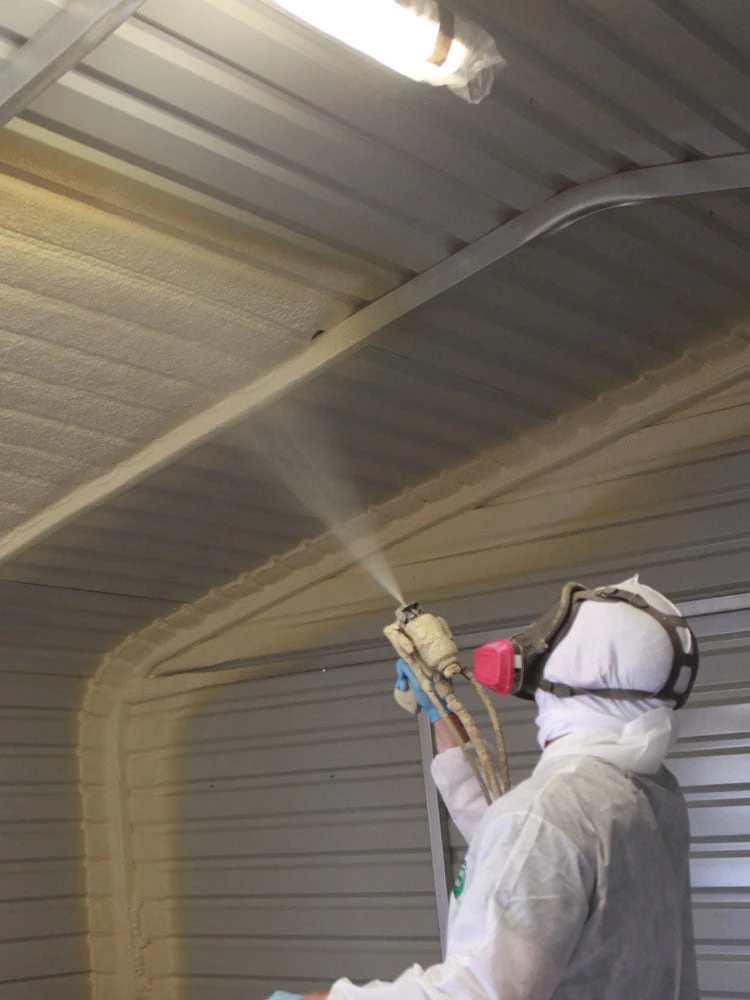
Why Closed-Cell Spray Foam Insulation Is Ideal for Indoor Pools in Lantana, FL
Closed-cell spray foam insulation stands out as the optimal solution for indoor pools in Lantana, Florida, due to its exceptional…


Insulation prevents energy loss through a dual-action process: resisting heat transfer through materials and blocking the physical movement of air through structural voids. While most people understand insulation as a blanket that keeps heat inside, its ability to seal hidden gaps is equally significant for energy efficiency. When insulation creates an effective air barrier, it stops the physical flow of conditioned air out of the building envelope, preventing the mechanical system from overworking to replace that lost energy.
Effective thermal protection requires addressing the hundreds of small cracks, holes, and seams found in typical construction. These gaps often appear where building materials meet, such as around windows, pipes, wires, and attic hatches. If insulation only covers a surface without sealing these penetrations, air travels right through or around the material. This process, known as convection, renders even high-grade insulation less effective. Proper application fills these voids, effectively closing the escape routes that allow expensive heated or cooled air to leave the structure. With years of field experience, it becomes clear that the difference between a high-performing home and a drafty one often comes down to how well these hidden gaps are managed.
To understand how insulation prevents energy loss, you must first understand the forces that push air out of a building. Air behaves like a fluid, constantly moving from areas of high pressure to low pressure and from warm areas to cold places.
The primary force driving air through hidden gaps is the stack effect. In the winter, warm air inside a building becomes lighter and rises to the top levels. This rising air creates a positive pressure in the attic and upper ceilings, forcing warm air out through any available cracks or penetrations.
As this air escapes, it creates negative pressure in the lower levels, sucking in cold outdoor air through gaps in the foundation, rim joists, and the basement. A Department of Energy report indicates that reducing these air leaks is one of the most cost-effective ways to cut heating and cooling costs. Without a seal to break this cycle, the heating system runs continuously to heat new cold air constantly pulled into the home.
Air does not just move in and out of the house; it also moves inside the walls. When insulation fits poorly or leaves gaps between the material and the drywall, air circulates within that cavity. Warm air touches the drywall, rises, hits the cold outer sheathing, cools down, and sinks. This rotating current strips heat from the interior wall and transfers it outside. Dense insulation that adheres directly to the building structure eliminates the space required for these convection loops to form.
Many property owners rely heavily on R-value when selecting materials. R-value measures a material’s resistance to conductive heat flow (heat traveling through a solid). While a high R-value is necessary, it does not account for air leakage.
If you wear a thick wool sweater on a windy day, the wind cuts right through it. The sweater has high insulation but lacks an air barrier. Putting a windbreaker over the sweater stops the airflow, allowing the wool to retain heat. In building terms, fibrous insulation types like fiberglass or mineral wool act like a sweater. They resist heat transfer but allow air to pass through if not paired with a separate air barrier.
Bonus Tip: Check your existing fiberglass insulation for dirty or dark patches. This discoloration acts as a filter, trapping dust as air passes through it. These dark spots serve as a clear visual indicator of where energy is escaping.
Identifying where energy escapes helps in selecting the right insulation strategy. Most leakage occurs at connection points that are often overlooked during initial construction.
Different materials handle air sealing differently. The following table breaks down how common insulation types perform in terms of air leakage and thermal resistance.
| Insulation Type | R-Value Per Inch | Air Sealing Ability | Moisture Permeability | Best Application |
|---|---|---|---|---|
| Fiberglass Batts | 2.9 – 3.8 | Poor (Requires a separate air barrier) | High | Standard wall cavities (if sealed) |
| Cellulose (Blown-in) | 3.1 – 3.8 | Moderate (Densely packed limits flow) | High | Attic floors, retrofitting walls |
| Open-Cell Spray Foam | 3.5 – 3.8 | Excellent (Expands to seal gaps) | Moderate (Vapor permeable) | Roof decks, interior walls |
| Closed-Cell Spray Foam | 6.0 – 7.0 | Superior (Forms vapor/air barrier) | Very Low (Water resistant) | Basements, exterior shells, pole barns |
According to technical data from Building Science Corporation, controlling airflow is often more critical for moisture control and energy efficiency than the insulation’s R-value. Materials that expand, such as spray foam, naturally fill voids that pre-cut batts might miss.
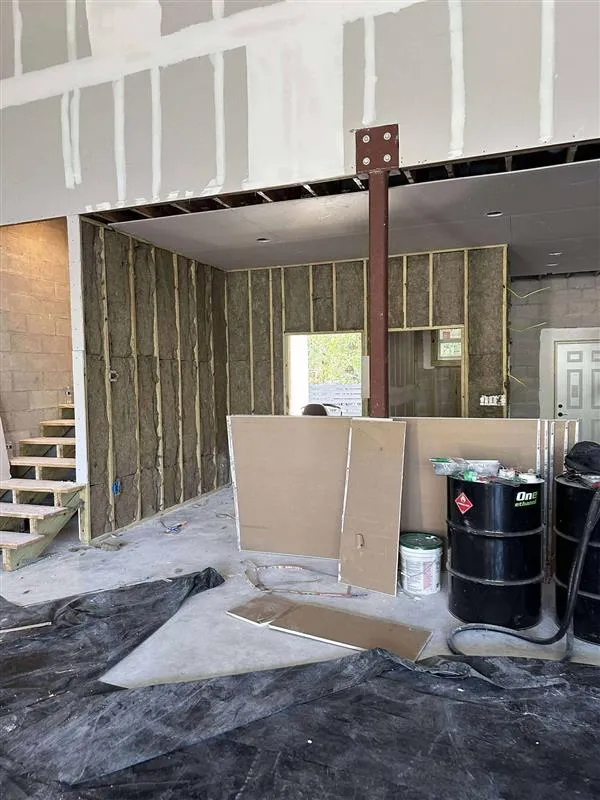
Before deciding on a method to seal these hidden gaps, evaluate the specific structural conditions.
Ventilation Requirements Tightening a building envelope reduces natural air exchange. While this saves energy, it requires a plan for mechanical ventilation. You must ensure that fresh air enters the home in a controlled manner, rather than through dirty crawl spaces or attics.
Existing Wiring Older homes with knob-and-tube wiring present a safety hazard if covered with insulation. The wiring needs air circulation to dissipate heat. An electrical inspection is necessary before adding any material to wall cavities or attics in historic properties.
Moisture Management: Trapping air also traps moisture. The insulation strategy must account for how the building sheds water vapor. Placing a vapor barrier on the wrong side of the wall in a humid climate can lead to condensation and rot within the structural framing.
Insulation serves as the primary defense against energy waste, but its effectiveness relies heavily on its ability to stop air movement. The stack effect constantly pushes conditioned air out of the home, pulling unconditioned air in to replace it. Materials that function as air barriers, or that are paired with proper sealing techniques, prevent this cycle. R-value measures thermal resistance, but it does not account for the energy lost through convection in unsealed gaps. Addressing areas such as rim joists, attic penetrations, and wall cavities ensures mechanical systems operate efficiently.
Every building has a unique thermal profile, and generic solutions often miss specific leakage points. If you are experiencing drafty rooms or rising energy costs, a professional assessment will pinpoint precisely where your energy is escaping. Evaluate your long-term goals for comfort and savings before choosing a material. For a detailed consultation on how to secure your building envelope, contact ALL IN OVERHALL. You can reach the team at (561) 406-3835 or send an inquiry to [email protected].
Uneven room temperatures, high utility bills, and ice dams on the roof are strong indicators. A professional energy audit using a blower door test provides a definitive measurement of how much air is leaking out of the structure.
Spray foam is the most efficient single-step product because it insulates and seals simultaneously. However, you can achieve similar results with rigid foam board and meticulous caulking and taping, though this process is more labor-intensive and prone to human error.
Adding more insulation without sealing the air leaks underneath acts like putting a heavy blanket over a window that is cracked open. The warm air will still push through the old insulation and bypass the new layer. You must address the air sealing layer first.
Thermal bridging occurs when heat travels through the studs or joists, bypassing the insulation between them. Continuous insulation, such as rigid foam or spray foam, applied over the studs, breaks this bridge. Standard batts placed between studs do not stop thermal bridging.
The Environmental Protection Agency suggests that air sealing and insulation can save homeowners an average of 15% on heating and cooling costs, though this figure often rises in older, leakier structures.